 Lynden Window
 Roof Repair in Ferndale: What This Climate Actually Demands
Ferndale sits close enough to the water and to the open flats of the Nooksack lowlands that its roofs take on a specific combination of stress most drier climates never see: salt-tinged marine air drifting in off the Sound, wind-driven rain that gets pushed sideways and up under shingle edges instead of falling straight down, and a moss season that runs long on any slope that stays shaded or damp. None of that is unusual for Whatcom County as a whole, but it adds up fast on a roof, and it's a big part of why a repair that would hold up fine in a drier region can fail here within a season or two if it isn't done with this exact climate in mind.
Lynden Window Co works on windows day in and day out, but we've also built a roof repair practice around the same principle that shapes everything else we install: a house is a system, and the roof is the piece that takes the first and hardest hit from the weather every year. In Ferndale specifically, that means repairs built around sustained moisture and salt exposure, not a generic patch job pulled from a drier climate's playbook.
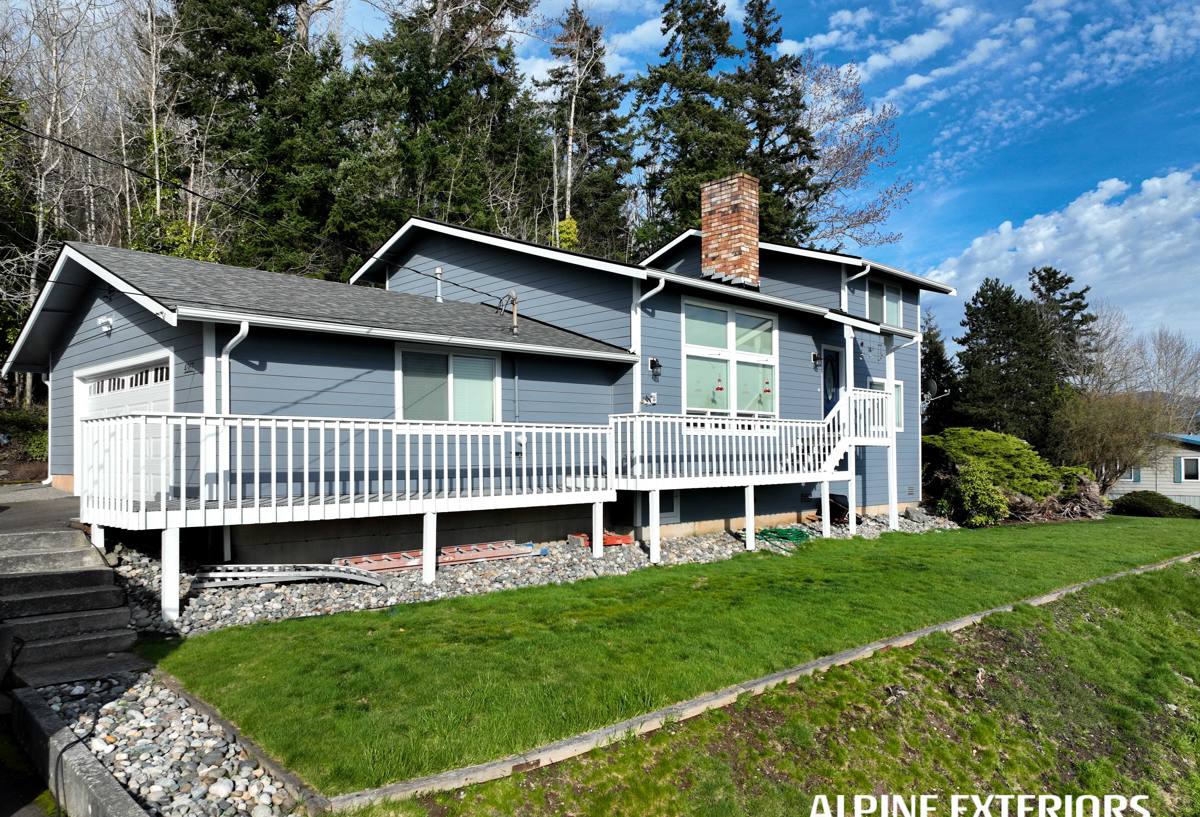
What the Climate Does to a Ferndale Roof
Salt Air and Corrosion
Even homes set back a mile or more from open water get a steady dose of salt-carrying air moving through this part of the county. Over years, that accelerates corrosion in fasteners, flashing, and any exposed metal on a roof. A repair that uses standard, non-coated fasteners or flashing metal not rated for a salt-influenced environment tends to show rust streaks and loosened fasteners well before it should, sometimes undoing the repair itself within a few wet seasons.
Wind-Driven Rain and Flashing
Rain in this part of Washington rarely falls straight down. Wind pushes it sideways and even upward under shingle tabs, ridge caps, and flashing edges, which is a harder test of a repair than a simple downpour. Most of the roof leaks we get called out for in Ferndale don't actually start in the open field of the roof — they start at a flashing detail: a valley, a chimney, a vent pipe, or a wall-to-roof transition where wind-driven water found a gap that a straight-down rain never would have exposed.
A Long Moss Season
Mild temperatures and consistent shade give moss a long growing season across Whatcom County, and Ferndale's tree cover and marine humidity make it worse on north-facing slopes and low-pitch sections. Moss holds water against the roofing material long after a storm has passed, works its way under shingle edges, and can lift or loosen shingles that were otherwise sound. A repair that doesn't address the moisture source behind the moss usually just buys a homeowner a year or two before the same spot fails again.
What a Correct Roof Repair Actually Involves
A roof repair sounds simple from the ground: find the leak, patch it, move on. Done right, it's more involved than that, especially in a climate this wet. A repair that's actually going to hold needs to:
- Trace the leak to its real source, which is often several feet upslope from where the water shows up inside the house
- Remove and replace damaged material back to sound decking, not just cover over a soft or weakened spot
- Match the existing roofing material closely enough that the repair sheds water the same way the surrounding roof does
- Re-lap and integrate new flashing correctly with the existing courses above and below it, rather than relying on caulk over the gap
- Use corrosion-resistant fasteners and flashing metal suited to a salt-influenced climate
- Check and clear ventilation and drainage paths near the repair so trapped moisture doesn't undo the work from underneath
Skipping any one of these turns a repair into a temporary fix. We've replaced plenty of prior "repairs" that were really just a bead of caulk or a mismatched shingle laid over a problem that kept spreading underneath, unnoticed, for another year or two.
Common Roof Repairs We See in Ferndale
- Lifted, cracked, or missing shingles after a windstorm, especially along exposed roof edges and ridges
- Flashing failures at chimneys, skylights, and vent pipes where sealant has dried out or metal has corroded
- Valley leaks where debris and moss have built up and pushed water sideways under the roofing
- Soft or weakened decking near roof edges and eaves from long-term moisture intrusion
- Fascia and roof-edge trim damage tied to how water is shedding off the roof, not the gutters themselves
- Moss-related shingle lifting on shaded, low-pitch, or north-facing sections
Some of these show up as an obvious leak inside the house. Others show up first as a stain, a soft spot, or moss that keeps returning to the same spot no matter how many times it's cleaned off — a sign the moisture problem underneath hasn't actually been solved yet.
Repair or Replace? How We Help You Decide
| What We Find | Usual Recommendation | Why |
|---|---|---|
| Isolated leak, roof otherwise sound and within its expected lifespan | Targeted repair | No reason to replace a roof that's fundamentally healthy for one localized failure |
| Multiple flashing failures across several penetrations | Broader flashing repair, full roof evaluation | Repeated flashing failures in different spots often signal the whole roof is reaching the end of its service life |
| Soft or weakened decking discovered under a small area | Repair with deck replacement at that section | Localized deck damage can be addressed without a full tear-off if it hasn't spread further |
| Widespread moss with granule loss and multiple soft spots | Full replacement discussion | Damage spread across the roof surface usually costs more to chase in pieces than to replace |
| Roof already near or past its rated lifespan with a new leak | Replacement, with repair as a short-term stopgap if needed | Patching an aging roof rarely pays off compared to committing to a new one |
We'll tell you plainly which category your roof falls into rather than defaulting to whichever recommendation is easier to sell. A repair that's genuinely the right call costs a fraction of a replacement and can add years of service life; a repair that's really just delaying an inevitable replacement is something we'll say outright, with the reasoning behind it, so you can decide with real information.
Our Roof Repair Process
- An in-person inspection of the whole roof, not just the ceiling stain or the spot visible from the ground
- A clear explanation of what we find, including photos of the actual problem area and its likely cause
- A written estimate before any work begins, covering scope, materials, and price
- The repair itself, done to match the existing roof and integrated correctly with surrounding flashing and courses
- A final walkthrough and cleanup, including a check for stray fasteners and debris around the work area
We'll also flag anything else we notice while we're up there — a stretch of moss starting to take hold, roof-edge trim pulling loose, ventilation that looks undersized — not to upsell you, but because a roof problem in this climate rarely stays isolated for long if it's left alone.
Signs a Ferndale Roof Needs Repair Now
- Water staining on an interior ceiling or wall, especially near an exterior wall or chimney
- Shingles that are visibly lifted, cracked, curling, or missing after a windstorm
- Moss buildup in valleys or on shaded slopes that keeps coming back after cleaning
- Granules collecting in gutters or at the base of downspouts
- Daylight visible through the roof deck when viewed from inside the attic
- Soft spots in the roof surface when walked on, or sagging along the roofline
- Flashing around chimneys, vents, or skylights that looks lifted, rusted, or missing sealant
Any one of these is worth a call before the next heavy rain, not after. In this climate, a small, isolated problem left through one more wet season is often what turns an affordable repair into a much larger project.
Why a Crew That Already Works Ferndale Matters
A crew that repairs roofs across this part of Whatcom County through every season learns things that don't show up on a spec sheet: which roof orientations in Ferndale hold moss longest because of tree cover and shade, how much wind-driven rain a given valley or wall-to-roof transition actually sees, and which flashing shortcuts turn into callbacks two winters later. That local pattern recognition is the difference between a repair that's genuinely built for this specific coastal-influenced climate and one that would have worked fine somewhere drier but doesn't hold up here. It also means working with a company that's still around, and easy to reach, if a repair needs a follow-up look after the first real storm of the season puts it to the test.
Beyond Roof Repair
Roof repair is one piece of what we do in Ferndale. Our core focus is windows, and we also handle siding and repair work tied to the roofline — fascia, trim, and the wall-to-roof transitions where roof problems and siding or window problems often meet. If a roof repair turns up moisture damage in nearby trim or siding, or a window flashing detail that's contributing to a leak, we can address it as part of the same visit instead of sending you to track down a second contractor.
If you're dealing with a leak, storm damage, or a roof that just needs an honest second look, we're happy to come take a look. Reach out using the form below for a free, no-pressure estimate.