 Lynden Window
 Fiber Cement Siding for Everson Homes
Everson sits in the Nooksack River valley in Whatcom County, close enough to the Salish Sea that marine air pushes inland on a regular basis, and close enough to the Cascades' foothills that rain off the mountains lingers over the valley for days at a time. That combination is tough on a house exterior. Homes here don't just get wet — they stay wet, cycle through freeze-thaw swings in winter, and sit under tree cover that keeps siding shaded and damp long after a storm passes. Whatever goes on the outside of an Everson home needs to handle all three of those things at once, year after year, without babysitting.
That's the case we make for James Hardie fiber cement siding on every Everson project we take on. This page walks through why the local climate matters for a siding decision, what a correctly done fiber cement job actually involves, and how our process is built around the realities of this specific area — not a generic install script.
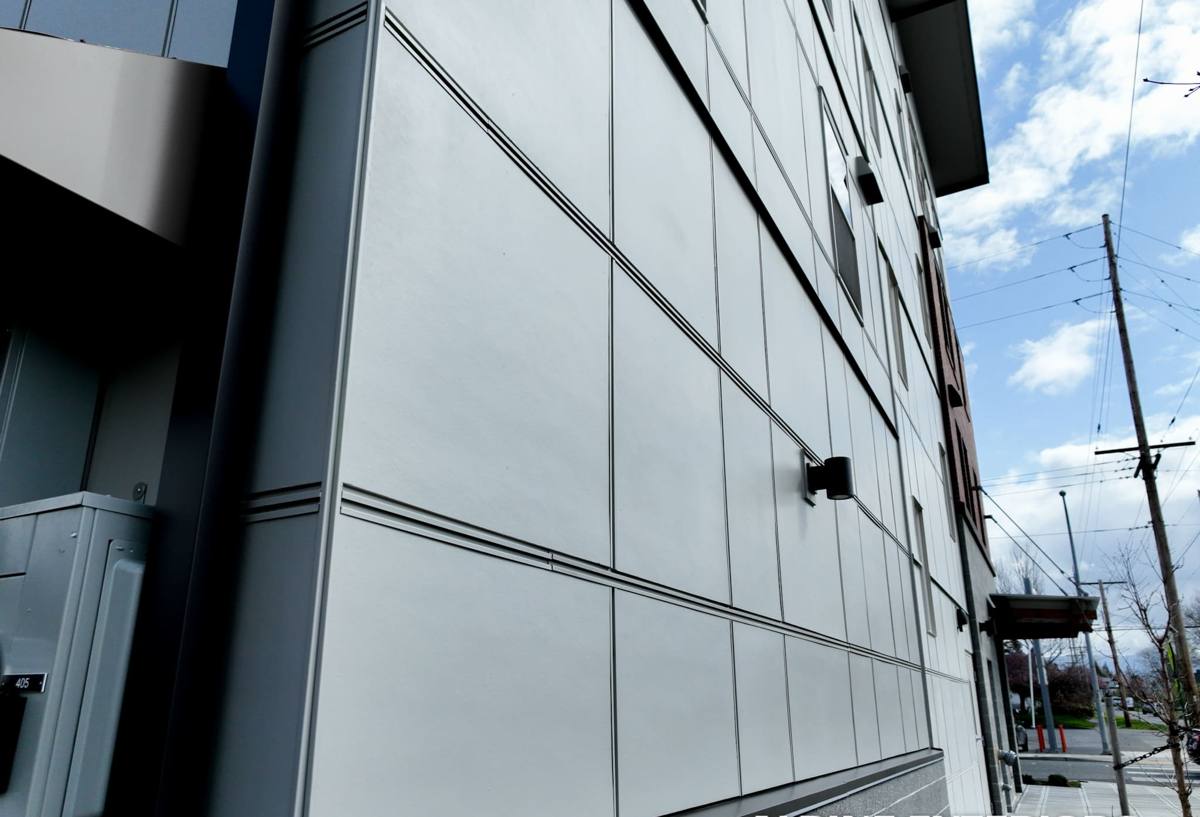
What Everson's Climate Actually Does to Siding
Marine Air and Moisture Load
Whatcom County's proximity to the coast means the air carries more moisture and more airborne salt than homeowners moving here from drier inland regions expect. Salt-laden marine air accelerates corrosion on fasteners and hardware, and it keeps humidity levels elevated even on days without visible rain. Siding materials that rely on paint film alone for protection — or that swell and contract with moisture the way engineered wood products do — take a slow, steady beating from this kind of exposure.
Driving Rain and Wind-Driven Wetting
Rain in the Nooksack valley doesn't always fall straight down. Wind off the valley pushes rain sideways into wall assemblies, which means the water-resistive barrier behind the siding and the way the siding sheds water at laps, seams, and penetrations matter as much as the siding material itself. A product that looks fine on a dry day can still be letting water track behind it if the install details are wrong.
Shade, Tree Cover, and Moss Season
Much of Everson sits close to farmland and stands of evergreen trees, and a lot of homes have at least one wall that rarely sees direct sun. Combine that shade with the region's long wet season and you get an extended window — often stretching from fall through spring — where moss, algae, and mildew have everything they need to take hold on a north-facing or tree-shaded wall. Siding that absorbs moisture gives that growth something to root into; siding that doesn't gives it far less to work with.
Why Fiber Cement Is the Right Material Here
Fiber cement is made from cement, sand, and cellulose fiber, pressed and cured into a dense, stable board. Unlike wood-based siding products, it doesn't swell when it absorbs moisture and it doesn't provide an organic food source for rot fungi. Unlike vinyl, it doesn't warp or go brittle across temperature swings, and it holds paint and factory finishes far longer because the substrate underneath isn't moving. For a valley climate that stays damp for months at a stretch, that dimensional stability is the whole ballgame — it's the difference between siding that still looks tight and flat after fifteen years and siding that's rippled, gapped, or growing moss in the shaded corners.
Fiber cement is also non-combustible, which matters increasingly in Whatcom County as wildfire smoke and ember exposure become a more regular late-summer concern even this far north and west. It won't ignite from a wind-blown ember the way some other siding materials can.
Why We Install Only James Hardie
Fiber cement is a category, not a single product, and the brands in that category aren't interchangeable. We install James Hardie exclusively — not LP SmartSide, not vinyl, not other fiber cement brands like Allura or Cemplank, not primed wood siding — because Hardie's ColorPlus factory finish, its HZ5 climate-engineered product line built specifically for the Pacific Northwest's wet cycle, and its long, transferable warranty are the combination we're willing to stand behind on an Everson roofline. Other fiber cement brands make a reasonable product; we simply don't have the field history with them in this climate that we have with Hardie, and we're not willing to guess on a homeowner's largest exterior investment.
ColorPlus finish is baked on in a controlled factory environment rather than sprayed or brushed on site, which means the color coat is more consistent and holds up longer against the fading and chalking that field-applied paint shows first — especially on walls that get direct afternoon sun for half the year and none for the other half, which describes a lot of Everson lots.
What a Correct Fiber Cement Installation Involves
Water Management Comes First
The siding itself is only part of the system. A correct install starts with a properly lapped water-resistive barrier, correctly flashed windows and doors, and rainscreen or furring where the wall assembly calls for it. In a valley that gets wind-driven rain, skipping or rushing this step is where most siding failures actually start — not with the siding material, but with what's happening behind it.
Fastening and Clearances
Hardie board has specific nailing patterns, fastener types, and minimum clearances from grade, roofing, and decking that are easy to shortcut and hard to notice until years later. Fasteners that corrode from salt-laden air, boards installed tight to grade with no drainage gap, or siding run directly into a roofline without proper flashing all shorten the life of an otherwise good installation.
Cuts, Seams, and Caulking
Every cut edge on a fiber cement board needs to be sealed and painted to match, and every seam needs the right joint treatment — not just caulk smeared over a gap. Done sloppy, these are the spots where moisture gets a foothold first, particularly on the shaded, damp walls common around Everson's tree-lined properties.
Fiber Cement Profile Options
| Profile | Typical Use | Notes for Everson Homes |
|---|---|---|
| HardiePlank lap siding | Most common wall siding, horizontal lap | Sheds wind-driven rain well when lapped and flashed correctly |
| HardiePanel vertical siding | Accent walls, gables, modern facades | Works well paired with lap siding on mixed-style exteriors |
| HardieShingle siding | Accent areas, farmhouse and cottage styles | More seams to detail correctly — worth extra attention on shaded walls |
| HardieTrim boards | Corners, fascia, window and door trim | Matched finish keeps the whole envelope consistent, not just the field siding |
Our Process for Everson Projects
Inspection and Assessment
We start by walking the exterior and identifying which walls are taking the worst of the weather — the sides facing prevailing wind and rain, and any shaded, tree-covered elevations already showing moss or dark staining. That assessment shapes where we pay closest attention to water management details during the install, not just where the old siding looks worn.
Prep and Removal
Old siding comes off, and we check the sheathing and water-resistive barrier underneath for hidden moisture damage before anything new goes up. Covering over a compromised wall assembly with new siding just hides a problem instead of fixing it.
Installation to Manufacturer Spec
Hardie board goes up following the manufacturer's fastening schedule, clearance requirements, and joint treatment — not a generalized approach borrowed from other siding types. This is also where we install rainscreen gapping when the wall assembly calls for it, which is common on Everson homes with significant shade exposure.
Final Walkthrough
Once the job is done, we walk the exterior with the homeowner, check caulking and paint lines up close, and go over basic care so the siding performs the way it's supposed to for the long haul.
What Drives Cost on a Fiber Cement Project
| Factor | Why It Matters |
|---|---|
| Home size and wall complexity | More corners, gables, and cutouts mean more cuts, seams, and labor hours |
| Existing siding removal | Tear-off and disposal add time versus a bare or already-stripped wall |
| Water-resistive barrier and sheathing condition | Hidden rot or moisture damage found during tear-off adds repair scope |
| Profile and trim selection | Shingle-style accents and extensive trim work take more labor than plain lap siding |
| ColorPlus color selection | Factory-finished color doesn't add field painting labor, which helps offset material cost |
Every Everson property is different, and the honest answer on price only comes after we've actually looked at the walls. We're glad to walk a property and give a straight, no-pressure number.
Maintenance in a Wet, Shaded Climate
Fiber cement asks for far less upkeep than wood siding, but "low maintenance" doesn't mean "no maintenance," especially on Everson's shadier, damp-prone walls. A short annual check goes a long way toward getting the full lifespan out of the material.
- Rinse pollen, dirt, and moss spores off the siding once or twice a year, especially on north-facing and tree-shaded walls
- Check caulking at trim joints, window and door edges, and butt seams for cracking or separation
- Keep gutters clear so overflow isn't running directly down the siding face during heavy rain
- Trim back branches and shrubs that are keeping any section of wall shaded and damp longer than the rest of the house
- Look for early moss or algae growth in shaded corners and address it before it spreads across a full wall
- Touch up any chipped or scratched paint promptly to keep the factory finish's protection intact
Why It Matters That We Already Work This Area
A siding crew that already works Whatcom County properties knows which walls in a given valley or river-bottom lot tend to hold moisture longest, how far marine air actually reaches inland on a given site, and where moss takes hold first on a shaded elevation. That's not something a crew coming in from outside the region picks up on the first pass — it comes from doing this work repeatedly in the same climate, on the same kinds of lots, through the same wet seasons. That local familiarity shows up in the small decisions during an install: where extra flashing attention goes, which walls get a closer look at the water-resistive barrier, and how the project is sequenced around Whatcom County's weather rather than against it.
If you're weighing a siding replacement or a new build in Everson, we're happy to walk the property, look at what your walls are actually dealing with, and put together a straightforward, no-pressure estimate — no hard sell, just an honest read on what your home needs.