 Lynden Window
 Why Siding Repair in Deming Takes More Than a Tube of Caulk
Deming sits in a part of Whatcom County where homes take a steady beating from the weather most of the year. A siding repair here isn't just about making a damaged board disappear — it's about understanding why that board failed in the first place and making sure the fix actually holds up through the next several wet seasons. A patch that looks fine on installation day but ignores what's happening behind the surface is a repair that fails again, usually within a year or two.
That's the gap between a quick cosmetic fix and a repair that's actually correct. Salt-laden marine air moves through this part of the county, driving rain regularly gets pushed sideways into walls during fall and winter storms, and a long moss season keeps organic growth active on shaded and north-facing walls for much of the year. Any one of these on its own is manageable. Together, over years, they're what turns a small siding problem into a bigger one if the repair doesn't address the actual cause.
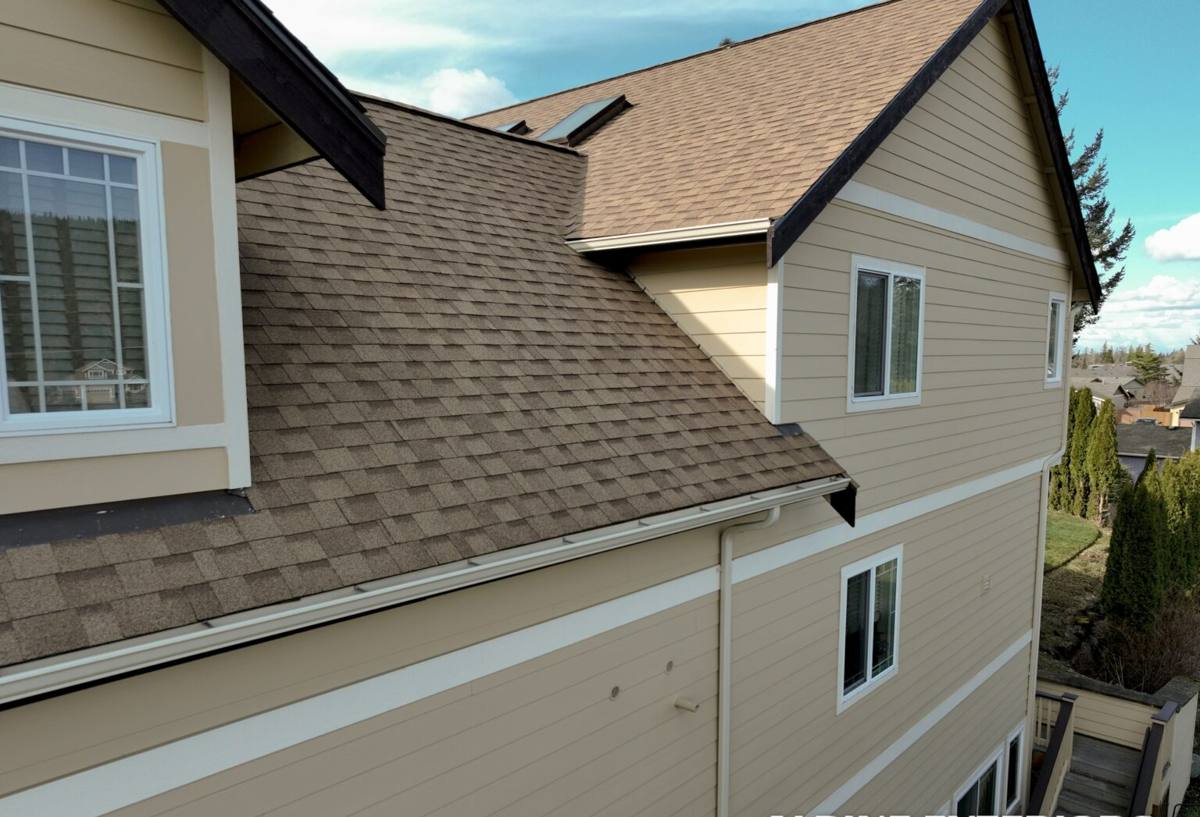
What This Climate Actually Does to Siding
Salt Air
Salt-carrying air accelerates corrosion in fasteners, flashing, and any exposed metal trim around the siding. A corroding nail or staple loses its grip over time and can create a small gap right where it penetrates the siding — a direct path for water to start working its way in behind the surface, often long before anything looks visibly wrong from the ground.
Driving Rain
Straight-down rain is easy for almost any siding to shed. Wind-driven rain isn't, because it hits walls at an angle and gets forced into laps, seams, and trim lines that were only ever designed to handle water moving downward. Whatcom County sees this kind of weather regularly, and walls that face the prevailing wind tend to show wear — cracked caulk joints, lifted trim, staining at seams — well before walls on the sheltered side of the same house.
A Long Moss Season
Mild, damp conditions keep moss and mildew active on shaded and north-facing siding for most of the year in this area. Moss doesn't just look bad — it holds moisture against the siding surface far longer than it would otherwise sit there, which extends every wet-dry cycle the material goes through and speeds up whatever damage is already underway.
Signs Your Siding Needs Repair
Some damage is obvious. Some isn't, and that's usually the kind that costs more if it's left alone. Before calling anyone, it's worth doing a slow walk around the house and looking specifically for these things:
- Cracked, split, or visibly warped boards, especially near corners and window trim
- Soft or spongy spots when you press on the siding with your hand
- Peeling, bubbling, or chalky paint in one localized area rather than across the whole house
- Dark staining or streaking running down from a seam, joint, or piece of trim
- Gaps opening up at corner boards, window trim, or where two sections of siding meet
- Fasteners that are rusted, backing out, or missing entirely
- Moss or mildew that keeps coming back in the same spot no matter how often it's cleaned
- An interior wall in that area that feels unusually damp, cool, or has a musty smell
Any single item on that list might be nothing more than routine wear. Two or three showing up in the same area of the house is a good reason to have it looked at before the next storm season.
What Happens When a Repair Is Done Wrong
Siding repair is one of those jobs that looks simple from the outside and isn't. A board gets swapped, a bead of caulk goes around the edges, and the wall looks fine again — for a while. The problem is that a lot of siding damage isn't actually caused by the visible board failing on its own. It's caused by something behind it: a gap in the water-resistive barrier, a piece of flashing that was never installed correctly, or a seam that's been letting water in slowly for years. Replace the board without addressing that underlying issue, and the new board is sitting in the exact same failing conditions as the one it replaced.
This is also where mismatched repairs show up. A patched section using a different material, a different profile, or an unweathered piece of siding next to years-old boards stands out visually and, more importantly, can behave differently than the surrounding material — expanding, contracting, or absorbing moisture at a different rate. That mismatch is often where the next round of problems starts.
What a Correct Siding Repair Actually Involves
Diagnosing the Cause First
Before anything gets replaced, the damaged area needs an honest look at why it failed. That means checking the condition of the material immediately around the damage, looking at how water is or isn't draining away from that section of wall, and checking whether flashing, trim, and caulk joints nearby are doing their job. Repairing the visible symptom without this step is the single biggest reason patch jobs fail early.
Repairing the Assembly, Not Just the Surface
If water has been getting behind the siding, the water-resistive barrier and any flashing in that section may need attention too, not just the siding itself. A repair that only replaces the outer board while leaving a compromised barrier underneath is solving the part of the problem you can see and leaving the part you can't.
Matching Material and Finish
Where the surrounding siding is in good condition, a well-executed repair matches the profile, exposure, and finish closely enough that it doesn't stand out as a patch. Where it isn't practical to get a clean match — because the material has been discontinued, or the surrounding siding is too weathered to match convincingly — that's worth saying honestly upfront rather than promising a seamless result that isn't realistic.
Repair or Replace? How We Help You Decide
Not every damaged section needs to become a full siding replacement, and not every repair is worth doing if the underlying material is on its way out anyway. The table below covers how we generally think through that call — every house is different, and a proper in-person look always comes before a recommendation either way.
| What We Find | Usually Points To Repair | Usually Points To Replacement |
|---|---|---|
| Damage location | Isolated to one or two boards or a single wall section | Similar damage showing up across multiple walls |
| Underlying cause | A specific, fixable issue — a failed caulk joint, a loose piece of trim | Widespread wear tied to the material's age or general condition |
| Material condition nearby | Surrounding siding is sound and holding paint or finish well | Surrounding siding is cupping, swelling, or delaminating at edges |
| Sheathing behind the siding | Dry, solid, no signs of rot on inspection | Soft, stained, or showing rot when probed |
| Age of the siding | Well within its expected service life | At or beyond what the material is typically good for |
Why We Repair and Install Only James Hardie Fiber Cement
We get called out to look at all kinds of siding in this area — vinyl, cedar, primed spruce, engineered wood, and fiber cement among them — and we'll assess and repair what's already on your house honestly. But when a repair turns into "this section really needs to be replaced," James Hardie fiber cement is what we install, and we don't install vinyl, LP SmartSide, Cemplank, Allura, primed spruce, or cedar as an alternative.
That's a standard we hold to because of how Hardie's fiber cement behaves over time in exactly the conditions Deming deals with. It's non-combustible, it's dimensionally stable rather than swelling and shrinking with moisture the way wood-based products do, and it comes with a factory-applied ColorPlus finish engineered to hold color and resist the kind of fading that comes from years of damp, low-light weather. James Hardie also builds its HZ5 product line specifically for climates like the Pacific Northwest, and the transferable warranty behind it is strong when the installation is done to spec — which matters more here than in a drier climate, because installation quality is what determines how well any siding actually performs against driving rain and prolonged dampness. When a full replacement is the right call, we think Hardie gives you the best long-term outcome for what this area puts a house through.
Our Siding Repair Process
- A walk-through of the damaged area and a look at the wall assembly behind it where the damage warrants it
- An honest assessment of whether the fix is a targeted repair or whether replacement of that section makes more sense long-term
- A written estimate before any work starts, with the reasoning behind the recommendation explained plainly
- Repair or replacement of the affected section, addressing the underlying cause as well as the visible damage
- A final check of caulking, flashing, and trim in the repaired area to confirm water is draining the way it should
We don't pad repairs into bigger jobs than they need to be, and we don't recommend a patch when the underlying problem will just resurface somewhere else on the same wall next season.
Why a Crew That Already Works Deming Matters
A lot of siding repair problems in this area trace back to work that was done without accounting for how this specific climate behaves — flashing details that would hold up fine somewhere drier, caulk joints that weren't built for this much wind-driven rain, or a repair that didn't consider how long moss stays active on a shaded wall here. Crews that already work regularly in and around Deming and the rest of Whatcom County have seen these failure patterns repeat across different houses, which means the diagnosis on your specific repair tends to be faster and more accurate the first time. That familiarity also matters for response time — when a storm exposes a weak point in your siding, having a crew nearby that already knows the area is the difference between a quick fix and a problem that sits exposed through another round of bad weather.
If you're dealing with damaged siding at your Deming property, or you're just not sure whether what you're seeing is a simple fix or something more, we're happy to take a look. Reach out for a free, no-pressure estimate — there's a form below to get started.