 Lynden Window
 Roofing in Deming Isn't the Same Job as Roofing in Town
Deming sits back from the coast, tucked along the Nooksack River corridor with the North Cascades and Mt. Baker foothills rising behind it. That location shapes what a roof deals with day to day. Properties here tend to sit on larger, tree-covered lots, which means more shade, slower drying times after rain, and more organic debris landing on the roof deck than a comparable house on an open lot closer to downtown Lynden. Add in the broader Whatcom County pattern of long wet seasons and marine-influenced air moving in off the coast, and you get roofs that stay damp longer than most manufacturers' warranty assumptions account for.
None of this means Deming roofs fail faster because something is wrong with them. It means a roof built or replaced without accounting for the shade, the moss, and the driving rain typical of this part of Whatcom County will show its age early — curling shingles, soft decking, and moss mats that hold moisture against the roof surface year-round. A roof replacement done right here starts with respecting those conditions, not just swapping old shingles for new ones.
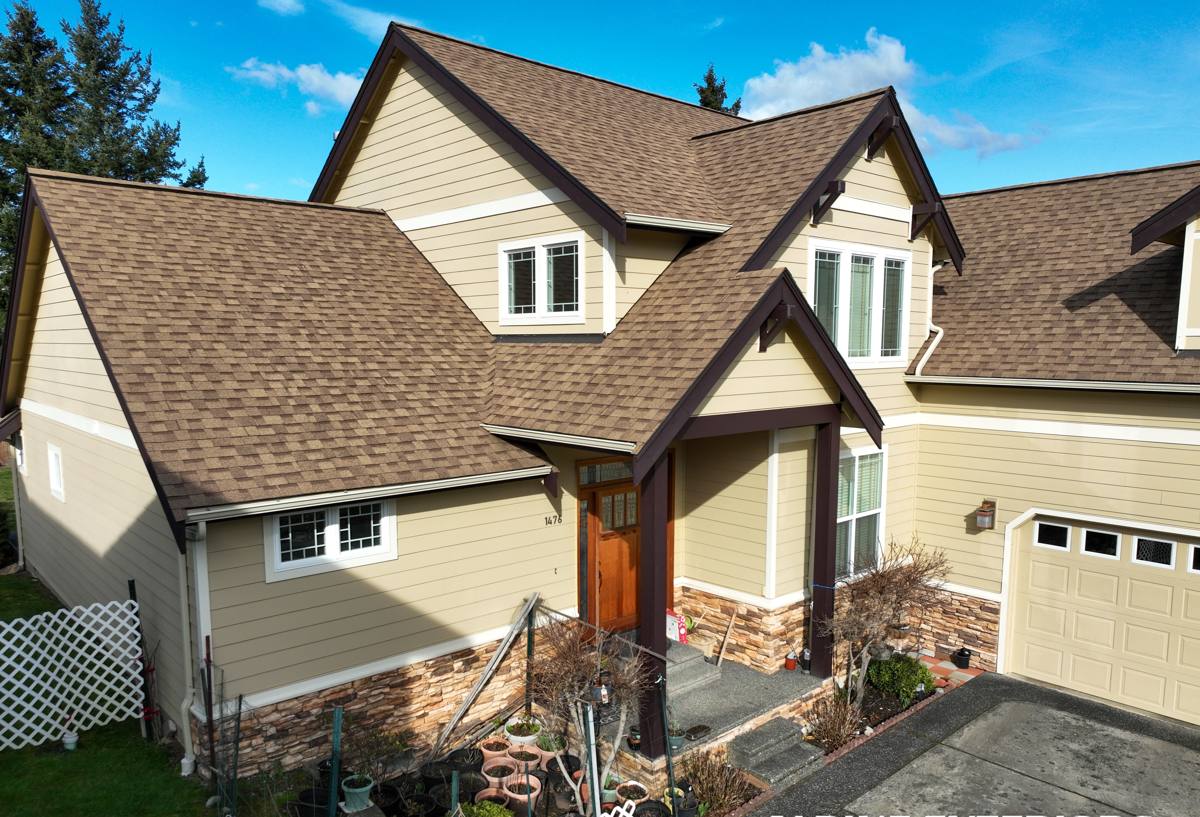
Signs a Deming Roof Needs Replacement, Not Another Patch
Repairs make sense when a roof has isolated damage and years of life left. Replacement makes sense when the roof's underlying materials — decking, underlayment, flashing — are failing as a system. In a heavily shaded, moss-prone area like Deming, that tipping point often arrives a few years earlier than the shingle manufacturer's rated lifespan would suggest.
- Moss or algae growth that returns within months of cleaning, especially on north-facing slopes and areas under tree cover
- Granule loss heavy enough that you're finding shingle grit in gutters and downspouts every season
- Shingles that are cupping, curling at the edges, or cracking when walked on
- Soft or spongy spots on the roof deck, usually found during a repair or gutter cleaning
- Daylight visible through the attic roof boards, or damp insulation near the eaves
- Repeated leaks around the same valley, chimney, or vent flashing despite prior patch jobs
- A roof approaching or past 20-25 years old with three-tab shingles, or 15-20 years with prior moss damage
If you're only seeing one or two of these, a repair or a moss treatment may still buy you time. If you're seeing several at once, that's usually the underlayment and decking telling you the shingles were never the real problem.
What a Correct Roof Replacement Actually Involves
It Starts Below the Shingles
The shingles are the part everyone sees, but they're the last layer installed, not the most important one. A proper tear-off removes the old roofing down to the deck so it can be inspected directly — you cannot properly evaluate decking condition, especially in a shaded, moisture-heavy setting like Deming, by roofing over it. Any soft, delaminated, or water-stained sheathing gets replaced before anything else goes down.
Underlayment and Ice-and-Water Protection
Over the deck goes a synthetic underlayment, with self-adhering ice-and-water shield membrane at the eaves, valleys, and around roof penetrations — the spots where wind-driven rain and ice dams do the most damage in a Whatcom County winter. This layer is cheap insurance compared to what a leak at a valley or chimney flashing costs to fix once it's reached the framing.
Flashing and Ventilation
New flashing at chimneys, skylights, walls, and roof-to-wall transitions is not optional on a proper replacement — reusing old flashing to save time is one of the more common shortcuts that leads to a callback within a year or two. Ridge and soffit ventilation get checked and corrected so the attic can actually exchange air; poor ventilation traps moisture under the deck, which speeds up rot and moss regrowth from underneath, not just above.
Final Layer
Only after decking, underlayment, flashing, and ventilation are handled does the finish material — architectural shingle, metal, or another system — go down, followed by ridge cap and a final inspection of every seam, nail line, and penetration.
Choosing a Roofing Material for a Deming Property
There's no single "best" roofing material — the right choice depends on how much shade and tree debris your specific lot deals with, your budget, and how long you plan to own the home. Here's how the common options compare for a shaded, high-moisture setting like Deming.
| Material | Moss/Algae Resistance | Typical Lifespan | Maintenance |
|---|---|---|---|
| Standard 3-tab asphalt shingle | Lower — flat profile holds moisture | 15-20 years | Regular moss treatment needed in shaded areas |
| Architectural (laminate) asphalt shingle | Moderate; better with algae-resistant granules | 25-30 years | Periodic cleaning, less frequent than 3-tab |
| Metal (standing seam or panel) | High — sheds moisture, little surface for growth to grip | 40-50+ years | Low; occasional debris clearing |
| Wood shake | Low in shaded settings without diligent upkeep | Varies widely with maintenance | High — not something we recommend for heavily shaded Deming lots |
For most Deming homes under significant tree cover, we steer customers toward algae-resistant architectural shingles or metal roofing. It's not that other materials can't work — it's that products which hold moisture against their surface fight an uphill battle against the shade and slow drying times common on wooded river-valley lots, and we'd rather set that expectation honestly up front than sell a roof that needs babying every year.
Ventilation and Moisture: Where Most Roof Problems Actually Start
A huge share of premature roof failures we see in this area trace back to moisture that never had a way out, not to the shingles themselves. Two things matter most:
Balanced Attic Airflow
Intake at the soffits and exhaust at the ridge need to work together. If intake is blocked — often by insulation stuffed too far into the eaves — the ridge vent pulls conditioned air from inside the house instead of fresh air from outside, and moisture ends up condensing on the underside of the deck. On a shaded lot where the roof surface itself is already slow to dry, that internal moisture load makes things worse, not better.
Protecting the Vulnerable Spots
Valleys, chimney bases, skylight curbs, and eaves are where water concentrates and where ice can form during Whatcom County's cold snaps. These are exactly the areas where ice-and-water membrane and correctly lapped flashing matter most — it's a small percentage of the roof's total area but accounts for a large share of the leaks we get called out to fix on older roofs.
Our Process, Start to Finish
1. Inspection and Estimate
We walk the roof and the attic, not just look at it from the ground. That means checking decking condition, ventilation, flashing points, and how much moss or shade exposure the specific slopes are dealing with, so the estimate reflects what your roof actually needs instead of a generic package.
2. Tear-Off and Deck Prep
Old roofing comes off down to the deck, damaged sheathing gets replaced, and the deck is cleaned and dried before anything new goes on.
3. Underlayment, Flashing, and Ventilation
Ice-and-water shield, synthetic underlayment, new flashing, and corrected ventilation go in before the finish material — the part of the job that determines whether the roof holds up through its first few wet seasons.
4. Installation
Shingles, metal panels, or your chosen material are installed to manufacturer specifications, with attention to nailing patterns and exposure — details that affect wind resistance and warranty validity, and that get rushed on jobs priced to move fast.
5. Cleanup and Walkthrough
We clear the site of old materials, run a magnetic sweep for stray nails around the house and driveway, and walk the finished roof with you before we consider the job done.
Living With a New Roof in a Shaded, Wet Climate
A roof replacement resets the clock, but it doesn't remove the conditions that wore out the last one. A few habits keep a new Deming roof performing closer to its full rated life:
- Keep overhanging branches trimmed back where practical — less debris and shade means faster drying and less moss pressure
- Clear gutters and valleys of needles and leaves at least twice a year, more often on heavily wooded lots
- Have moss growth treated early rather than left to mat and hold moisture against the shingles
- Check attic ventilation isn't blocked after any insulation work or other attic projects
- Schedule a roof check after major windstorms, which are common through the fall and winter in this part of Whatcom County
Why a Crew That Already Works in Deming Makes a Difference
Roofing crews that mostly work in drier, more open parts of the county sometimes underestimate how much shade and tree cover change a roof's needs — they'll spec the same materials and ventilation approach they'd use anywhere else. Working this specific area regularly means knowing which slopes on a wooded Deming lot hold moss longest, how rural driveway and access conditions affect equipment staging, and what local permitting through Whatcom County actually requires before work starts. It also means we're not guessing at how a roof here holds up over time — we're the ones who get called back if it doesn't, which keeps us honest about what materials and details are worth the investment.
If you're weighing a repair against a full replacement, or just want an honest read on where your roof stands, we're glad to take a look. Reach out for a free, no-pressure estimate using the form below.