 Lynden Window
 Laurel's Climate Is Hard on Decks — Here's Why
Laurel sits in a stretch of Whatcom County that gets the full weather package: moisture-laden air off the Salish Sea, long stretches of driving rain through fall and winter, and short, weak winter daylight that keeps shaded surfaces damp for weeks at a time. Add in the salt air that drifts inland from the coast and you've got conditions that quietly attack wood, fasteners, and even some composite products faster than most manufacturers' literature assumes.
A deck built for a drier inland climate, or built without attention to drainage and ventilation underneath, tends to show its age in this area within a handful of years — not decades. Soft spots near ledger boards, corroded fasteners, and a green film of moss on anything that doesn't get direct sun are the most common complaints we hear from homeowners in and around Laurel. None of that is inevitable. It's a sign the original build didn't account for what this specific climate does to a structure over time.
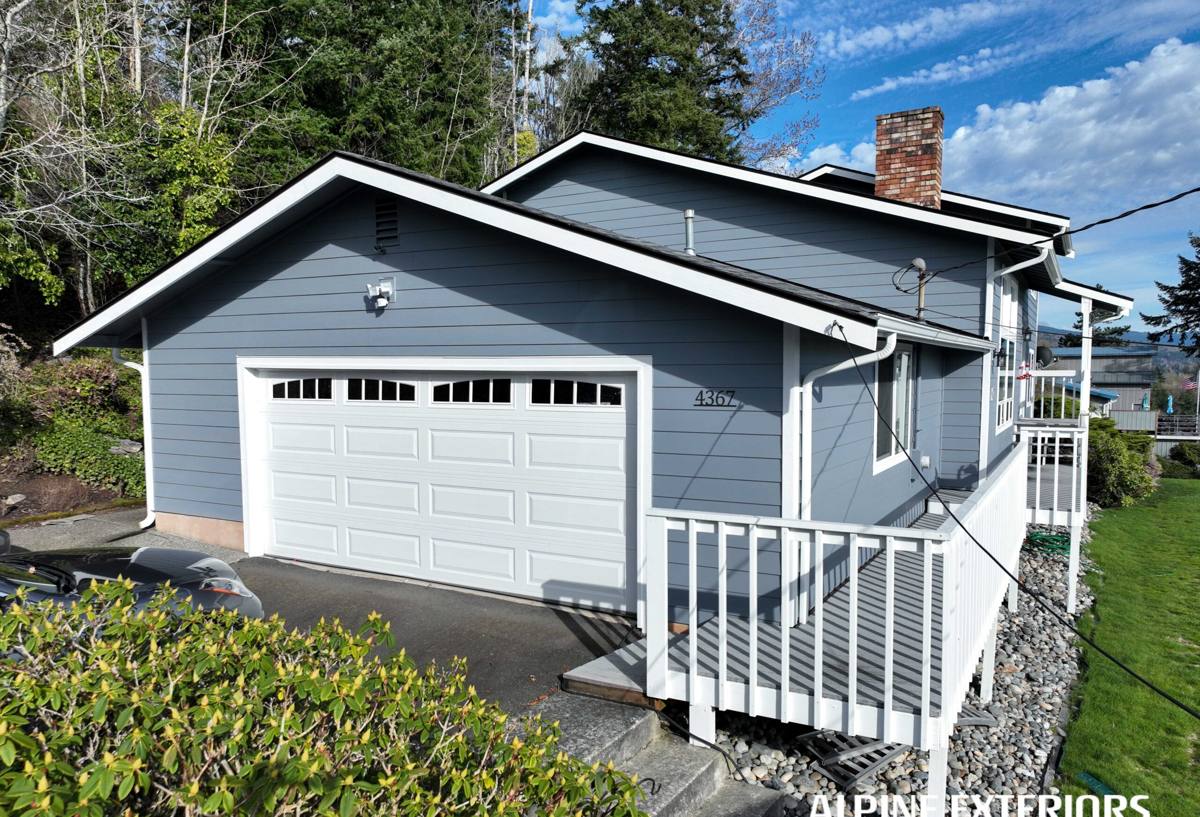
Signs Your Laurel Deck Needs Replacement, Not Repair
Not every tired-looking deck needs to come out. But there's a point where patching boards is just delaying an inevitable, more expensive fix — and in some cases, patching over a structural problem is a safety risk. Replacement is usually the right call when:
- The frame or ledger board is soft, spongy, or shows rot when probed with a screwdriver
- Fasteners are rusted, bleeding stains into the wood, or backing out
- The deck was never properly flashed where it meets the house, and you can see water staining on the siding or rim joist below
- Footings have shifted, heaved, or settled unevenly, causing the deck to feel bouncy or slope
- Moss and algae keep returning within weeks of cleaning, meaning the surface is staying damp longer than it should
- The deck predates current guardrail and stair-baluster spacing standards and would need a full rebuild to bring up to code anyway
If it's just surface graying or a few worn boards on an otherwise sound frame, a repair or resurfacing may be all that's needed. We'll tell you honestly which category your deck falls into rather than push a full tear-out you don't need.
What a Correct Deck Replacement Involves
A deck is only as good as the parts you can't see once it's finished. Most deck failures in this climate start below the decking boards, not on top of them.
Framing and Ledger Attachment
Where the deck attaches to the house is the single most important detail on the whole project. It needs proper flashing that sheds water away from the house framing, correct structural fasteners (not just deck screws) rated for the load, and a gap or flashing detail that keeps water from wicking into the rim joist. This is the area we find neglected most often on older builds, and it's usually the source of hidden rot.
Drainage and Ventilation
Decks that trap moisture underneath — low clearance to grade, no slope away from the house, dense landscaping crowding the perimeter — stay wet longer after every rain event and grow moss and mildew faster. A correct rebuild accounts for grading, clearance, and airflow underneath so the structure actually gets a chance to dry out between storms.
Fasteners and Hardware
Salt-air corrosion is real here, even set back from the water. Standard galvanized hardware can start showing rust streaks within a few seasons. We use fasteners and structural connectors rated for coastal/high-moisture exposure — typically stainless steel or heavy-duty coated hardware matched to the decking material — because replacing a deck's structure due to failed fasteners is far more expensive than spending correctly on hardware the first time.
Choosing Decking Material for Whatcom County Weather
There's no single "best" decking material — there's a best fit for your budget, your maintenance appetite, and how much sun versus shade your deck actually gets. Here's how the common options hold up under Laurel's conditions specifically:
| Material | Moss/Moisture Behavior | Maintenance | Typical Lifespan | Relative Cost |
|---|---|---|---|---|
| Pressure-treated wood | Absorbs moisture, needs regular sealing to resist moss and graying | Annual cleaning and periodic re-staining/sealing | 10–15 years with upkeep | Lowest upfront |
| Cedar | Naturally rot-resistant but still needs sealing in shaded, damp spots | Regular sealing to maintain color and resistance | 15–20 years with upkeep | Mid |
| Composite | Won't rot, but can still grow surface moss/algae in shaded areas without cleaning | Periodic washing, no sealing/staining | 25+ years | Mid to high |
| PVC/capped composite | Most resistant to moisture absorption; still benefits from occasional cleaning in shaded spots | Lowest — occasional washing | 25–30+ years | Highest upfront |
For decks in heavily shaded or north-facing spots common on treed Laurel lots, we lean toward recommending composite or capped-composite boards, simply because moss and algae take hold faster on organic wood surfaces that don't get direct sun. For decks with good sun exposure, a well-maintained wood deck can still be a smart, budget-friendly choice.
Permits, Code, and Safety Basics
Deck replacement projects above certain heights or involving structural changes typically require a permit through the local building jurisdiction, and guardrail height, baluster spacing, and stair details all need to meet current residential code — not whatever standard was in place when an older deck was originally built. Footing depth and design also need to account for local frost and soil conditions rather than a generic spec pulled off the internet.
We handle the permit and inspection process as part of the job rather than leaving it to the homeowner to sort out. If your existing deck predates current code, that's normal — it just means the replacement is also your opportunity to bring the structure up to current safety standards in the same project.
Our Deck Replacement Process
We keep the process straightforward and communicate clearly at each stage:
- On-site assessment — we inspect the existing structure, ledger, footings, and framing to determine what's salvageable versus what needs full replacement
- Written estimate — a clear scope covering materials, structural work, permit handling, and timeline, with honest options at different price points
- Tear-out — removal of the old deck, with attention to what the demolition reveals about the house's rim joist and siding condition underneath
- Framing and flashing — new or reinforced structure, correctly flashed ledger attachment, and drainage/grading corrections where needed
- Decking, railings, and stairs — installed to current code with fasteners and hardware matched to your chosen material and this climate
- Final walkthrough — we go over care and maintenance specific to the material you chose before we consider the job done
Keeping Your New Deck Ahead of Moss and Moisture
A properly built deck still needs some seasonal attention in this climate. A few habits go a long way toward protecting the investment:
- Sweep debris and fallen leaves off the deck regularly through fall — trapped organic matter holds moisture and feeds moss
- Wash the surface at least once a year, more often in heavily shaded areas, to remove early moss and algae growth before it takes hold
- Keep gutters and downspouts clear so overflow isn't draining directly onto or under the deck
- Trim back landscaping that's crowding the deck perimeter and blocking airflow underneath
- Reseal wood decking on the schedule recommended for your specific product — don't wait until it's visibly gray and worn
- Check fasteners and railings annually for early rust or looseness, especially after a hard winter
Why Hiring a Crew That Already Works in Laurel Matters
Deck-building fundamentals don't change from town to town, but the details that make a deck last do. A crew that regularly works in the Laurel and greater Lynden area already knows which lots hold moisture longer, which orientations fight moss year-round, and how the region's rain patterns affect scheduling and curing times for finishes and sealants. That familiarity means fewer surprises during the job and a better match between the materials we recommend and what actually performs well on your specific property.
It also means we're not guessing at local permit requirements or showing up once and disappearing. A deck replacement is a structural investment in your home — it deserves a crew that treats the parts you can't see with as much care as the parts you can.
If you're weighing repair versus replacement, or just want an honest read on what your current deck needs, we're happy to take a look. Reach out for a free, no-pressure estimate using the form below.