 Lynden Window
 Deck Replacement Built for Aldergrove's Weather, Not Just Its Looks
A deck in Aldergrove takes a beating that a lot of homeowners underestimate until the boards start to sag or the railings start to wobble. Between salt-tinged air moving in off the Salish Sea, long stretches of driving rain, and a moss season that can run from fall clear into spring, wood and hardware out here age faster than the same materials would in a drier climate. We build and replace decks with that reality in mind, not with a one-size-fits-all approach borrowed from a drier region.
Deck replacement is different from deck repair. Repair patches what's failing today. Replacement means the structure gets a fresh start from the framing up, so you're not chasing the same rot or the same soft spot again in three years. This page covers what that actually involves for a home in the Aldergrove area, and how we approach the job from first look to final walkthrough.
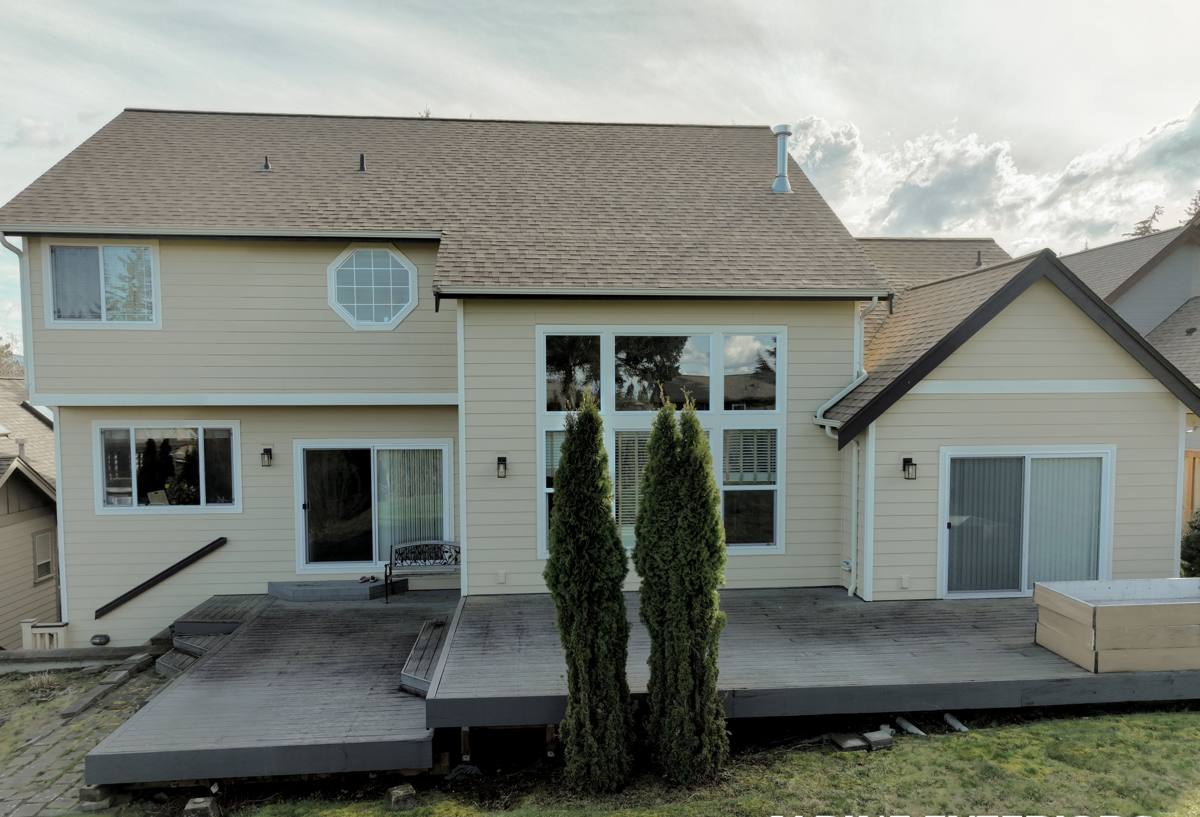
Why Decks in This Area Fail Sooner Than People Expect
Most deck failures aren't dramatic. They're slow. Moisture gets into a joint, a fastener starts to corrode, moss takes hold on a shaded corner of decking and holds water against the wood underneath. By the time it's visible, the damage underneath is usually further along than it looks from the surface.
The Three Culprits
- Salt-influenced air: even away from open coastline, salt-laden moisture in the Fraser Valley and Whatcom County corridor accelerates corrosion on fasteners, brackets, and any exposed metal hardware.
- Driving rain: wind-driven rain finds its way into ledger board connections, stair stringer joints, and any spot where flashing was skipped or installed poorly the first time.
- Extended moss season: shaded, north-facing, and low-airflow sections of a deck stay damp for months at a time, and moss and algae growth trap that moisture against the decking surface instead of letting it dry.
None of these are exotic problems. They're the same forces every deck in the region deals with. The difference between a deck that lasts and one that doesn't usually comes down to whether it was built to shed water in the first place.
Signs a Deck Needs Full Replacement, Not a Patch
Not every deck problem calls for a total rebuild. But there are signs that mean repair is just delaying the inevitable, and often at a higher eventual cost.
- Soft or spongy spots in the decking that give under foot pressure
- Visible rot or dark staining at the ledger board where the deck meets the house
- Railing posts that wobble or have any lateral give when pushed
- Rust streaks running down from joist hangers or fasteners
- Stairs that feel bouncy or uneven from step to step
- A deck more than 20-25 years old that has never had the substructure inspected
- Persistent moss or algae growth that keeps returning no matter how often it's cleaned
If you're seeing two or more of these, it's worth having someone look at the framing underneath before deciding between repair and replacement. A deck that looks fine on the surface can still have a compromised ledger connection or rotted joists doing the real structural work.
What a Correct Deck Replacement Actually Involves
The Substructure Comes First
The decking boards are the part everyone sees, but the framing underneath is what determines whether the deck is safe and how long it lasts. A proper replacement means checking and, where needed, replacing the ledger board attachment, joists, beams, and footings, not just laying new boards over an old frame. The ledger connection especially deserves attention here, since it's the single most common failure point on decks attached to a house in wet climates.
Flashing and Water Management
Where the deck meets the house, proper flashing keeps water from tracking behind the siding and into the wall assembly. This is one of the most skipped steps on older or budget deck builds, and it's usually invisible until there's already damage. Given how much rain this area sees, we treat flashing as non-negotiable, not optional.
Decking Material
Material choice matters more here than in a drier climate, because moisture exposure and moss growth affect wood, composite, and PVC decking differently.
| Material | Moisture Behavior | Maintenance Needs | Notes for This Climate |
|---|---|---|---|
| Pressure-treated wood | Absorbs and releases moisture; prone to warping and checking over time | Needs regular sealing/staining, moss cleaning | Lowest upfront cost; shortest lifespan without upkeep |
| Cedar | Naturally rot-resistant but still absorbs moisture | Periodic sealing to maintain appearance and resistance | Good option where a natural wood look matters |
| Composite decking | Resists rot and absorption; surface moss/algae still needs cleaning | Low; occasional washing | Strong fit for damp, shaded yards common in this area |
| PVC decking | Fully moisture-resistant; won't absorb water into the material | Lowest; washing only | Best moisture performance, higher upfront cost |
Fasteners and Hardware
Given how much salt-influenced moisture is in the air here, we use fasteners and structural hardware rated for exterior, corrosion-prone conditions, not standard interior-grade hardware. This is a small line item on a quote but a major factor in how long the connections underneath your decking actually hold.
How Our Deck Replacement Process Works
- On-site assessment: we inspect the existing deck, including getting under it where possible, to check ledger condition, joists, footings, and drainage.
- Scope and quote: you get a clear breakdown of what's being replaced, what materials are proposed, and why, in plain language.
- Permitting check: we confirm what's required for your specific property before work starts, since requirements vary by structure size and attachment method.
- Tear-off: the old deck is removed down to whatever structure is being reused, if any, or fully to grade if it's a full rebuild.
- Framing and flashing: new or repaired substructure goes in first, including proper flashing at the house connection.
- Decking and railings: your chosen material is installed with corrosion-rated fasteners and correct spacing for drainage and expansion.
- Final walkthrough: we go over the finished deck with you before calling the job done.
We don't skip steps to save a day of labor. A deck replacement that cuts corners on framing or flashing tends to show it within a few wet seasons, and by then the fix costs more than doing it right the first time would have.
Permits and Building Considerations for Aldergrove Homes
Aldergrove sits close to the border, and homeowners here sometimes assume permitting works the same as it does on the Washington side. It doesn't. Deck size, height above grade, and attachment to the home can all trigger permit requirements under local building rules, and those rules are set by the local authority having jurisdiction over your property, not by us. Part of our job on any replacement is making sure you know what applies to your specific project before work begins, so there are no surprises with inspections later. We're upfront when a project needs sign-off from your local building department, and we won't cut that corner to move faster.
What Affects the Cost of a Deck Replacement
There's no honest flat price for deck replacement, because the variables genuinely change the scope of work. Here's what actually drives cost up or down.
| Cost Factor | Why It Matters |
|---|---|
| Deck size and shape | More square footage and more corners/angles mean more material and labor |
| Substructure condition | Rotted joists, footings, or ledger connections add repair scope beyond surface decking |
| Decking material chosen | Pressure-treated wood, cedar, composite, and PVC all sit at different price points |
| Height and stairs | Elevated decks with stairs and additional railing require more structural work |
| Railing style | Basic wood rail versus cable, glass, or composite rail systems affects both material and labor cost |
| Site access | Tight yards or limited equipment access can add labor time for demolition and material handling |
We'd rather walk your specific deck and give you real numbers than throw out a broad estimate that doesn't hold up once we see what's underneath.
Keeping a New Deck Ahead of Moss Season
A correctly built deck still needs some seasonal attention in this climate, especially through the long wet stretch when moss and algae growth is at its worst. A little routine care goes a long way toward protecting the investment.
- Sweep leaves and debris off the deck surface regularly through fall, since trapped organic material holds moisture against the boards
- Rinse or wash the deck surface a couple of times a year to knock back early moss and algae growth before it takes hold
- Check that gaps between boards stay clear so water can drain through rather than pooling
- Inspect railings and stair connections once a year for any looseness
- Reseal or restain wood decking on the schedule appropriate to that material; composite and PVC don't need this but still benefit from periodic washing
- Keep an eye on the ledger board area at the house connection, since that's the first place moisture problems tend to show up again
Why It Matters to Hire a Crew That Already Works in Aldergrove
A deck replacement is structural work happening a few feet from your home's foundation and, in most cases, physically attached to it. Getting the ledger connection, flashing, and framing right isn't optional detail work, it's what keeps water out of your house and keeps the deck safe to stand on. A crew that regularly works homes in and around Aldergrove and greater Whatcom County has already seen how the local combination of salt air, driving rain, and a stubborn moss season plays out on real decks over real years, not just in a general climate guide. That local experience shows up in the material choices we recommend, the flashing details we don't skip, and the honest read we give you on whether a section of your deck needs replacing or can be saved.
If your deck is showing its age or you're just planning ahead, we're happy to take a look and give you a straight assessment. Use the form below to request a free, no-pressure estimate, and we'll walk you through exactly what your deck needs and why.