 Lynden Window
 Blaine's Coastline Is Hard on Decks
A deck in Blaine takes a beating that a deck twenty miles inland simply doesn't. The salt-laden air coming off the water accelerates corrosion on anything metal — fasteners, brackets, railing hardware — long before it would fail in a drier, less coastal setting. Add in driving rain that comes sideways during Whatcom County's fall and winter storms, and water gets forced into joints and seams that a straight-down rain would never reach. Then there's moss season, which in this part of Washington isn't really a season at all — it's most of the year. Moss and algae hold moisture against wood surfaces and framing, and moisture held in place is what turns a cosmetic problem into a structural one.
None of this means a deck in Blaine is doomed. It means the repair work has to account for what's actually attacking the structure, not just patch what's visible on top. That's the difference between a repair that lasts a few seasons and one that lasts the life of the deck.
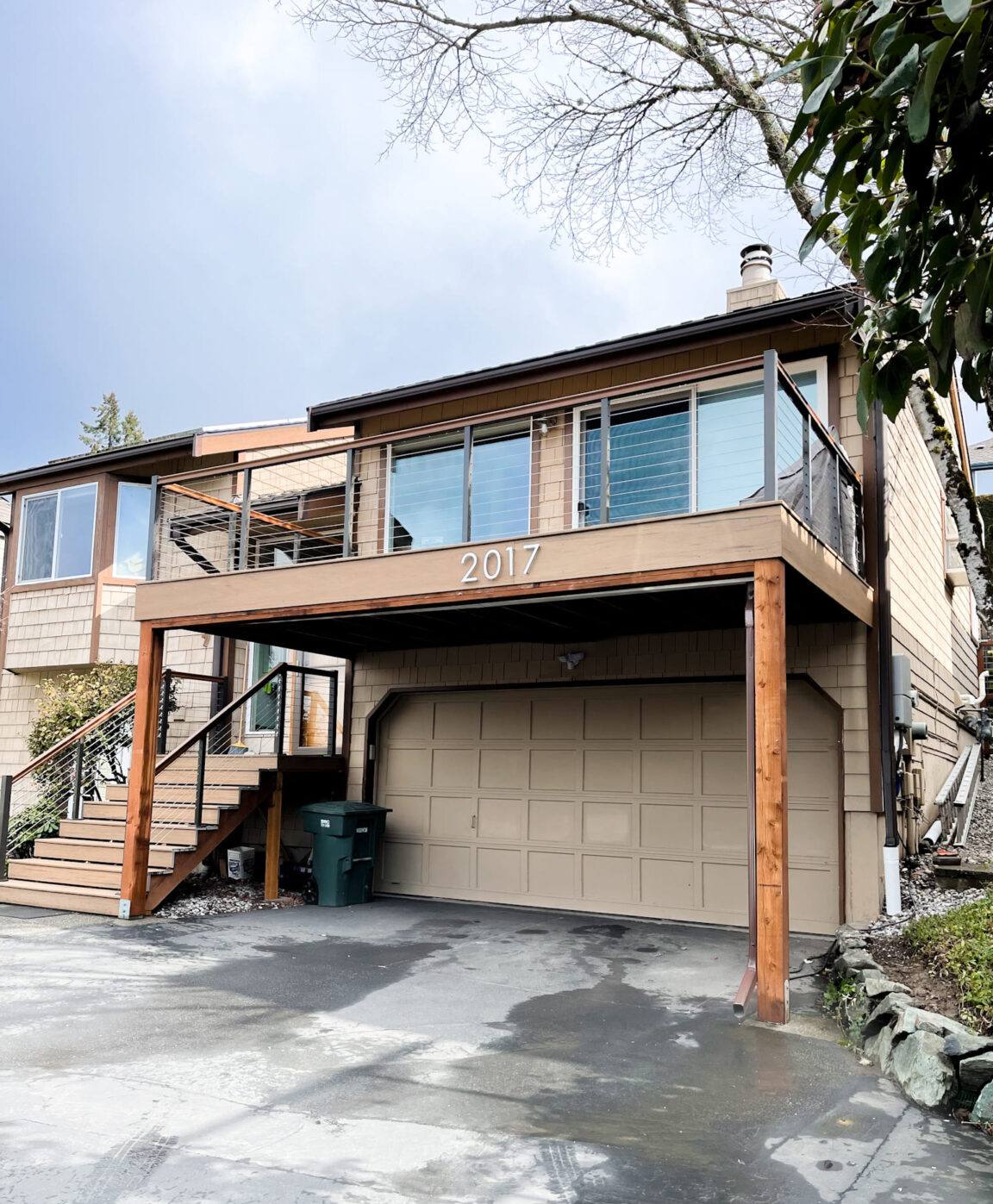
Signs Your Deck Needs Repair (Not Just a Pressure Wash)
Homeowners often call us after noticing surface staining or a slick, mossy texture underfoot and assume a cleaning will solve it. Sometimes it will. But there are signs that point to something a hose and a scrub brush can't fix:
- Boards that feel spongy, soft, or give slightly when you step on them
- Visible gaps, splitting, or cupping in decking boards, especially near board ends
- Rust streaks bleeding from screw heads or metal connectors
- A railing or stair that feels loose or wobbly when you put weight on it
- Dark staining or a musty smell around the ledger board where the deck attaches to the house
- Visible daylight or gaps where flashing should be sealing a joint
- Persistent moss or algae that returns within weeks of cleaning
Any one of these on its own might be minor. Several together usually mean moisture has been working on the structure for a while, and it's worth having someone look underneath the deck, not just at the walking surface.
What Actually Fails First on Coastal Decks
Ledger Board and Flashing
The ledger board — where the deck bolts into the house framing — is the single most important structural connection on most decks, and it's also the most common failure point we find. If the flashing above it was installed poorly, or wasn't installed at all, driving rain works its way behind the board over years. By the time staining shows up on the surface, the wood behind it may already be compromised. This is not a corner to cut, and it's not always visible without pulling a board or two.
Joists and Structural Framing
Underneath the decking, joists and beams are exposed to splash-back, standing moisture, and in low-clearance decks, poor air circulation that keeps them damp far longer than they should be. Rot here doesn't always show from above. We check for soft spots, discoloration, and give framing members a physical test, not just a visual one.
Fasteners and Hardware
This is where salt air does its most direct damage. Standard galvanized screws and connectors that would hold up fine inland can start corroding within a few years this close to the water. Corroded fasteners lose holding strength gradually, which is part of why a deck can feel "mostly fine" right up until a board or railing section suddenly doesn't.
Decking Boards and Railings
Wood decking absorbs and releases moisture constantly in this climate, which is what drives cupping, splitting, and eventually rot at board ends and around fastener holes. Railings take a similar beating, plus the added stress of people leaning on them — a combination that turns small wood failures into a safety issue.
Repair or Replace? How We Help You Decide
Not every deck problem calls for a full rebuild, and not every deck is worth patching. The honest answer depends on what's failing and how much of the structure it touches.
| Factor | Leans Toward Repair | Leans Toward Replacement |
|---|---|---|
| Extent of damage | Isolated to a few boards, one railing section, or localized fastener corrosion | Widespread rot in framing, multiple failed connections, or damage at the ledger board |
| Age of the deck | Newer deck with a specific, identifiable problem | Older deck already near the end of its typical service life |
| Structural framing condition | Joists and beams test solid; only surface materials are affected | Framing is soft, cracked, or shows rot when probed |
| Code and safety concerns | Deck meets current attachment and railing standards | Ledger attachment, footings, or railings don't meet current safety expectations |
| Budget goals | Want to extend usable life at lower upfront cost | Want a long-term reset and are open to a larger project |
We'll tell you plainly which category your deck falls into. If a repair genuinely solves the problem, that's what we'll recommend — there's no upside for us in talking a homeowner into more work than the deck actually needs.
Our Deck Repair Process
Inspection
We start underneath the deck, not on top of it. That means checking joists, beams, footings, and the ledger connection directly, along with a physical check of fasteners and hardware for corrosion. We also look at drainage and airflow around and under the deck, since standing moisture is usually the root cause behind whatever brought us out in the first place.
Scope and Materials
Once we know what's actually failing, we put together a clear scope — what gets replaced, what gets reinforced, and what materials and fasteners are appropriate for a property this close to the water. You'll know before work starts what's included and why.
The Work Itself
Repairs are done to match the structural standard of a new build, not just patched to look right. That means proper flashing at the ledger if that's part of the scope, corrosion-resistant fasteners throughout, and framing repairs sistered or replaced to full strength rather than just braced. We don't cover a rot problem with new boards on top of compromised framing.
Cleanup and Walkthrough
We clear debris, walk the deck with you, and point out anything worth keeping an eye on going forward — including simple maintenance that will extend the life of the repair.
Materials That Hold Up to Salt Air and Moisture
Material choice matters more in Blaine than it does further inland, particularly for anything metal. Where it fits the scope and the homeowner's goals, we favor stainless steel or high-grade coated fasteners over standard galvanized hardware, since standard galvanized coatings can break down faster in salt air than most homeowners expect. For decking and framing repairs, we work with both quality pressure-treated lumber and composite decking, and we're upfront about the trade-offs of each:
- Pressure-treated lumber is cost-effective and easy to repair in sections later, but it needs periodic sealing or staining to perform well in this climate
- Composite decking resists moisture and moss better on the surface and needs less upkeep, but it costs more upfront and isn't always practical for structural framing
- Cedar has natural rot resistance and a look many homeowners want, but it's a softer wood and needs consistent maintenance to hold up long-term near the water
We're not going to steer you toward one product because it's easier for us to install. We'll walk through what each option means for maintenance, appearance, and cost over the life of the deck, and let you decide what fits.
Questions to Ask Before You Hire a Deck Repair Contractor
Deck repair is one of those jobs where a fast, cheap fix on top of an unresolved moisture problem can look fine for a season and then fail. Before hiring anyone, it's worth asking:
- Will you inspect underneath the deck and check the ledger board connection, or just look at the surface?
- What fasteners and hardware will you use, and are they rated for a marine or coastal environment?
- Are you licensed and insured to do structural work in Washington?
- Will the repair address the moisture or drainage issue that caused the damage, or just replace the damaged boards?
- Can you explain, in plain terms, why you're recommending repair over replacement (or vice versa)?
A contractor who's willing to answer these clearly, without vague reassurance, is generally one worth trusting with the job.
Why a Crew That Already Works Blaine Matters
We're based in Lynden and work throughout Whatcom County, and Blaine's coastal conditions are something we account for as a matter of course, not something we're figuring out for the first time on your project. That familiarity shows up in practical ways: we know to check ledger flashing and fastener corrosion more carefully on homes this close to the water, we know moss regrowth is a near-constant issue here rather than an occasional one, and we're not learning the local permitting and inspection expectations on your job. It also means we're a known, reachable crew if you have a question about the repair six months or a few years down the road — not a name you found once and never heard from again.
Keeping Your Deck Repair Lasting
A good repair still needs a little upkeep to get its full lifespan, especially in Whatcom County's wet climate. A few habits go a long way:
- Clear leaves, needles, and debris from between boards regularly, especially in fall
- Address moss with a gentle cleaning approach rather than aggressive pressure washing, which can damage wood fibers and force water deeper into seams
- Reseal or restain wood decking on the schedule appropriate for the product — don't wait until it's visibly weathered
- Check railings and stair connections periodically for looseness
- Keep gutters and downspouts near the deck clear so runoff isn't draining directly onto or under it
If you're seeing soft boards, rust stains, a loose railing, or persistent moss on a Blaine deck, it's worth having it looked at before winter's driving rain finds every gap. We offer free, no-pressure estimates — fill out the form below and we'll take a look and give you a straight answer on what your deck actually needs.