 Lynden Window
 Custom Decks Built for Maple Falls' Wet, Shaded Terrain
Maple Falls sits up in the forested foothills of Whatcom County, at a higher elevation and under a lot more tree canopy than the open valley floor around Lynden. That difference matters more for a deck than for almost any other part of a house. A deck is an outdoor structure exposed to the full run of Northwest weather with nothing but its own materials, fasteners, and framing standing between it and the elements. In this part of the county, that means driving rain that rarely falls straight down, a moss season that runs longer under heavy shade than it does on an open lot, and, because Maple Falls sits higher and closer to the Cascades than the valley towns nearby, colder nights and more freeze-thaw cycling on anything built into the ground. Homes up here don't get the direct salt exposure that our waterfront service areas see, but they sit inside the same wet, marine-influenced climate that shapes exterior work across Whatcom County, with shade and elevation added on top.
Lynden Window Co builds custom decks across the county, including up around Maple Falls, and decks get the same standard we apply to windows, siding, and roofing: build for the actual conditions on that specific lot, not a generic spec that happens to meet code on paper. A deck built the same way for a sunny, open backyard and a shaded, tree-covered lot in Maple Falls will age very differently, even starting from identical plans.
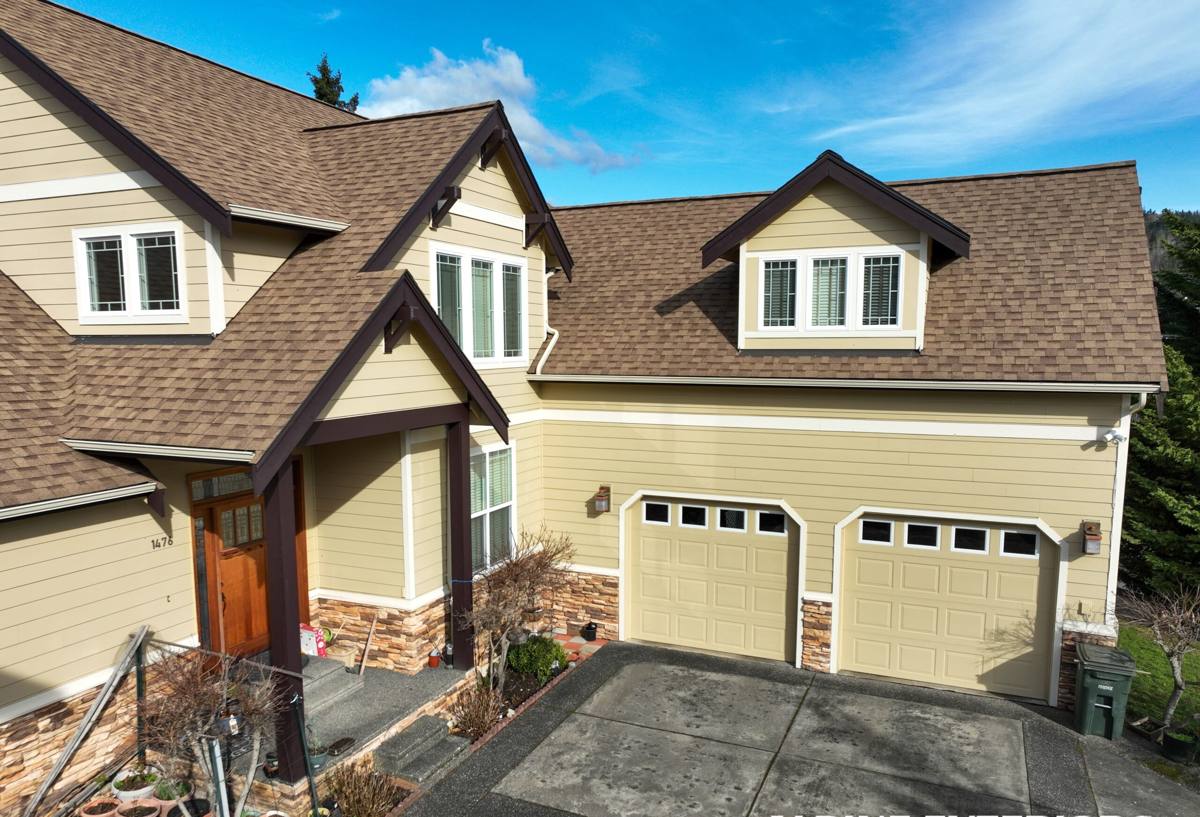
What Makes a Maple Falls Deck Different From a Valley-Floor Build
Shade, Tree Cover, and a Long Moss Season
Heavy tree cover is common on lots up around Maple Falls, and it changes how a deck behaves over time. Shade keeps decking boards, joists, and ledger connections damp longer after every rain, which is exactly the condition moss, algae, and mildew need to take hold. Falling needles, leaves, and seed litter also collect in board gaps and around posts, holding moisture against the surface even between storms. A deck built without that shade and debris load in mind, with tight board spacing, poor airflow underneath, or decking that traps organic material, grows moss and goes slick faster here than the same deck would in an open, sun-exposed yard.
Elevation, Freeze-Thaw, and Footings
Maple Falls sits at a higher elevation than Lynden and the valley towns closer to the Sound, which means colder overnight temperatures and more freeze-thaw cycling through the winter. That matters most below ground, at the footings. Footings that aren't poured below the local frost depth can heave slightly as the ground freezes and thaws, and over a few seasons that movement works its way up into loose railings, squeaking boards, or a deck that's no longer quite level. It's not a dramatic failure, it's a slow one, which is part of why it gets overlooked on decks built to a minimum standard instead of the actual site conditions.
Site Access and Terrain
Sloped lots, gravel driveways, and homes set back among trees are common up here, and they change how a deck project actually gets built. Material staging, equipment access for footings, and even where a trailer or dumpster can sit all take more planning on a wooded, sloped Maple Falls lot than on a flat, open one. A crew that hasn't worked this kind of terrain before tends to find these problems on install day; a crew that already has, plans around them before the first truck shows up.
Choosing Decking Material for This Climate
There's no single right material for every deck. Budget, how much direct sun the site actually gets, and how long you plan to stay in the home all factor in. What matters is understanding how each option performs under sustained shade and moisture, not just how it looks in a showroom.
| Material | Moisture & Moss Behavior | Typical Maintenance | Realistic Lifespan Here |
|---|---|---|---|
| Pressure-treated wood | Resists rot reasonably well if sealed and maintained; end cuts and fastener holes are vulnerable points | Higher: regular cleaning, re-sealing every 1-2 years | 15-20 years with upkeep |
| Cedar | Naturally moisture-resistant and attractive, but softer and more prone to surface wear and moss in deep shade | Higher: periodic cleaning and finish maintenance | 15-20 years with upkeep |
| Composite | Won't rot; surface can still grow an algae or moss film in heavy shade without occasional cleaning | Low: periodic washing | 25-30+ years |
| PVC / capped polymer | Fully moisture-sealed surface; among the least hospitable options for moss and algae growth | Low | 25-30+ years |
On a shaded Maple Falls lot, we tend to steer clients away from the lowest-grade pressure-treated boards, not because the material is inherently bad, but because it demands a maintenance schedule most homeowners don't actually keep up with once the deck is a few years old and less exciting than it was on day one. Composite and capped polymer boards cost more up front but hold up with a lot less attention in a climate that never fully dries out under tree cover. We'll walk through the honest trade-offs for your specific site rather than defaulting to whichever product is easiest to sell.
What a Correctly Built Deck Involves Here
Most deck problems we get called out to fix in this climate aren't failures of the decking material itself. They're shortcuts in the framing, flashing, and fastening details that don't show up until a wet season or two later, once moisture has had years to work on a weak point. On every deck we build, that means:
- Footings poured below the local frost depth, sized to the deck's actual load, not a minimum guess
- Ledger board attachment properly flashed where it meets the house, so water sheds away from the wall instead of behind it
- Joist protection tape over the top of every joist, closing off the exact spot where standing water causes the most rot
- Corrosion-resistant, structurally rated fasteners and hardware sized for sustained damp exposure, not general-purpose screws
- Board spacing and framing that allow real airflow underneath, so the structure can actually dry out between rains instead of staying damp
- Railings and stair framing built to current code, with connections rated for the loads they'll actually see
None of this is optional or an upgrade. It's what a deck actually needs to hold up on a shaded, wet Maple Falls lot instead of just looking finished on the day it's built.
Permits and Whatcom County Requirements
Most custom deck projects in unincorporated Whatcom County, including Maple Falls, require a building permit, with the specifics depending on the deck's height, size, and how it attaches to the house. Permitted work means a county inspector checks the footings, framing, and railings against code at defined points in the build, which is exactly the kind of oversight that catches an undersized footing or a missed flashing detail before it's buried under decking. We handle the permit process as part of the job rather than leaving it for the homeowner to sort out, and we build to pass inspection the first time rather than treating the inspector as an obstacle.
Our Process, Start to Finish
Every Maple Falls deck project follows the same sequence, adjusted for the specific site:
- A site visit to walk the lot, assess slope, tree cover, sun exposure, and access, and talk through what you actually want to use the deck for
- A written estimate with material options and honest trade-offs, not a single locked-in package
- Permit drawings and submission to Whatcom County where required, handled on your behalf
- Footings and framing, built below frost depth and flashed at every connection to the house
- Decking, railings, and any stairs, finished to code and to the material spec you chose
- A final walkthrough before we consider the job done, plus a plain-language rundown of what maintenance the specific material you chose actually needs
Keeping a Deck Looking Good Through Moss Season
Even a well-built deck needs some basic upkeep in a climate this wet and shaded, though how much depends heavily on the material you chose. Composite and PVC decking mostly need an occasional wash to keep algae film from building up in the shadiest corners. Wood decking needs more: periodic cleaning, prompt attention to any spot where moss has gained a foothold, and re-sealing on a schedule rather than whenever it happens to come to mind. A few habits go a long way regardless of material:
- Sweep needles and leaf litter out of board gaps and corners before they compost in place and hold moisture
- Clean visible moss or algae promptly rather than letting it spread and become slick underfoot
- Keep gutters and downspouts near the deck clear so runoff isn't dumping extra water onto or under the structure
- Have railings, stairs, and ledger connections checked periodically, especially on a deck more than a few years old
None of this requires major effort, but skipping it on a shaded Maple Falls lot tends to catch up with a deck faster than homeowners expect.
Why a Crew That Already Works in Maple Falls Matters
A contractor who builds decks across this part of Whatcom County through every season knows how shade, elevation, and moisture actually behave on real lots here, not just how a product performs on a spec sheet. That shows up in decisions that are easy to get wrong from a generic plan: how deep footings need to go on a given site, how much airflow a deck needs underneath based on how much sun it actually gets, and which framing details are worth the extra time on install day so you're not dealing with a soft joist or a heaving footing a few winters later. It also means working with someone who already understands the difference between a shaded, higher-elevation lot up here and an open, valley-floor yard closer to town, and doesn't build both the same way.
If you're planning a custom deck for a home in Maple Falls, we're glad to come take a look at your specific site and give you a straightforward, honest read on what it actually needs. Reach out using the form below to schedule a free, no-pressure estimate.