 Lynden Window
 Why Birch Bay Decks Need a Different Approach
Birch Bay sits right on the water, and that changes what a deck has to survive. A deck built the same way you'd build one ten miles inland, away from the shoreline, will show problems faster here — loose fasteners, graying and cupping boards, slick green patches in the shady corners, hardware that rusts before the wood even needs replacing. None of that is bad luck. It's what salt air, driving rain, and a long moss season do to a structure that wasn't specified for them.
We build decks throughout Whatcom County, but Birch Bay properties get a slightly different set of decisions from us on materials, fasteners, and drainage. This page walks through what actually matters for a deck in this specific setting, not a generic list that applies anywhere in the Pacific Northwest.
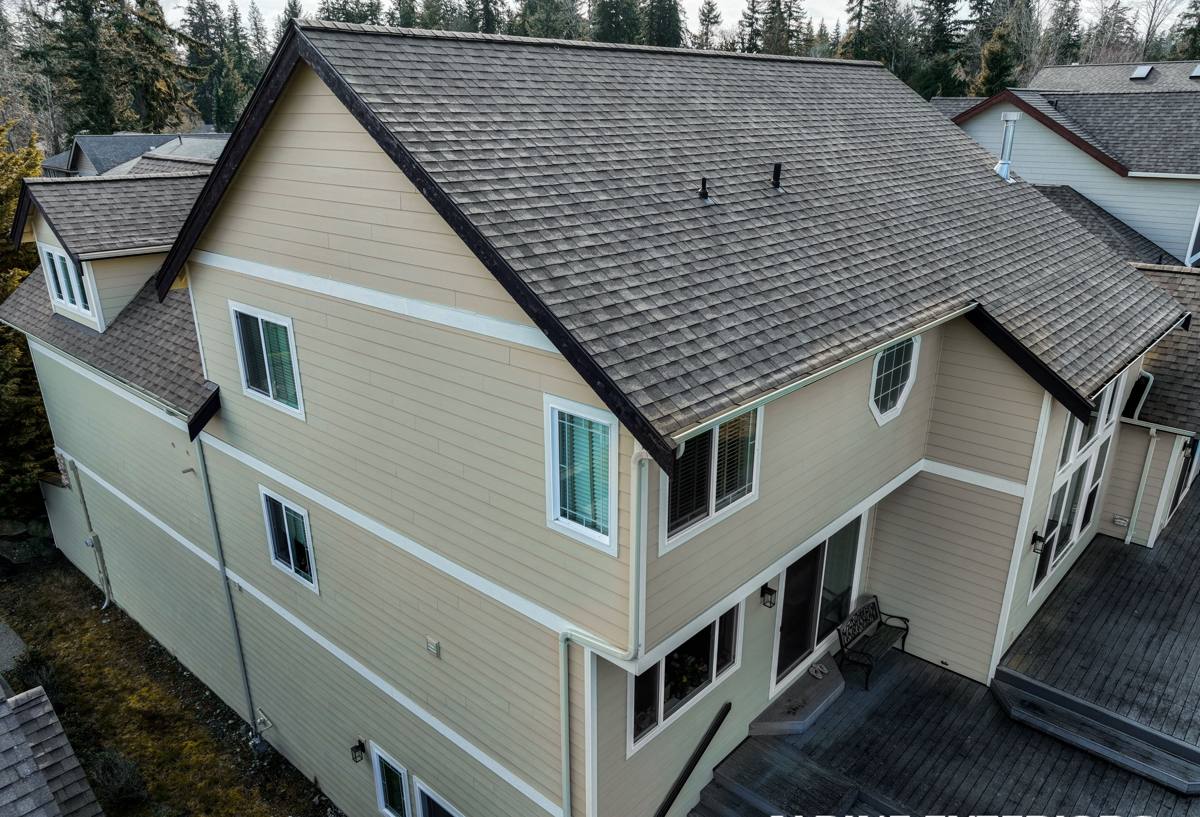
What Salt Air, Rain, and Moss Actually Do to a Deck
Salt air and corrosion
Airborne salt from the bay accelerates corrosion on anything metal — nails, screws, joist hangers, post bases, railing brackets. Standard galvanized fasteners that would last decades a few miles inland can start showing rust streaks and pitting much sooner near the water. Once a fastener corrodes, it loses holding strength long before it looks obviously bad, which is why hardware choice matters more here than almost anywhere else in the county.
Driving rain and trapped moisture
Wind off the water pushes rain sideways, driving it into places a calm-weather deck design assumes will stay dry — ledger connections, under railing posts, between deck boards laid too tight, behind fascia boards. Wood and even some composite products that stay wet longer than they should will start to break down from the inside, well before the surface shows it.
Moss and the long wet season
Shaded sections of a deck, especially under overhangs or near mature trees, hold moisture and grow moss for a good stretch of the year in this climate. Beyond looking bad, moss holds water against the wood surface and turns decking into a slip hazard on stair treads and walking surfaces — a real safety issue, not just a maintenance annoyance.
Decking Material Options for Birch Bay Conditions
There's no single "correct" decking material for every project — it depends on budget, how much upkeep you want to do, and how exposed the deck is to wind and salt spray. Here's how the common options actually perform in this environment:
| Material | Salt Air / Moisture Behavior | Maintenance Needed | General Notes |
|---|---|---|---|
| Pressure-treated fir/hem | Good if fasteners and flashing are correct; can cup or check if left unsealed | Re-stain or seal every 2-3 years | Lowest upfront cost; performance depends heavily on installation quality |
| Cedar | Naturally rot-resistant but softer; benefits from a breathable finish | Refinish every 1-2 years to hold color and grain | Preferred where a natural wood look matters most |
| Capped composite | Very good — the cap resists moisture intrusion and doesn't corrode | Occasional wash; no staining or sealing | Higher upfront cost, lowest long-term upkeep |
| Uncapped composite (older style) | Weaker — can absorb moisture at cut edges and support mold/mildew growth | Regular cleaning to prevent staining | We generally steer clients toward capped versions in this climate for that reason |
As a general rule, expect fully installed decking costs in this area to run roughly in the $35 to $75 per square foot range depending on material, railing style, and site access — we'll give you an exact number after seeing the site, not a guess off a phone call.
Substructure and Hardware: The Part Nobody Sees But Everyone Regrets Skimping On
The decking boards are what you look at, but the framing underneath and the fasteners holding it together determine how long the whole thing actually lasts near saltwater. This is where corner-cutting shows up years later as a sagging or failing deck, not right away.
Ledger attachment and flashing
Where the deck attaches to the house, proper flashing has to keep driving rain from working its way behind the ledger board and into the house's wall structure. This connection carries the structural load of the deck and is one of the most common failure points we find on older decks in wet coastal settings.
Corrosion-resistant hardware
We specify stainless steel or heavy hot-dip galvanized fasteners and connectors for coastal jobs — standard electro-galvanized hardware is more prone to rust in salt-exposed air and isn't what we consider correct for a property this close to the water. It costs a bit more upfront; it also means you're not looking at rust-streaked hardware and weakened connections in five years.
Post bases and footings
Post bases that hold wood up off concrete and let water drain away from the post end matter more here than in a drier climate, since ground moisture combined with salt-laden air speeds up rot at the base of a post faster than most homeowners expect.
Railings, Fascia, and Finish Details for a Coastal Yard
Railing hardware is often the first thing to show corrosion on a coastal deck because it's directly exposed to wind-driven salt spray and gets touched constantly. We favor railing systems and brackets rated for coastal or marine-grade exposure over standard interior-grade hardware, even when it costs a bit more, because replacing corroded railing brackets on a finished deck is disruptive and avoidable.
Fascia boards and skirting also take a beating from driving rain if they're not detailed with a drip edge or proper gap for airflow. We build in ventilation gaps behind skirting and fascia so trapped moisture has somewhere to go instead of sitting against the wood.
Design Considerations Specific to Birch Bay Lots
A lot of Birch Bay properties are built to take advantage of water views and prevailing breezes, which is great for enjoying the deck and tougher on the deck itself. A few things we think through on every coastal design:
- Wind exposure: more open railing designs and lower solid privacy walls reduce wind load on the structure compared to solid wind-blocking panels, which act like a sail in a storm.
- Board orientation and spacing: correct gapping between boards lets rain drain through instead of pooling, which matters more with our rainfall totals than it does in a drier climate.
- Grading and drainage under the deck: water needs somewhere to go once it drains through the decking — we check the ground slope beneath the structure, not just the surface above it.
- Shade and moss-prone zones: where a deck sits under trees or a roof overhang, we factor that into material choice and cleaning access from the start rather than discovering it later.
How Our Process Works
Site assessment
We start by walking the property with you, looking at sun and wind exposure, existing drainage patterns, and how the deck will connect to the house. Coastal lots each have their own quirks depending on how exposed they are to wind off the water.
Design and material selection
We talk through decking material, railing style, and layout based on your budget and how much maintenance you actually want to do going forward — there's no point specifying a low-maintenance composite deck if your priority is matching a specific wood look, and vice versa.
Permitting
Deck projects above a certain size or height typically need a permit through the applicable county or local building department. We handle that process as part of the job so you're not left figuring out requirements on your own.
Construction
We build the substructure first — footings, framing, ledger flashing, hardware — and get that inspected before decking goes down, since that's the part that's hardest to fix later. Decking, railings, and finish details go on last.
Final walkthrough
Before we consider the job done, we walk the finished deck with you, check railing stability, stair details, and finish quality, and go over basic care so you know what to expect from the specific materials we used.
Maintenance Checklist for a Long-Lasting Birch Bay Deck
Whatever material you choose, a little seasonal attention goes a long way in this climate. A simple routine to follow:
- Sweep debris out of gaps between boards regularly so moisture and organic material don't build up and feed moss growth.
- Rinse salt residue off railings and decking periodically, especially after storms with onshore wind.
- Check railing brackets and visible hardware once or twice a year for early rust or looseness.
- Treat or clean shaded, moss-prone areas before growth gets established rather than after it's slick.
- Re-seal or re-stain wood decking on the schedule recommended for that specific product — don't stretch it out just because it still looks okay on the surface.
- Confirm drainage under and around the deck stays clear so water isn't pooling against posts or footings.
Why Hiring a Crew That Already Works in Birch Bay Matters
A contractor who mostly builds decks in drier, inland settings can still build a structurally sound deck — but they may not default to marine-grade hardware, coastal flashing details, or moss-conscious design choices unless you specifically ask. We already build this way for every coastal job in Whatcom County, so those decisions are built into the plan from the start rather than added as upgrades.
We also know the practical side of building here — how site access and weather windows affect scheduling near the water, and what local permitting looks like for this area. That familiarity keeps the job moving instead of hitting avoidable delays.
If you're planning a new deck or need to know whether an existing one is holding up the way it should in this climate, we're glad to take a look. Fill out the form below for a free, no-pressure estimate — we'll walk the site, answer your questions honestly, and give you a real number, not a guess.