 Lynden Window
 Decking Built for the Wiser Lake Environment
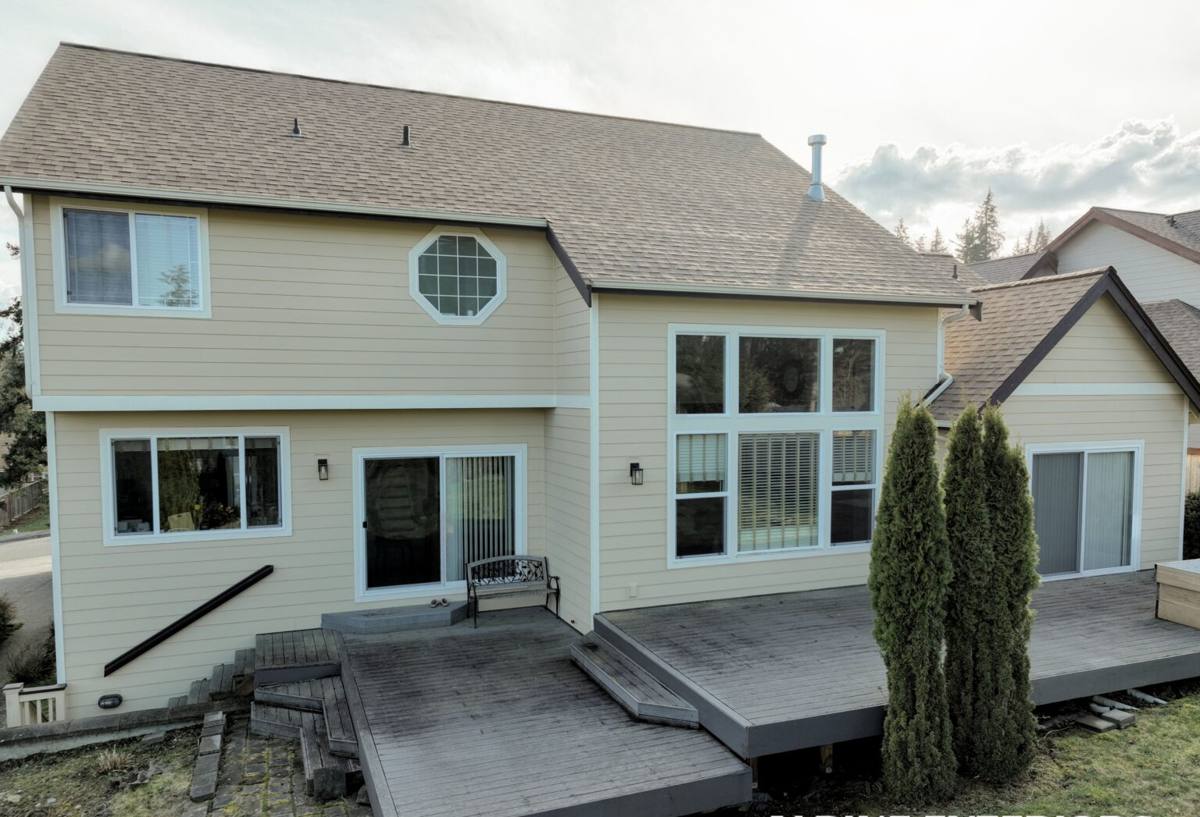
Wiser Lake sits in a part of Whatcom County where the yard rarely dries out for long. Between tree cover, lake-effect humidity, and the marine air that moves inland off the Salish Sea, decks here spend a lot of the year damp. Add in driving rain off the water during fall and winter storms and a moss season that can stretch from October well into spring, and you've got conditions that are hard on a lot of decking materials. Composite decking is one of the few products built specifically to shrug off that combination, but only if it's installed correctly for this environment — not just installed to spec on paper.
This page is about composite decking specifically for homes around Wiser Lake: what the local climate does to a deck over time, what a properly built composite deck actually requires, and how we approach these jobs differently than we would in a drier inland neighborhood.
What This Climate Does to a Deck Over Time
Moisture That Doesn't Let Up
Lakefront and near-lake properties hold moisture in the air and in the ground longer than homes even a mile or two away. Decking near Wiser Lake often sits in partial shade from mature trees, which slows evaporation after every rain. That's a recipe for wood rot, fastener corrosion, and surface mildew — and it's the main reason wood decks in this area need more frequent attention than the same deck would in a drier climate zone.
Moss and Algae Growth
A long moss season means green growth isn't just a cosmetic issue here — it's a slip hazard on any decking surface with texture or grain that holds moisture. Untreated or poorly sealed wood surfaces can develop a slick moss film within a single wet season, especially on north-facing decks or ones shaded by trees near the lake.
Salt-Influenced Air
Whatcom County's marine-influenced weather carries salt-laden air inland on prevailing winds. It's a lighter effect than you'd see directly on the coast, but combined with the lake's own humidity, it accelerates corrosion on exposed metal fasteners, railings, and hardware — another reason fastener choice and hidden-fastener systems matter more here than in a dry inland build.
Why Composite Decking Fits This Environment
Composite decking is made from a blend of wood fiber and plastic (and, on capped boards, a plastic outer shell). Done right, that combination gives it a real advantage in a climate like this:
- It doesn't absorb water the way solid wood does, so it's far less prone to rot, cupping, or splintering from constant damp exposure.
- Capped composite boards resist moss and algae staining better than open-grain wood, and what does grow on the surface washes off more easily.
- It doesn't need annual staining or sealing to stay protected, which matters on a property where you're already managing moss on roofs, walkways, and siding.
- Color and texture stay more consistent over the years instead of graying, splitting, or checking the way exposed wood does under repeated wet-dry cycles.
That doesn't mean composite is maintenance-free — no decking product is, in this climate — but it shifts the maintenance burden from structural repair (rot, board replacement) to simple surface cleaning, which is a better trade for most homeowners around the lake.
What a Correct Composite Deck Installation Actually Involves
The Structure Underneath Matters Most
Composite boards are only as good as the frame under them. In a damp environment like Wiser Lake, we treat the substructure as the most important part of the job:
- Joist spacing and blocking matched to the specific composite product's span rating — composite boards flex differently than wood and are unforgiving of joists spaced for lumber instead.
- Proper ledger board flashing and attachment where the deck meets the house, so water is directed away from the wall rather than trapped against it.
- Ground and under-deck ventilation so moisture doesn't sit and stagnate beneath the deck, which is a bigger risk on shaded, low-lying, or lake-adjacent lots than on an open, sunny site.
- Corrosion-resistant fasteners and hardware rated for coastal or high-moisture exposure, since standard hardware corrodes faster here than in drier parts of the county.
- Hidden fastener systems where the product allows, which reduce surface penetrations that can trap water and reduce the number of exposed metal points that corrode or streak the decking over time.
Gaps, Drainage, and Board Layout
Board spacing has to account for both composite expansion and the reality that this deck will spend long stretches wet. Too tight, and water and debris get trapped between boards, feeding moss growth. Too loose, and the deck feels unfinished and can trap smaller debris. We set gapping to the manufacturer's spec for the specific board profile, then confirm drainage slope so water actually moves off the deck instead of pooling near the house or against railings.
Our Process for Wiser Lake Composite Deck Projects
| Step | What We Check or Do |
|---|---|
| Site assessment | Sun/shade exposure, tree cover, existing moisture or moss damage, drainage patterns on the lot |
| Structural evaluation | Existing framing condition (for replacement decks), ledger attachment, footing depth and condition |
| Material selection | Board profile, capped vs. uncapped, color and grain matched to how much shade and moisture the deck will see |
| Framing and flashing | Joist spacing to the board's span rating, ledger flashing, corrosion-resistant hardware throughout |
| Installation | Hidden fastener systems where applicable, proper gapping, drainage slope confirmed before final fastening |
| Walkthrough | Homeowner walkthrough covering realistic maintenance expectations for this specific site and product |
We don't sell a one-size-fits-all deck package. A shaded, tree-covered lot a few hundred feet from the water needs different ventilation and material choices than an open, sun-exposed yard on the same street.
Composite vs. Other Decking Materials for This Climate
| Material | Moisture/Rot Resistance | Moss & Algae Behavior | Upkeep | Relative Upfront Cost |
|---|---|---|---|---|
| Pressure-treated wood | Moderate — treatment slows rot but doesn't stop it long-term | Absorbs moisture, grows moss faster in shaded areas | Regular staining/sealing, periodic board replacement | Lowest |
| Cedar or other natural wood | Fair — naturally rot-resistant but still absorbs moisture | Prone to graying and moss in wet shade | Frequent sealing to hold appearance and protection | Moderate |
| Capped composite | High — minimal water absorption | Resists staining, easier surface cleanup | Periodic washing, no staining/sealing | Higher than wood |
| PVC decking | Highest — no wood content to absorb moisture | Very low moss/algae retention | Lowest ongoing upkeep | Highest |
Composite generally costs more upfront than pressure-treated wood, but less than full PVC decking, and it avoids most of the recurring maintenance cost that wood requires in a wet, shaded, moss-prone environment like this one. Over the life of the deck, that maintenance gap is usually the deciding factor for lake-area homeowners.
Capped vs. Uncapped Composite
Not all composite boards are built the same. Capped composite has a plastic shell wrapped around the wood-fiber core, which is what actually gives it strong moss and stain resistance. Uncapped composite (or composite capped on only one or two sides) still absorbs some moisture at exposed edges and cut ends, which matters on a deck that stays damp as long as one near Wiser Lake does. We seal or cap-treat any exposed cut ends on uncapped or partially capped boards as standard practice, not as an upsell — it's a small step that prevents a real problem in this climate.
Maintaining a Composite Deck in a Moss-Prone, Humid Area
Composite is lower-maintenance than wood, not maintenance-free. In this climate, a simple seasonal routine keeps a deck looking and performing well for years:
- Sweep debris (leaves, needles, seed pods) off the deck regularly — trapped organic matter is what feeds moss growth on any surface.
- Rinse or wash the deck at least twice a year, more often on shaded sections, using a soft-bristle brush and a composite-safe cleaner rather than a pressure washer on high settings.
- Check gaps between boards each fall and clear out compacted debris before the wet season sets in.
- Inspect railings and fastener points for corrosion staining, especially on sections closest to the lake or under heavy tree cover.
- Confirm under-deck ventilation isn't blocked by landscaping, stored items, or built-up debris.
Why It Matters to Hire a Crew That Already Works Around Wiser Lake
A composite deck built to a generic spec sheet can still fail early in this environment if the crew installing it hasn't accounted for local conditions — shaded lake lots, high ambient humidity, and a moss season that puts real, sustained moisture load on a structure. Crews that regularly work properties around Wiser Lake and the broader Lynden area already understand how tree cover and lake proximity change ventilation needs, why fastener corrosion resistance isn't optional here, and how drainage has to be handled differently on sloped or low-lying lakefront lots than on a flat, open, inland yard. That local familiarity shows up in fewer callbacks and a deck that actually performs the way composite decking is supposed to.
If you're planning a new composite deck or replacing an aging wood deck near Wiser Lake, we're happy to walk the site, look at sun exposure and drainage, and put together a straightforward, no-pressure estimate using the form below.