 Lynden Window
 Siding Replacement Is a Different Job Than New Siding
Putting siding on a new wall and replacing siding on a 20- or 40-year-old wall are not the same project, even though they end with the same-looking product on the outside. A replacement job starts with an unknown: what condition is the sheathing in underneath, how much of the old moisture barrier is still doing its job, and how much damage has already happened without anyone noticing from the ground. In a town like Blaine, sitting right on the water at the northern edge of Whatcom County near Semiahmoo Bay and Drayton Harbor, that unknown matters more than it would somewhere drier and more sheltered. Salt air, driving rain, and a moss season that runs most of the year all work on a wall assembly for decades before a homeowner ever calls about it.
Lynden Window Co installs siding, roofing, windows, and decks, and siding replacement specifically is one of the jobs we do most often in Blaine. On siding, we install James Hardie fiber cement exclusively — a professional standard we settled on after seeing, on tear-off after tear-off, which products actually held up against this coast's conditions and which ones just delayed the problem behind a nicer-looking wall.
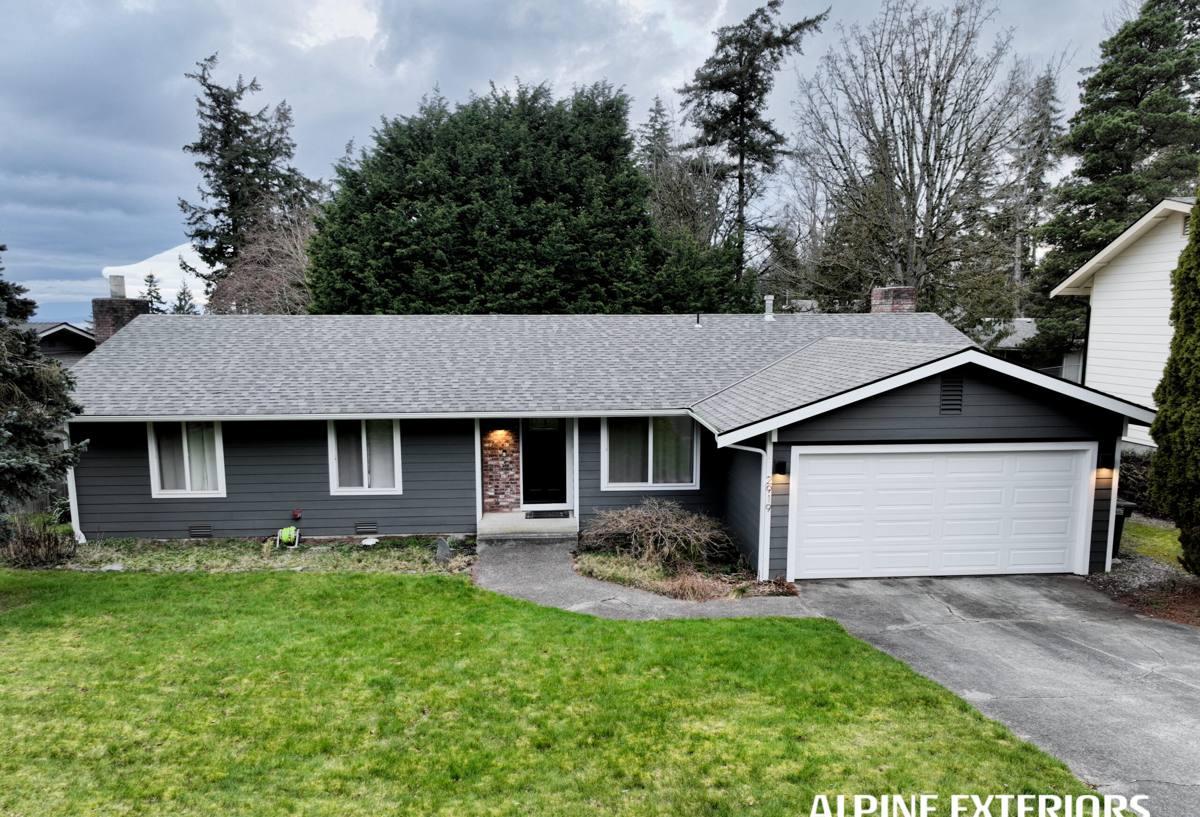
What Years of Coastal Weather Leave Behind an Old Wall
Corroded Fasteners and Failing Trim
Blaine's closeness to open water means salt-laden air reaches most homes in town, not just the ones with a water view. Over years, that salt accelerates corrosion on nails, staples, and any exposed metal trim or flashing. On a tear-off, corroded fasteners are one of the clearest signs that the original installation wasn't specified for this kind of exposure, and it's often the first thing that lets water start working its way behind the siding.
Trapped Moisture Behind the Old Siding
Storms coming off the water tend to drive rain sideways into a wall rather than straight down, which puts far more stress on seams, laps, and trim transitions than a calm, dry climate would. When the original installation didn't include a proper rain screen gap or correctly lapped weather barrier, moisture gets in and has nowhere to go. It sits against the sheathing, and by the time it shows up as a soft spot or stain on the interior wall, the damage has usually been building for a while.
A Moss Season That Runs Most of the Year
Mild, wet weather gives moss and mildew a long growing season on any siding surface that stays shaded or doesn't dry out quickly. Beyond the cosmetic problem, moss and algae hold moisture against the siding surface longer, which is especially hard on porous or lower-grade materials. On a replacement job, we regularly find the heaviest substrate damage on the same north-facing or tree-shaded walls where moss has been visibly heaviest for years.
Repair, Reseal, or Full Replacement? How We Tell the Difference
Not every siding problem in Blaine calls for full replacement, and we don't default to recommending one just because it's the bigger job. The honest answer depends on how contained the damage is and what's happening behind the surface, which is something we look at directly rather than guess at from the ground.
| Condition | Usually Points To | Typical Fix |
|---|---|---|
| Isolated cracked or damaged boards, sound sheathing underneath | Localized impact or aging in one area, rest of the wall intact | Spot repair or partial board replacement |
| Failing caulk and trim joints, no soft sheathing found on inspection | Normal maintenance aging, moisture not yet past the surface | Reseal and recaulk, repaint if needed |
| Soft or spongy siding across multiple walls, especially low or shaded areas | Moisture has reached the sheathing, likely spreading | Full tear-off and replacement, with sheathing repair |
| Original siding is 25+ years old with cupping, warping, or heavy moss return after cleaning | Material at or past its realistic service life for this climate | Full replacement, evaluated whole-house rather than wall by wall |
The table above covers general patterns, not a diagnosis for your specific home. We open up a section of siding during the estimate when there's any question about what's happening underneath, because a visual inspection from the ground can miss damage that's already spread well past a single wall.
What a Correct Siding Replacement Involves
Full Tear-Off, Not an Overlay
Installing new siding over old siding is faster and cheaper, and it's also how existing moisture and rot problems get sealed up rather than fixed. On a genuine replacement, we remove the old siding down to the sheathing. That's the only way to actually see what condition the wall is in, and it's the step an overlay skips entirely.
Sheathing Inspection and Repair
Once the old siding and weather barrier are off, we inspect the sheathing for soft spots, rot, and any framing damage, particularly around window and door openings and at the base of walls where water tends to collect. Any damaged sheathing or framing gets repaired or replaced before new siding goes on. Skipping this step is one of the more common ways a siding replacement job ends up covering a problem instead of solving it.
Weather Barrier, Rain Screen, and Flashing
New housewrap or building paper goes on correctly lapped, shingle-style, so water sheds downward and outward rather than working its way behind a seam. Behind the Hardie boards, a rain screen gap gives any moisture that does get past the outer surface a path to drain and evaporate instead of sitting against the wall. Flashing at windows, doors, and every roof-to-wall transition gets tied into that same drainage plane rather than treated as a separate detail, because those are the exact points where a driving-rain climate finds gaps.
Our Siding Replacement Process, Step by Step
- On-site assessment: We look at the existing siding, check for soft spots at accessible points, and get a real read on scope before quoting the job.
- Tear-off and disposal: Old siding and trim come off and get hauled away; the sheathing is fully exposed for inspection.
- Sheathing and framing repair: Any damaged material found underneath gets addressed before anything new goes back on the wall.
- Weather barrier and flashing installation: New housewrap, window and door flashing, and roof-to-wall transitions are installed and lapped correctly.
- Rain screen and Hardie installation: James Hardie fiber cement siding and trim go on per manufacturer spec, with correct fastener type and spacing throughout.
- Trim, caulking, and finish details: Joints and transitions are sealed, and factory-finished ColorPlus surfaces are protected through the rest of the job.
- Final walkthrough and cleanup: We walk the finished job with you and clear the site of debris and old material.
Why We Replace Old Siding With James Hardie, Not a Cheaper Alternative
When we're already pulling siding down to the sheathing, it's the right moment to put something back up that's actually built for what Blaine's weather does to a wall over the next few decades, not just the next few years. That's why we install James Hardie fiber cement on every replacement:
- Non-combustible core: Fiber cement doesn't feed a fire the way wood-based siding products can.
- Factory-applied ColorPlus finish: The color is baked on under controlled conditions, so it holds up against fading and moisture better than a field-applied paint job would on a replacement project.
- Climate-engineered HZ product lines: Hardie's HZ5 formulation is built for sustained moisture and freeze-thaw cycling, which describes coastal Whatcom County well.
- Dimensional stability: Fiber cement doesn't swell, cup, or warp the way some engineered wood products do after repeated wet-weather exposure, which matters most on the walls that already showed that kind of damage before you called us.
- Strong transferable warranty: Backed by Hardie when installation follows their spec, giving you real coverage on a job that's meant to last.
We don't install LP SmartSide, vinyl siding, Cemplank, Allura, primed spruce, or cedar. Each has its place in the market, and plenty of homeowners are satisfied with them. But on a replacement project in a town with this much sustained moisture and salt exposure, we'd rather put up one system we fully stand behind than replace a failing wall with something that quietly shifts the same maintenance risk a few years down the road.
Cost Factors for a Blaine Siding Replacement
| Factor | Why It Matters |
|---|---|
| Home size and wall area | More square footage means more material and labor, the largest single driver of cost |
| Condition of the sheathing underneath | Rot or soft sheathing found during tear-off adds repair scope that can't be priced sight unseen |
| Trim and architectural complexity | Multiple gables, dormers, or trim details take more time than a simple rectangular wall |
| Number and type of siding layers being removed | Some older homes in Blaine have more than one layer of siding history to tear off before reaching bare sheathing |
| Access and site conditions | Waterfront lots, tight setbacks, or landscaping close to the walls can affect staging and time on site |
| Disposal and haul-away volume | More old material coming off means more disposal cost built into the job |
These are the factors that move the number, not a quote. We don't price a full replacement without walking the property and, in most cases, opening a section of the existing siding, because what we find underneath is often the real driver of scope in a coastal climate.
Timing a Replacement Around Blaine's Weather
Whatcom County's wettest, windiest stretch generally runs from late fall through winter, and Blaine's exposed, waterfront position makes that stretch harder on both an open wall and a work crew than it is further inland. Spring and summer offer the driest, most stable conditions for a tear-off, since sheathing repairs and new weather barrier need to go on and set up without being caught between storm systems. That said, a wall with active moisture intrusion doesn't get better by waiting for the calendar to cooperate — if you're seeing soft siding or interior staining now, it's worth having it looked at rather than holding out for the ideal season.
Before You Hire a Siding Replacement Crew in Blaine
- Confirm they do a full tear-off to the sheathing rather than installing over existing siding
- Ask how they handle sheathing or framing damage discovered mid-project, and how that gets priced
- Ask specifically what weather barrier, rain screen, and flashing details they use, not just what siding brand goes on the outside
- Confirm current Washington contractor licensing and active liability insurance
- Ask for a clear answer on fastener type and spacing, since this is one of the most common shortcuts on lower-bid jobs
- Ask how disposal and site cleanup are handled once the old siding comes off
Why a Crew That Already Works Blaine Matters for Replacement Work
A crew that tears off and replaces siding across this stretch of Whatcom County regularly sees what salt air, driving rain, and moss actually do to a wall over years, not just how a product performs on a spec sheet. That shows up in decisions that matter on a replacement job specifically: knowing which walls in a waterfront town like Blaine are most likely to have hidden sheathing damage before the first board comes off, recognizing corroded fastener patterns that point to a bigger problem than what's visible from the ground, and building in the flashing and rain screen details that a home this close to the water actually needs rather than a generic approach carried over from a drier region.
If your Blaine home has siding that's soft, cracked, holding moss no matter how often it's cleaned, or simply past its useful life, we're glad to take a look and give you an honest read on whether it needs repair or full replacement. Reach out using the form below to schedule a free, no-pressure estimate.