 Lynden Window
 Why Blaine Roofs Wear Differently Than Roofs Inland
Blaine sits right on the water at the northwest corner of Whatcom County, and that location changes how a roof ages. Homes a few miles inland in Lynden or Everson deal with rain and moss too, but they don't get the steady salt-laden air coming off the bay day after day. That salt air settles on metal flashing, fasteners, and vents, and it accelerates corrosion in ways that a standard roofing warranty doesn't always account for. Add in driving rain that comes sideways during winter storms and a moss season that can run from fall through spring, and you've got three climate factors stacking up on the same roof at the same time.
None of this means Blaine homes need exotic materials or overbuilt systems. It means the details — fastener choice, flashing material, underlayment, and ventilation — have to be chosen for coastal exposure instead of a generic inland spec. A roof replacement that ignores that is a roof you'll be dealing with again sooner than you should.
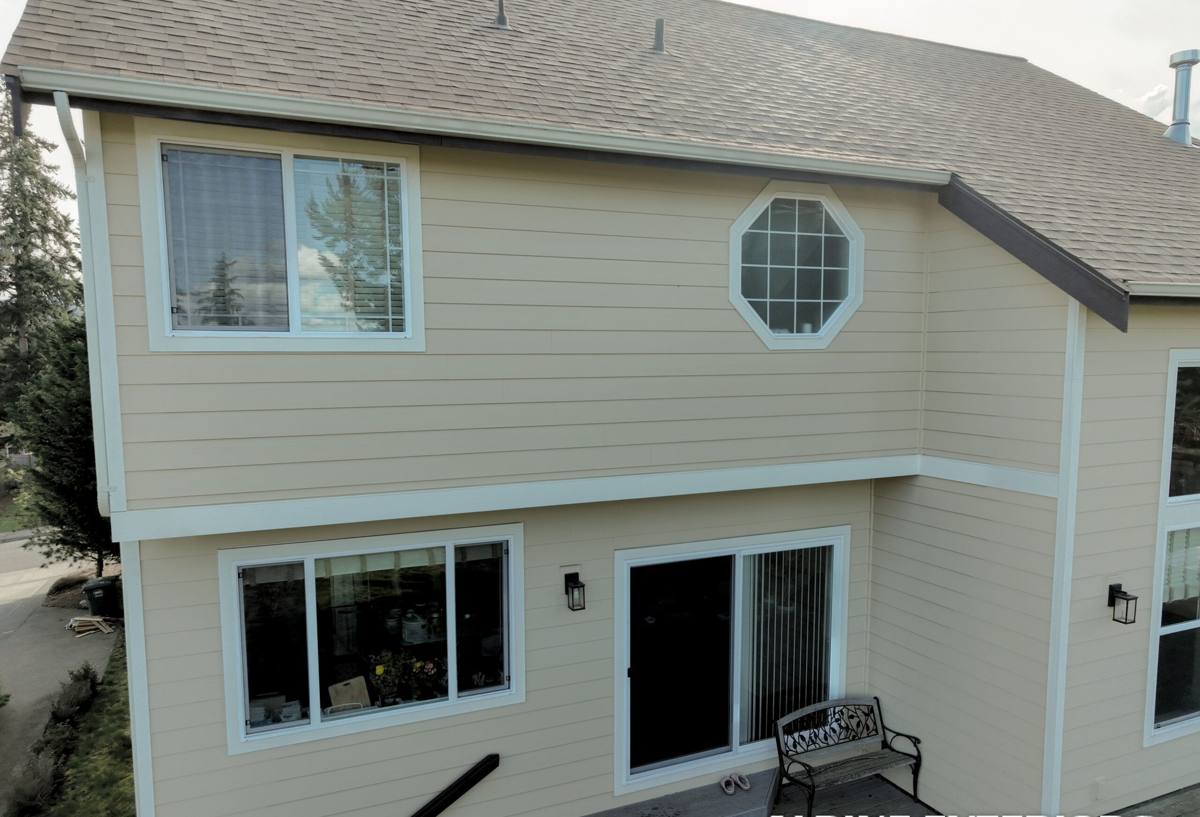
What Salt Air, Driving Rain, and Moss Actually Do to a Roof
Salt Air and Corrosion
Airborne salt accelerates oxidation on exposed metal — nails, flashing, vent boots, and drip edge. On a roof that's otherwise sound, corroded fasteners or flashing are often the first real failure point, well before the shingles or panels themselves are worn out. This is a bigger factor for homes closer to Drayton Harbor and Semiahmoo Bay, though the effect reaches inland to a lesser degree across Blaine as a whole.
Driving Rain
Wind-driven rain doesn't just fall on a roof, it gets pushed sideways and upward under laps, around penetrations, and into any gap in the flashing detail. A roof that would shed water fine in a calm, straight-down rain can leak in a Blaine winter storm if the underlayment and flashing weren't installed with wind-driven moisture in mind.
Moss
Moss thrives in the shaded, damp, mild-temperature conditions common across Whatcom County, and Blaine's marine influence keeps things damp longer into the year. Moss holds moisture against the roofing material, works into laps and seams as it grows, and can lift shingle edges over time. On lower-slope sections and shaded north faces, moss growth is usually the first visible sign that a roof isn't drying out between rain events like it should.
Signs a Blaine Home Needs Replacement, Not Another Repair
Repairs make sense when a roof has isolated damage and the rest of the system is still sound. Replacement makes sense when the underlying materials — decking, underlayment, flashing — are failing broadly, not just at one spot. Watch for:
- Granule loss heavy enough that you can see bare, shiny patches on asphalt shingles
- Shingles that are cupping, curling, or cracking across large sections rather than a few isolated spots
- Moss or algae growth that keeps coming back within a season or two of cleaning
- Soft spots or sagging when walked on, which usually points to decking damage underneath
- Rusted or deteriorating flashing around chimneys, vents, and valleys
- Interior signs — ceiling stains, attic moisture, or musty smells after wind-driven storms
- A roof approaching or past the manufacturer's expected service life for its material and this climate
If you're only seeing one or two of these, a repair may still be the right call. If several are showing up at once, that's usually a sign the whole system is aging out together, and patching one area just shifts the failure point somewhere else on the roof.
What a Correct Roof Replacement Involves
A roof replacement is more than swapping old shingles for new ones. Done right for a coastal Whatcom County home, it includes:
Full Tear-Off and Deck Inspection
We remove the old roofing down to the deck rather than layering over it. That's the only way to actually see what's underneath — soft or rotted decking from long-term moisture intrusion doesn't show up until the old material is off, and it has to be replaced before anything new goes down.
Underlayment Built for Wind-Driven Rain
The underlayment layer is your backup water barrier, and it matters more on a coastal roof than an inland one. We pay particular attention to laps, valleys, and any low-slope transitions where driving rain is most likely to find a way in.
Flashing Chosen for Salt Exposure
Flashing around chimneys, skylights, walls, and valleys is where most roof leaks actually start, and it's also where salt air does the most damage over time. We use flashing materials and fasteners suited to marine-influenced air rather than the cheapest standard option, particularly on homes closer to the water.
Ventilation That Lets the Roof Dry
A roof that can't ventilate properly stays damp longer after every storm, which feeds moss growth and shortens the life of the roofing material from underneath. Balanced intake and exhaust ventilation is part of a correct replacement, not an optional add-on.
Material Options for Blaine's Coastal Conditions
There's no single "best" roofing material for every home — the right choice depends on your roof's slope, exposure, budget, and how the home is shaded and oriented relative to the water and prevailing wind. Here's how the common options stack up for a Blaine roof specifically:
| Material | Coastal/Salt Air Behavior | Moss Resistance | Typical Fit |
|---|---|---|---|
| Asphalt Composition Shingle | Good when installed with corrosion-resistant fasteners and flashing | Moderate — benefits from good ventilation and periodic cleaning | Most common choice; strong value and wide style range |
| Standing Seam Metal | Very good with marine-grade coatings and fasteners; sheds moss more readily due to smooth, steep-shed surface | Good | Higher upfront cost, long service life, works well on steeper coastal-exposed roofs |
| Composite/Synthetic Shake | Good; check fastener and flashing spec | Moderate to good depending on product | Homeowners wanting a shake look without the moisture concerns of real wood |
| Cedar Shake | Requires diligent maintenance in damp, salt-air conditions | Lower — retains moisture, needs regular treatment and cleaning | Best for homeowners committed to ongoing upkeep; we'll walk through the tradeoffs honestly |
We're happy to install what fits your home and budget, but we'll always give you the honest maintenance picture — a material that looks great on day one but needs constant upkeep in this climate isn't doing you any favors five years down the road.
Our Roof Replacement Process
- On-site inspection — we get on the roof, check the decking, flashing, ventilation, and current material condition, and take a look at how the home sits relative to sun, shade, and prevailing weather.
- Written estimate — a clear scope of work and price, with material options explained in plain terms, no pressure to decide on the spot.
- Scheduling around Whatcom County weather — we plan the tear-off and dry-in around the forecast so your home isn't left exposed during a wind-driven rain event.
- Tear-off and deck repair — old material removed, decking inspected and replaced where needed.
- Underlayment, flashing, and material installation — installed to the coastal-exposure spec appropriate for your home's location and slope.
- Ventilation check — intake and exhaust balanced so the new roof can actually dry between storms.
- Final walkthrough — we go over the finished work with you before we consider the job done.
Maintenance That Extends Roof Life on the Coast
A well-installed roof still needs some ongoing attention in a climate like Blaine's. A short, realistic maintenance routine goes a long way:
- Clear gutters and downspouts each fall so rain has somewhere to go besides the roof edge
- Check for moss buildup at least once a year, especially on shaded, north-facing sections
- Trim back overhanging branches that keep sections of roof shaded and damp
- Have flashing and vent boots inspected periodically rather than waiting for a visible leak
- Address small issues — a lifted shingle, a rusting fastener — before the next storm season rather than after
Why a Crew That Already Works Blaine Makes a Difference
Roofing crews that mostly work drier, more inland areas don't always default to coastal-appropriate flashing, fasteners, and underlayment details unless they stop and think about it. A crew that regularly works homes in Blaine and along the rest of coastal Whatcom County treats those choices as standard practice, not an upgrade you have to ask for. We've built our process around the reality that a roof here has to handle salt air, sideways rain, and a long moss season all at once — not one of those at a time.
That local familiarity also means we know what realistic timelines and scheduling look like around this area's weather patterns, so we're not guessing when it comes to planning your tear-off and dry-in around the next storm system.
Get a Free, No-Pressure Estimate
If your roof is showing wear, dealing with recurring moss, or simply getting old enough that you'd rather plan ahead than react to a leak, we're glad to take a look. Fill out the form below for a free estimate on your Blaine roof replacement — no pressure, just a straight assessment of what your roof actually needs.