 Lynden Window
 Blaine Roofs Face a Tougher Job Than Most
Blaine sits right on the water at the edge of Whatcom County, and that location shapes everything about how a roof ages here. Homes a few miles inland in Lynden deal with plenty of rain, but Blaine roofs also take on salt-laden air coming off Semiahmoo Bay and Boundary Bay, along with wind-driven rain that doesn't behave like a normal straight-down shower. Add in a moss season that can run most of the year in this part of Washington, and you've got a roof system that's working harder than the shingles or metal on it were probably rated for on paper.
None of that means a Blaine roof is doomed to fail early. It means the repair work has to account for salt exposure, wind-driven moisture, and biological growth as real factors, not afterthoughts. A patch that would hold up fine in a drier, inland climate can fail within a season or two out here if it's not detailed correctly.
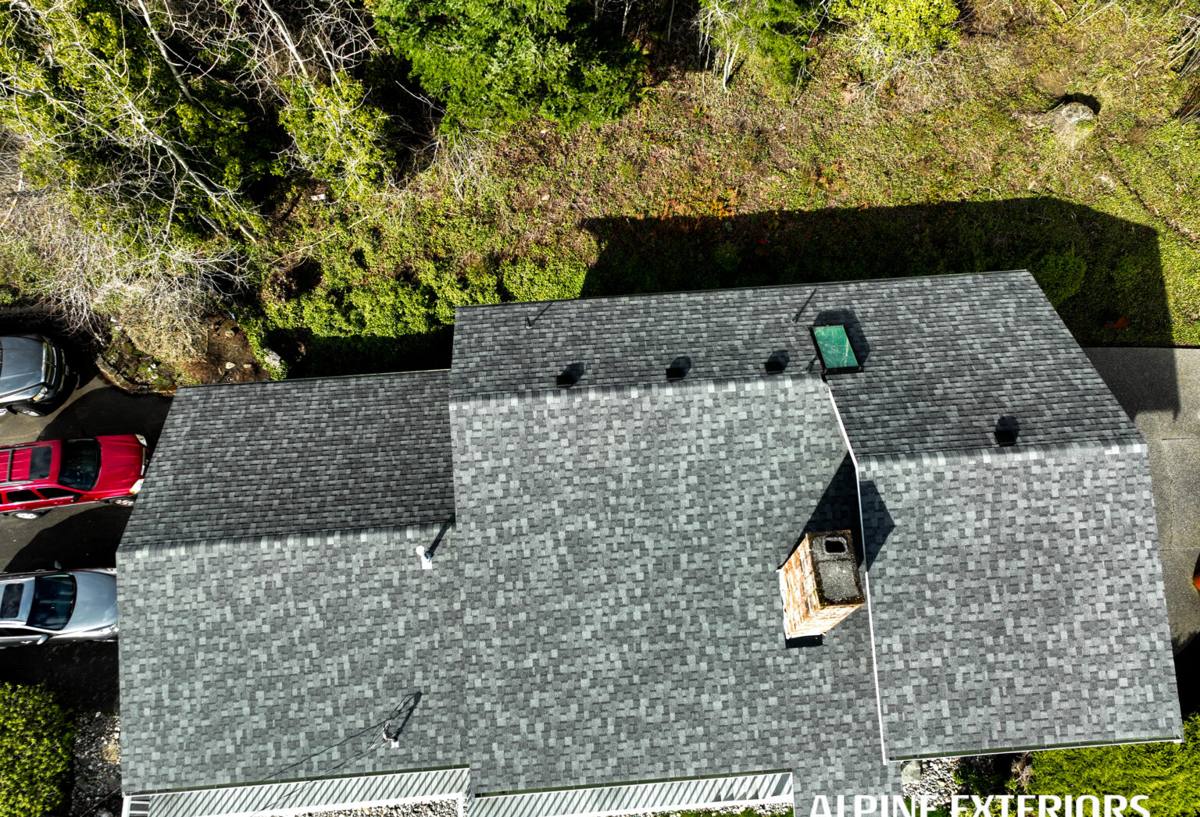
What Salt Air, Driving Rain, and Moss Actually Do to a Roof
Salt Air and Corrosion
Airborne salt accelerates corrosion on anything metal — nail heads, flashing, gutter fasteners, ridge vents, and the metal components inside a roofing system that most homeowners never see. A fastener that's slightly undersized or the wrong alloy for a coastal environment can start losing holding strength years before it would inland. Once fasteners back out or flashing corrodes at the seams, water finds a way in.
Wind-Driven Rain
Straight-down rain is easy for a roof to shed. Wind-driven rain coming in at an angle off the bay is a different problem — it can work its way up under shingle edges, through poorly lapped flashing, and into vents and penetrations that would never leak in calmer weather. This is why repair work in Blaine has to pay extra attention to laps, seals, and flashing direction, not just patching the obvious hole.
Moss and Organic Growth
Moss doesn't just look bad — it holds moisture against the roof surface, lifts shingle edges as it grows, and works its root structure into seams and granule surfaces. A long moss season in this part of Whatcom County means moss isn't a once-a-year nuisance; it's an ongoing condition that has to be managed as part of keeping a roof watertight, not treated as a separate cosmetic issue.
Signs a Blaine Roof Needs Repair Now
Most roof failures don't start with a dramatic leak — they start small and get ignored because they're easy to miss from the ground. Here's what we tell Blaine homeowners to watch for:
- Dark streaking or thick moss growth concentrated on north-facing or shaded slopes
- Granules collecting in gutters or at downspout outlets, a sign shingles are wearing thin
- Curling, cracked, or lifted shingle edges, especially on the side of the roof that faces prevailing wind
- Rust staining or visible corrosion around flashing, vents, or exposed fasteners
- Soft spots, sagging, or discoloration on interior ceilings, particularly after a windy rainstorm
- Daylight visible through the roof deck from inside an attic space
- Gutters pulling away from the fascia or showing rust at seams and hangers
Any one of these on its own might not mean much. Two or three together, especially after a stretch of wind-driven rain, usually means water is getting past the roof's first line of defense and it's worth having someone look before the next storm.
What an Honest, Correct Roof Repair Actually Involves
A real repair isn't a tube of roofing cement and a prayer. It starts with figuring out why the failure happened, not just where the water is showing up inside — those two spots are often several feet apart once you account for how water travels along a roof deck before it finds a gap in the drywall or ceiling below.
Diagnosis First
We trace the leak path from the interior damage back to the actual point of entry, checking flashing, valleys, penetrations, and shingle condition along the way. In a coastal environment like Blaine, we're also checking fastener condition and flashing metal for corrosion, since that's a common root cause here that wouldn't be the first suspect on an inland roof.
Repairing the Right Layer
Depending on what we find, a proper repair can involve:
- Replacing damaged or missing shingles and matching them as closely as possible to existing material
- Re-flashing valleys, chimneys, skylights, and vent penetrations with corrosion-resistant metal and correct lap direction for wind-driven rain
- Repairing or replacing underlayment where it's been compromised, not just covering over it
- Resetting or replacing fasteners that have backed out or corroded
- Addressing moss and organic buildup as part of the same visit, not a separate future call
- Checking attic ventilation, since poor airflow traps moisture and speeds up deterioration from the inside out
Skipping any of these steps to save time usually means the same leak reappears in a year, sometimes in a new spot after water has traveled further under the roofing material.
Repair or Replacement? How We Help You Decide
Not every roof problem in Blaine needs a full replacement, and we don't push one just because it's a bigger job. The honest answer depends on the roof's age, how widespread the damage is, and how much of the underlying deck and structure is still sound.
| Factor | Repair Usually Makes Sense | Replacement Worth Considering |
|---|---|---|
| Age of roofing material | Roof is under roughly two-thirds of its expected lifespan | Roof is near or past its expected service life |
| Extent of damage | Isolated to one slope, flashing point, or penetration | Multiple slopes affected, widespread granule loss or curling |
| Deck condition | Deck is solid where inspected | Soft or delaminated decking found in more than one area |
| Repair history | First or second repair on this roof | Repeated repairs to the same or nearby areas |
| Moss/organic damage | Surface growth without shingle lift | Moss has lifted shingles or damaged granule layers broadly |
We'll walk you through where your roof falls on that spectrum and give you a straight recommendation, including when repair is genuinely the smarter move for another few years of service.
Our Process, From First Call to Cleanup
- Initial conversation. We ask what you're seeing — interior staining, missing shingles, a storm event — so we know what to look for first.
- On-site inspection. We check the roof surface, flashing, penetrations, and attic if accessible, and we photograph what we find so you can see the actual condition, not just take our word for it.
- Written scope and estimate. You get a clear explanation of what's causing the issue and what fixing it correctly involves, in plain language, before any work starts.
- The repair itself. We match materials as closely as possible, detail flashing and laps for wind-driven rain, and address moss or debris that contributed to the problem.
- Cleanup and walkthrough. We clear debris, check gutters and downspouts near the repair area, and go over what we did before we consider the job finished.
Materials and Fasteners That Hold Up Near the Water
Not every roofing product performs the same way a few blocks from the water as it does further inland. We're careful about a few specific things on Blaine jobs:
Fastener and Flashing Metal
We use fasteners and flashing rated for coastal or high-moisture exposure rather than standard-grade material, since the difference in corrosion resistance directly affects how long a repair actually lasts. This is a small cost difference at the time of the repair and a much bigger one if corroded flashing causes a repeat leak in a few years.
Sealants and Underlayment
We favor underlayment and sealant products with proven performance under sustained moisture exposure rather than the cheapest option that technically meets code. A roof repair in a driving-rain environment like Blaine's isn't the place to cut corners on the materials nobody sees once the shingles go back on.
Shingle and Material Matching
When we're replacing a section rather than a full roof, we do our best to match existing material in profile and color so the repair blends in rather than standing out as an obvious patch. Exact matches aren't always possible with older roofs, and we'll tell you honestly if that's the case before starting.
Managing Moss and Ongoing Roof Health After the Repair
A repair fixes the current problem, but Blaine's moss season means ongoing maintenance matters more here than in drier parts of the state. A few habits go a long way:
- Keep gutters and downspouts clear so water isn't backing up against roof edges
- Trim back overhanging branches that keep roof sections shaded and damp
- Have moss growth addressed before it lifts shingle edges, not after
- Schedule a roof check after major windstorms, since wind-driven rain damage isn't always visible from the ground
- Watch attic ventilation — trapped moisture speeds up deterioration from underneath
We're happy to point out what to watch for on your specific roof during the repair visit, since prevention is a lot cheaper than another repair call in a year or two.
Why It Matters to Hire a Crew That Already Works Blaine
A roofer who mostly works drier, inland jobs isn't necessarily going to think about flashing lap direction for wind-driven rain, or reach for coastal-grade fasteners by default. Those aren't exotic techniques, but they're details that matter more here than in most of Whatcom County, and they're easy to skip if they're not part of your regular routine.
We work on homes throughout Lynden and the surrounding area, including Blaine, and we bring the same standard to every roof: diagnose the real cause, repair it with materials suited to the actual conditions, and tell you honestly whether a repair or a bigger fix is the right call. No pressure toward replacement when a repair will genuinely do the job, and no shortcuts that leave you calling us back for the same leak next winter.
If you're seeing signs of trouble on your roof, or just want an honest look before the next round of fall storms, we'd be glad to come take a look. Fill out the form below for a free, no-pressure estimate.