 Lynden Window
 Why Blaine's Marine Climate Wears Out Siding Faster Than Inland Lynden
Blaine sits right on the water, at the edge of Whatcom County where Drayton Harbor and the Strait of Georgia meet the Canadian border. That waterfront position is part of what makes the town beautiful, and it's also exactly why siding here takes more punishment than siding a few miles inland in Lynden. Salt-laden marine air, wind-driven rain off the water, and long stretches of shade during the wet season combine to break down the wrong siding material faster than most homeowners expect.
Salt Air and Corrosion
Airborne salt doesn't just affect boats and dock hardware. It settles on exterior walls, works into seams and fastener heads, and accelerates corrosion on anything metal — trim flashing, nail heads, hose bibs, light fixtures. Siding materials that rely on exposed metal fasteners or unprotected edges show pitting and staining sooner in Blaine than they would twenty minutes east. It's a slow process, which is exactly why it gets ignored until the damage is already cosmetic and structural.
Driving Rain and Wind-Driven Moisture
Storms coming off the Strait of Georgia don't just drop rain straight down — wind pushes it sideways, driving water into laps, seams, and anywhere a wall assembly has a weak point. Siding that depends on face-sealed caulking rather than a properly drained assembly behind it is a bad match for this kind of weather. Water that gets behind the cladding needs somewhere to go and dry out; if it doesn't have that path, it sits against sheathing and framing.
A Long, Shaded Moss Season
Whatcom County's wet season stretches from fall through spring, and Blaine's tree cover and marine humidity keep north- and west-facing walls damp for long periods. That's ideal growing conditions for moss and algae on siding surfaces, especially in shaded corners, under eaves, and behind landscaping. Left alone, moss holds moisture against the wall surface and can accelerate deterioration in materials that aren't built to handle sustained dampness.
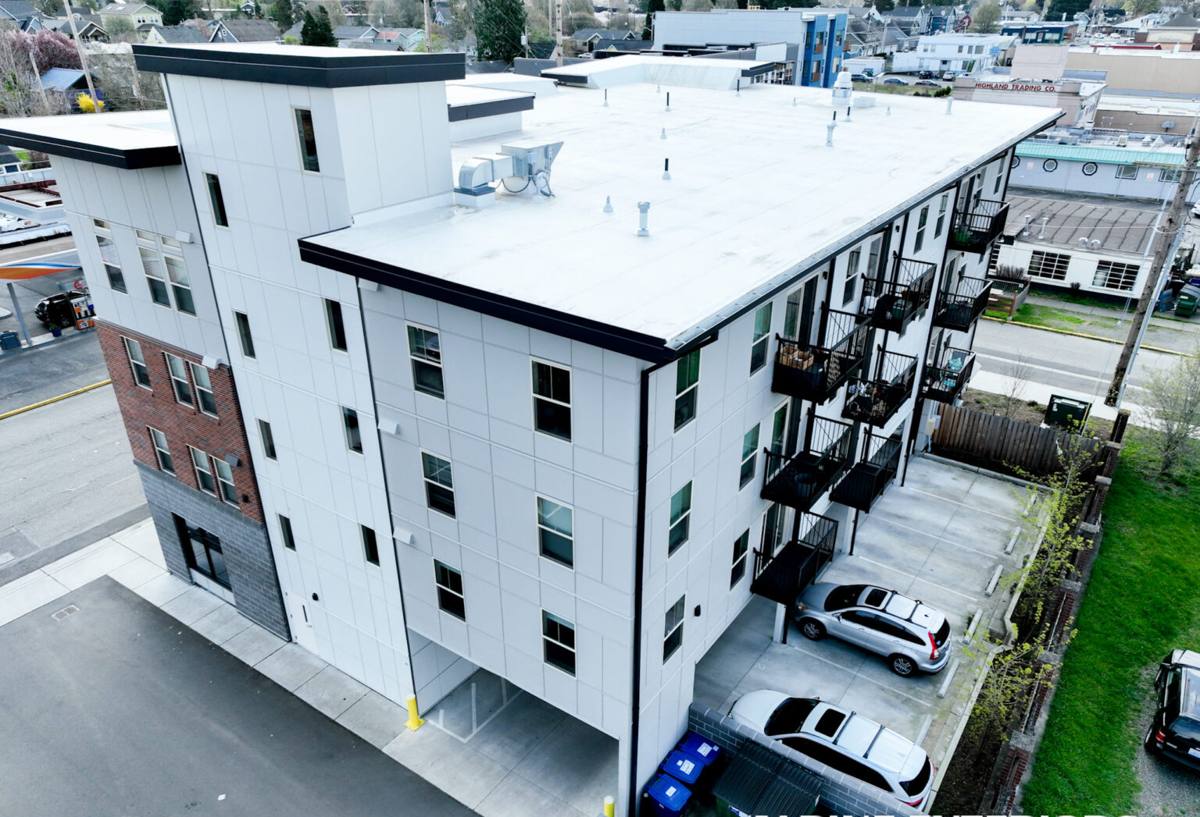
What Correct Fiber Cement Installation Looks Like in This Environment
Fiber cement siding performs well in Blaine's climate, but only when it's installed correctly. A rushed or by-the-book-minimum installation can leave the same moisture vulnerabilities that plague weaker materials — the product is only as good as the assembly behind it.
The Rainscreen Gap
A drainage gap between the siding and the water-resistive barrier lets any moisture that gets past the cladding drain and evaporate instead of sitting against the wall. On a coastal, wind-exposed property like a Blaine home, this detail matters more than it does on a sheltered inland lot. We build this gap in as standard practice, not as an upsell.
Flashing, Housewrap, and Penetrations
Every window, door, hose bib, and vent penetration is a place water can get behind the siding if it isn't flashed correctly. That means proper head flashing above openings, correctly lapped housewrap, and sealant used only where it's supposed to carry the load — not as a substitute for physical water management. Given the wind-driven rain this area sees, we don't treat these details as optional steps to speed through.
Fastening and Joint Treatment
James Hardie panels and lap siding have specific fastening patterns, nail penetration depth requirements, and joint treatment methods spelled out by the manufacturer. Installers who don't follow them void the product warranty and create the exact seams and gaps that salt air and driving rain exploit over time. Butt joints, corners, and board ends get sealed and flashed according to spec — every time, not just where it's convenient.
Why We Install Only James Hardie
We don't install vinyl, LP SmartSide, Cemplank, Allura, primed spruce, or cedar. That's not a marketing position — it's a standard we hold because of what we've seen these products do (and not do) in exactly this climate. Vinyl can warp and become brittle with UV and temperature swings and offers little defense against wind-driven rain at the seams. Engineered wood products and untreated wood sidings carry ongoing moisture and pest vulnerabilities that demand more maintenance than most homeowners want to keep up with in a wet marine climate. Other fiber cement brands may be reasonable products, but we've standardized on one system so our crews install it correctly every time, and so warranty and product support are never in question.
James Hardie's HZ5 product line is engineered specifically for climates like ours — freeze-thaw cycles, sustained moisture, and coastal exposure. The ColorPlus factory finish is baked on under controlled conditions rather than field-applied, which means better color consistency and adhesion than a job-site paint job, particularly useful in an area where humidity can complicate on-site painting and touch-up work. Fiber cement is also non-combustible, which matters increasingly for wildfire-adjacent insurance considerations even in a wet coastal county. And because it's backed by a strong transferable warranty, homeowners aren't left exposed if something goes wrong years down the road or the home changes hands.
Fiber Cement vs. Other Siding Options for a Blaine Home
Here's how the materials we're asked about most often actually compare in a salt air, high-rain environment like Blaine's:
| Material | Salt Air / Moisture Behavior | Maintenance Burden | Typical Lifespan (installed to spec) |
|---|---|---|---|
| James Hardie fiber cement | Non-combustible, dimensionally stable, holds factory finish well in humidity | Occasional cleaning; repaint not required for decades with ColorPlus | 30+ years |
| Vinyl siding | Can warp/crack with temperature swings; seams vulnerable to wind-driven rain | Low, but limited repair options if damaged | 15–25 years |
| LP SmartSide / engineered wood | Wood-based core is moisture-sensitive; edge sealing is critical and easy to miss | Regular inspection of seams and cut edges | 20–30 years with diligent upkeep |
| Cedar / primed spruce | Natural wood absorbs moisture; prone to rot and pest issues in sustained damp conditions | Frequent repainting/staining and moisture monitoring | 15–25 years with heavy maintenance |
This isn't a knock on every alternative — it's why, given what this specific climate demands, we've chosen to put our name behind one product system rather than offer several and hope the wrong one doesn't get picked for the wrong house.
Our Process, Start to Finish
Every Blaine project follows the same sequence, whether it's a full re-side or a section replacement:
- On-site assessment of the existing siding, sheathing condition, and any trouble spots specific to the home's exposure (shaded walls, wind-facing elevations, low areas prone to splashback).
- A written estimate that spells out product line, color, and scope — no vague allowances.
- Removal of old siding and inspection of the sheathing and water-resistive barrier underneath; any rot or damage is addressed before new siding goes up, not covered over.
- Installation of housewrap, flashing, and the rainscreen gap per manufacturer and code requirements.
- James Hardie panel or lap installation with correct fastening, joint sealing, and trim work.
- Final walkthrough with the homeowner before we consider the job done.
Living With Fiber Cement Siding in a Salt-Air, Moss-Prone Climate
One reason we recommend James Hardie for this area is how little upkeep it actually needs compared to the alternatives — but "little" isn't "none." A short annual routine keeps it looking right and catches small issues before they become expensive ones:
- Rinse the exterior with a garden hose (not a pressure washer aimed directly at seams) once or twice a year, especially on salt-exposed and shaded elevations.
- Check shaded, north- and west-facing walls for early moss or algae growth and treat it before it spreads.
- Keep gutters clear so overflow isn't running down the siding face during heavy rain events.
- Trim back landscaping that keeps a wall surface damp or blocks airflow and sunlight.
- Inspect caulking at trim joints, window edges, and penetrations annually and have any gaps addressed promptly.
- Watch for chalking, fading, or lifted edges at butt joints, which can signal a flashing or sealant issue worth checking.
Signs Your Blaine Home's Siding Needs Attention Now
Some warning signs are worth acting on before they turn into sheathing or framing repairs. Persistent dark streaking or moss that returns quickly after cleaning suggests moisture isn't drying out the way it should. Soft or spongy spots, especially near the bottom courses or around window trim, usually mean water has already gotten behind the cladding. Visible warping, cracking, or separated seams on existing siding — particularly on vinyl or wood-based products — are signs the material is reaching the end of what it can handle in this environment. Any of these is worth a professional look rather than a wait-and-see approach, since coastal moisture problems tend to get more expensive the longer they sit.
Why Hiring a Crew That Already Works Blaine Matters
Siding installation isn't identical from house to house, and it especially isn't identical from town to town along this stretch of Whatcom County. A crew that regularly works Blaine's waterfront-influenced properties already knows which elevations take the worst of the wind-driven rain, where moss tends to establish first, and how to sequence a job around this area's wet-season weather windows. That familiarity shows up in the small decisions — where extra flashing attention goes, which details get reinforced instead of built to the bare minimum — that separate a siding job that holds up for decades from one that starts showing problems in five years.
If you're weighing your siding options for a Blaine property, we're happy to take a look and walk you through what your home specifically needs. Reach out for a free, no-pressure estimate — there's no obligation, just a straight assessment of your siding and what correct installation would involve.