 Lynden Window
 Why Birch Bay Roofs Take a Different Kind of Beating
Birch Bay sits right on the water in Whatcom County, and while it's a short drive from Lynden, the roofing conditions out there aren't the same as roofs a few miles inland. Salt-laden air blows off the bay and settles on every exposed surface — flashing, fasteners, vent caps — and it corrodes metal faster than a roof set back from the shoreline ever experiences. Add winter storms that drive rain sideways into eaves and valleys, plus a moss season that can run eight or nine months a year in the damp, often-shaded microclimate near the water, and you get a roof that ages faster than its calendar age would suggest. A repair out here has to account for all three factors at once — salt, wind-driven rain, and moss — not just patch the spot where water is currently getting in.
That's the difference between a repair that holds and one that reopens in a year. A patch that ignores corroded fasteners underneath, or that seals over moss instead of clearing it, buys a homeowner a little time and not much else.
Signs a Birch Bay Roof Needs Repair
Most roof problems out here show themselves gradually, not all at once. Here's what we tell homeowners to watch for between inspections:
- Granule buildup collecting in gutters or at the base of downspouts — shingles losing their protective coating faster than normal, which salt air and sun exposure both accelerate.
- Moss or algae streaking on north-facing slopes, especially in valleys, along eaves, and under overhanging trees.
- Rust staining around flashing, pipe boots, or exposed fastener heads.
- Soft spots, discoloration, or a musty smell on interior ceilings near exterior walls, particularly after a windy rainstorm.
- Curling, cracked, or missing shingles concentrated on the side of the roof that faces the water and takes the worst of the weather.
- Gutters overflowing during heavy rain or pulling away from the fascia board.
Any one of these on its own might not mean much. Two or three together, especially combined with a roof that's more than 12–15 years old, usually means it's worth a look before the next storm season.
What a Correct Repair Actually Involves
Flashing and Sealant Points First
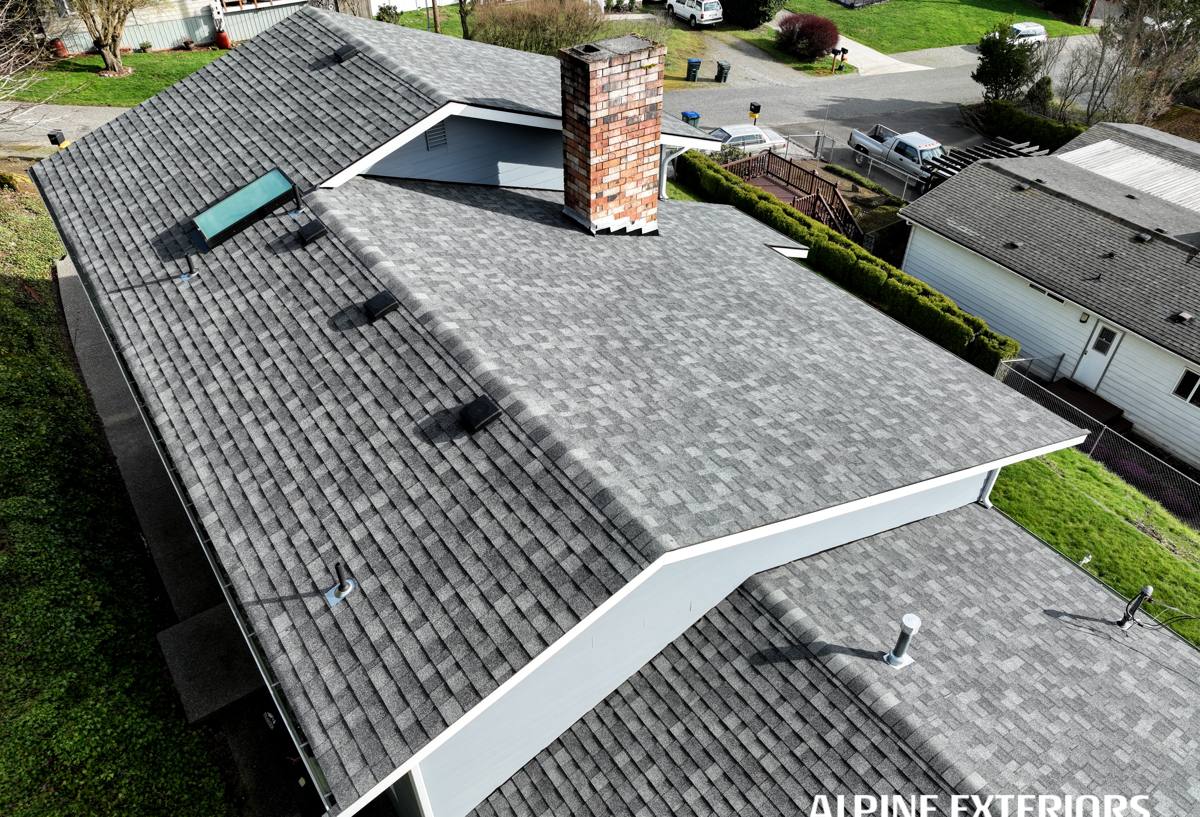
Most leaks near Birch Bay don't start in the open field of the roof — they start at transitions: chimney flashing, skylight curbs, vent boots, and roof valleys where two slopes meet. Salt air corrodes thin metal flashing and exposed fasteners faster here than it does further inland, so a repair that only re-seals the surface without checking the metal underneath tends to fail again within a season. Doing this correctly means pulling back the surrounding shingles, inspecting the flashing and the deck beneath it, replacing corroded metal rather than caulking over it, and re-installing with fasteners rated for the exposure.
Moss and Debris Removal Before Any Patch
You can't repair a roof correctly while moss is still holding moisture against the shingles. Moss acts like a sponge — it keeps the roof surface wet long after the rain stops, which softens shingles, lifts edges, and works its way under flashing. Any legitimate repair starts with clearing moss and debris from the affected area and the drainage path around it, not just from the specific spot that's leaking.
Matching Materials, Not Just Covering the Spot
Shingles fade and weather over time, and a patch using mismatched material stands out and can behave differently in wind and rain than the surrounding roof. We match shingle type, weight, and where possible color generation to the existing roof, and we tie new underlayment into the old correctly rather than just layering a patch on top — a shortcut that traps moisture rather than shedding it.
Salt Air and Corrosion: The Part Many Repairs Skip
This is the piece that separates a coastal repair from a generic one. Standard galvanized fasteners and light-gauge flashing hold up fine in most of Whatcom County, but on a roof exposed to Birch Bay's salt air, they corrode noticeably faster — sometimes within a handful of years instead of the decade or more you'd expect inland. When we're repairing flashing, fasteners, or metal drip edge on a Birch Bay home, we default to corrosion-resistant materials suited to the exposure rather than whatever's cheapest, because replacing rusted-out flashing again in three years costs more than doing it right the first time. It's a maintenance-burden and long-term-cost tradeoff, and for a home this close to the water, it's usually worth the difference.
Roof Repair Cost Factors in Birch Bay
Every roof is different, so we won't quote a number without seeing the roof. But homeowners planning ahead should know what tends to move the price up or down:
| Factor | How It Affects Cost |
|---|---|
| Size and location of the damaged area | A single flashing repair costs far less than a section affecting multiple slopes or valleys. |
| Moss and debris buildup | Heavier moss coverage means more removal work before any repair can begin. |
| Underlying deck condition | If water has been getting in a while, the plywood deck underneath may need partial replacement, not just the shingles. |
| Material matching | Older or discontinued shingle lines can be harder to match and may cost more to source. |
| Roof pitch and access | Steeper roofs or homes with limited access on tight waterfront lots take more time and safety setup. |
| Corrosion-resistant materials | Upgrading flashing and fasteners for salt exposure adds a modest cost up front but reduces repeat repairs. |
As a general guide, a straightforward flashing or vent-boot repair often lands in the low hundreds of dollars, while repairs involving moss remediation, deck replacement, or multiple roof sections can run well into the low thousands. We'll always walk you through the actual scope before any work starts.
Our Roof Repair Process
- Free on-site inspection. We walk the roof (or use a camera where access is limited) and check attic ventilation and interior ceilings for signs of moisture, not just the visible exterior damage.
- Documented findings. We show you what we found — photos of flashing condition, moss coverage, deck condition where relevant — so you're not taking our word for it.
- Written estimate with options. If there's more than one reasonable way to fix it, we explain the tradeoffs rather than defaulting to the most expensive option.
- The repair itself. Moss and debris cleared first, damaged materials removed, deck checked, and matched materials installed with corrosion-resistant fasteners where the exposure calls for it.
- Post-repair walkthrough. We show you the completed work and explain what was done and why.
- Maintenance recommendations. If we spot early moss regrowth risk, clogged gutters, or ventilation issues that will shorten the life of the repair, we'll tell you — even if it's not something we're billing you for that day.
Repair vs. Replacement: How We Decide
Not every roof problem needs a full replacement, and we don't default to recommending one. The decision usually comes down to a few honest questions:
| Consideration | Leans Toward Repair | Leans Toward Replacement |
|---|---|---|
| Age of roof | Under roughly two-thirds of its expected lifespan | Nearing or past its expected lifespan |
| Extent of damage | Isolated to one area or a few penetrations | Spread across multiple slopes or recurring in different spots |
| Deck condition | Solid, no widespread rot or soft spots | Multiple areas of deck damage found during inspection |
| Repair history | First or second repair on this roof | Same areas have needed repeat repairs |
If a roof is genuinely a repair candidate, we'll say so — a full replacement isn't the right call just because it's the bigger job.
Why Hiring a Crew That Already Works Birch Bay Matters
Birch Bay's roofs are a specific case within Whatcom County's coastal weather pattern — different exposure than Lynden proper, different moisture load than the county's more inland communities. A crew that hasn't worked this stretch of coastline before can miss things: they may not think to check fastener corrosion on a five-year-old roof because it wouldn't be a concern where they usually work, or they may not budget enough time for moss removal because they're used to lighter growth inland. Working this area regularly means knowing which materials actually hold up against salt air, how to schedule around the wetter stretches of the year, and how to work efficiently on the tighter, waterfront-adjacent lots common in Birch Bay. That familiarity shows up in fewer surprises and repairs that are built for the exposure they'll actually face.
Maintenance Between Repairs
A good repair buys you years, but a few habits stretch that further, especially this close to the water:
- Clear gutters and downspouts at least twice a year, more often if you're under trees — clogged gutters back water up under shingles and eaves.
- Trim back overhanging branches to cut down on the shade and debris that feed moss growth.
- Have moss treated or removed before it establishes rather than after it's visibly thick — it's a smaller job either way.
- Check attic ventilation periodically; poor airflow traps moisture and speeds up deterioration from the inside.
- After any major windstorm, do a visual check (or have us do it) for lifted shingles or displaced flashing before the next rain finds them.
Get an Honest Look at Your Roof
If you're seeing moss, staining, or a leak that's just starting to show itself, it's worth getting eyes on it before the next storm makes it worse. We offer free, no-pressure estimates for Birch Bay homeowners — we'll tell you plainly whether it's a repair, what it involves, and what it'll take to make it last in this climate. Fill out the form below to get started.