 Lynden Window
 Bellingham's Climate Is Hard on Windows
Bellingham sits close enough to the Salish Sea that homes here deal with a combination most inland towns never see: salty, moisture-laden air off the water, wind-driven rain that hits siding sideways instead of straight down, and a stretch of gray, shaded months where surfaces barely get a chance to dry out. None of that is dramatic on any given day, but it adds up year after year. Windows are one of the first places that slow damage shows up, because every window is a manufactured seam in an otherwise continuous wall — hardware, weatherstripping, sealant, and flashing all have to keep working together, and in this climate they're working harder than they would almost anywhere else in Whatcom County.
Salt Air and Coastal Exposure
Airborne salt is corrosive to metal hardware — hinges, locks, balance systems, and screen frames — especially on homes with more direct westerly or southerly exposure. Over years, this can mean stiff or failing hardware well before the glass or frame itself would otherwise need attention. It's a slow process, so it's easy to miss until a window won't latch properly or a lock starts binding.
Driving Rain and Wind-Driven Water
Straight-down rain is easy for almost any window to shed. Wind-driven rain is a different problem — it gets pushed sideways and even slightly upward into gaps that would otherwise stay dry, which is why flashing detail and sill design matter more here than in a calmer climate. A window that's rated fine on paper can still leak if it wasn't installed with this kind of weather in mind.
Moss Season and Prolonged Dampness
Whatcom County's long wet season means moss and mildew get a real foothold on north-facing walls, shaded trim, and anywhere airflow is limited. Around windows, that translates to trim and sills staying damp longer than they should, which accelerates wood rot on older wood-frame windows and can trap moisture against sealant and flashing on newer ones if they weren't detailed correctly.
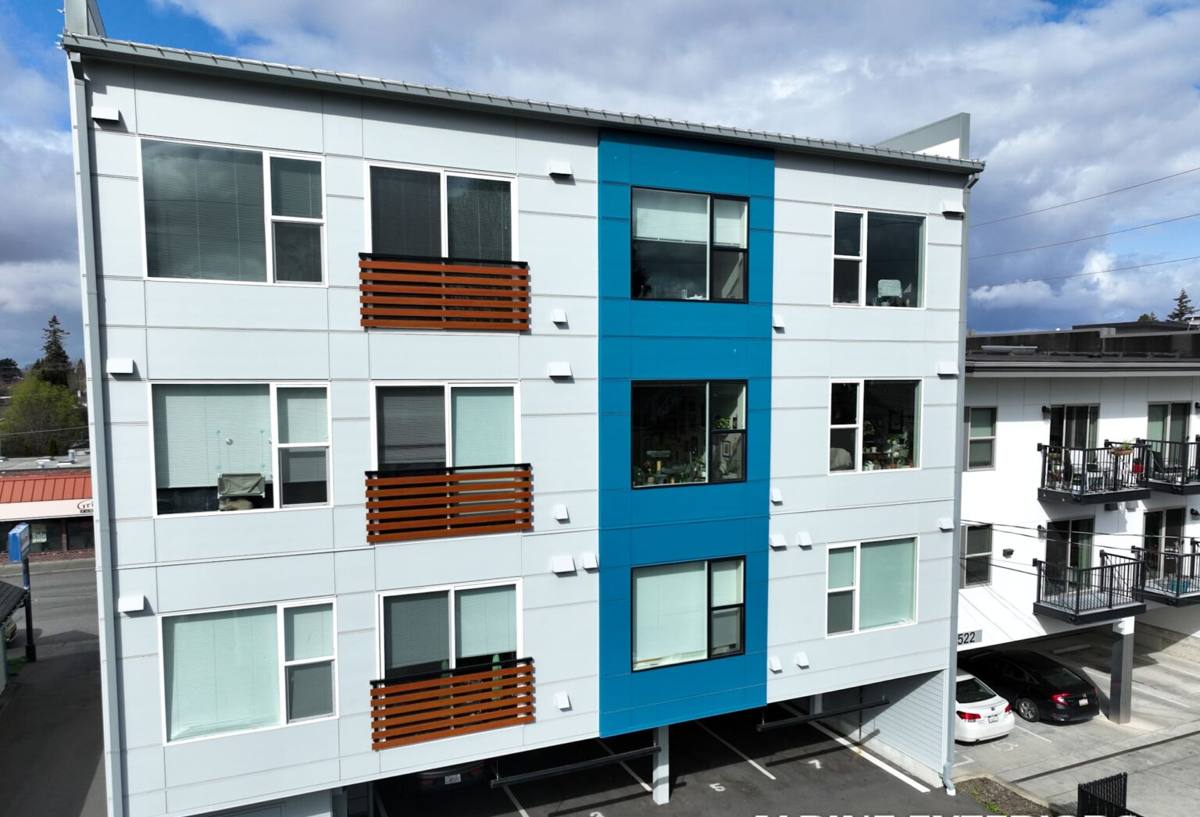
Signs Your Bellingham Home's Windows Are Ready for Replacement
Some of these show up gradually, so it helps to walk your home's windows on a rainy day and check for them directly rather than waiting for an obvious failure.
- Fogging or a hazy film between panes of glass — the seal has failed and the insulating gas is gone
- Noticeable drafts near the frame, even with the window fully latched
- Soft, spongy, or discolored wood at the sill or lower corners of the frame
- Windows that are difficult to open, close, or lock, or that have been painted shut
- Condensation forming on the inside of the glass regularly, not just on the coldest mornings
- Visible gaps, cracked glazing putty, or failing caulk around the exterior trim
- Moss or dark staining building up on the sill or trim faster than on the rest of the wall
- Single-pane glass, especially in a home that hasn't been updated since its original construction
Any one of these on its own isn't necessarily an emergency, but a few of them together usually mean the window is past the point where caulk and weatherstripping can fix it.
What a Correct Window Replacement Job Actually Involves
Window replacement looks simple from the outside — old window out, new window in — but the work that determines whether it holds up in this climate happens in the details most homeowners never see once the trim goes back on.
Removal and Opening Inspection
Once the old window is out, the rough opening gets inspected before anything new goes in. This is the point where hidden wood rot, old or missing flashing, and framing issues get caught. Skipping this step and just dropping a new window into a compromised opening is how problems get sealed up and hidden rather than fixed.
Flashing and Weatherproofing
This is the single most important step for a coastal, high-rainfall area like Bellingham. Proper flashing directs any water that gets past the window itself back out and away from the wall assembly, rather than letting it collect behind the siding. Sill pans, head flashing, and correctly lapped water-resistive barrier all matter here — done right, they're invisible; done wrong, they cause damage that won't show up for a year or more.
Insulation and Air Sealing
The gap between the window frame and the rough opening needs to be sealed and insulated, not just caulked at the surface. This affects both energy efficiency and how well the window resists the drafts that come with wind-driven weather.
Installation and Finish Work
The window is set plumb, level, and square, fastened per the manufacturer's specifications, and the interior and exterior trim work is finished to match the rest of the home. A window that's slightly out of square will bind, won't seal evenly, and will wear out its hardware faster.
Choosing Materials and Glass That Hold Up Here
There's no single "best" window material for every home — it depends on exposure, budget, and how the rest of the house is built. What matters most for Bellingham is how a material handles sustained moisture and salt-air exposure over time, not just how it performs on a spec sheet.
| Material | How It Handles Salt Air & Moisture | Maintenance | Typical Lifespan |
|---|---|---|---|
| Vinyl | Won't corrode or rot; performs consistently in coastal exposure | Low — occasional cleaning | 20-30+ years |
| Fiberglass | Very stable in temperature swings and moisture; strong long-term performer | Low | 30-40+ years |
| Wood or Wood-Clad | Handsome, but the wood core is vulnerable if the exterior cladding or finish is ever breached | Higher — finish and seals need regular attention | Varies widely with upkeep |
| Aluminum | Durable frame, but conducts cold and can be prone to condensation without a thermal break | Low | 20-30 years |
Our general standard for coastal Whatcom County homes leans toward vinyl or fiberglass for most projects, simply because they hold up to sustained moisture and salt exposure with the least ongoing maintenance. We'll still install wood or wood-clad windows when a homeowner wants that look and understands the upkeep it requires — it's a legitimate choice, just one with a different maintenance commitment.
Glass Packages Worth Considering
| Glass Option | What It Does | Worth It For |
|---|---|---|
| Standard double-pane, low-E | Good baseline insulation and UV control | Most rooms and budgets |
| Double-pane with argon fill | Improved thermal performance over standard double-pane | Homes prioritizing energy efficiency |
| Triple-pane | Best insulation and sound dampening, at added weight and cost | North- or west-facing rooms, or homes near busier roads |
| Impact or laminated glass | Added durability and security | Ground-floor windows or storm-prone exposures |
How We Approach a Bellingham Window Replacement
On-Site Assessment
We walk the home in person, note each window's exposure and condition, and check how the existing openings were flashed and framed. Windows on the same house often have different needs depending on which direction they face.
Product Selection
We go over material, glass, and style options based on your home's exposure and your budget — including where it's worth spending more and where a standard option performs just as well.
Installation Day
We work one opening at a time so your home is never sitting wide open to the weather, which matters on a job site where rain can move in without much warning. Each opening gets inspected, flashed, insulated, and finished before we move to the next.
Final Walkthrough
Every window gets operated, checked for a square, even seal, and reviewed with you before we consider the job done. We clean up the work area and haul away the old windows and debris.
Why Local Experience in Bellingham Matters
A crew that regularly works Bellingham and the surrounding Whatcom County area has already seen how different exposures on local homes behave — which walls take the worst of the wind-driven rain, which orientations stay damp longest into the moss season, and where extra flashing detail earns its keep versus where it's unnecessary cost. That's not something you can fully get from a spec sheet or a one-size-fits-all install checklist. It also means we're a known, reachable crew if a question comes up after the job is finished, rather than a company that installed once and moved on to the next region.
Keeping New Windows Performing Through the Wet Season
New windows are close to maintenance-free, but a little seasonal attention goes a long way in this climate:
- Keep weep holes at the bottom of the frame clear of dirt, moss, and debris so water can drain properly
- Rinse salt residue off frames and glass a few times a year, especially on more exposed sides of the house
- Check exterior caulking annually and touch it up if it's cracking or pulling away
- Trim back vegetation or clean gutters that are keeping a window shaded and damp longer than necessary
- Operate each window a few times through the year so hardware doesn't seize up from disuse
What Affects the Cost of Window Replacement
Costs for window replacement vary a fair amount project to project, but the main factors are consistent: the number and size of windows, the material and glass package chosen, whether it's a straightforward replacement or one that requires additional framing or siding repair, and access on the day of the install. As a broad general guide, homeowners in this area typically see per-window installed costs ranging from a few hundred dollars for a standard vinyl replacement up into the low thousands for larger openings, premium materials, or triple-pane glass — with whole-house projects priced accordingly. The only way to get a real number is a walkthrough of your specific windows, since exposure and condition vary window to window even on the same house.
If your windows are drafty, fogged, hard to operate, or just original to a home that's due for an update, we're happy to take a look and put together a straightforward, no-pressure estimate for your Bellingham home. Fill out the form below and we'll get in touch to schedule a time that works.