 Lynden Window
 Bellingham Roofs Work Harder Than People Realize
Bellingham sits close enough to the water that salt-laden air is a real factor in how roofing materials age, and it gets enough sustained rain — often blowing sideways off Bellingham Bay — that a roof here needs more than just shingles nailed in a straight line. Add a shaded, moisture-heavy tree canopy in a lot of Bellingham neighborhoods and you get a long moss season that can run nearly year-round on north-facing slopes. None of this is dramatic on its own, but stacked together over 15-20 years, it's exactly the combination that shortens a roof's usable life if the original installation didn't account for it.
A roof replacement in this part of Whatcom County isn't just about swapping old shingles for new ones. It's about correcting whatever the previous roof got wrong — usually ventilation, underlayment, or flashing — so the new one actually lasts through the climate it's going to face.
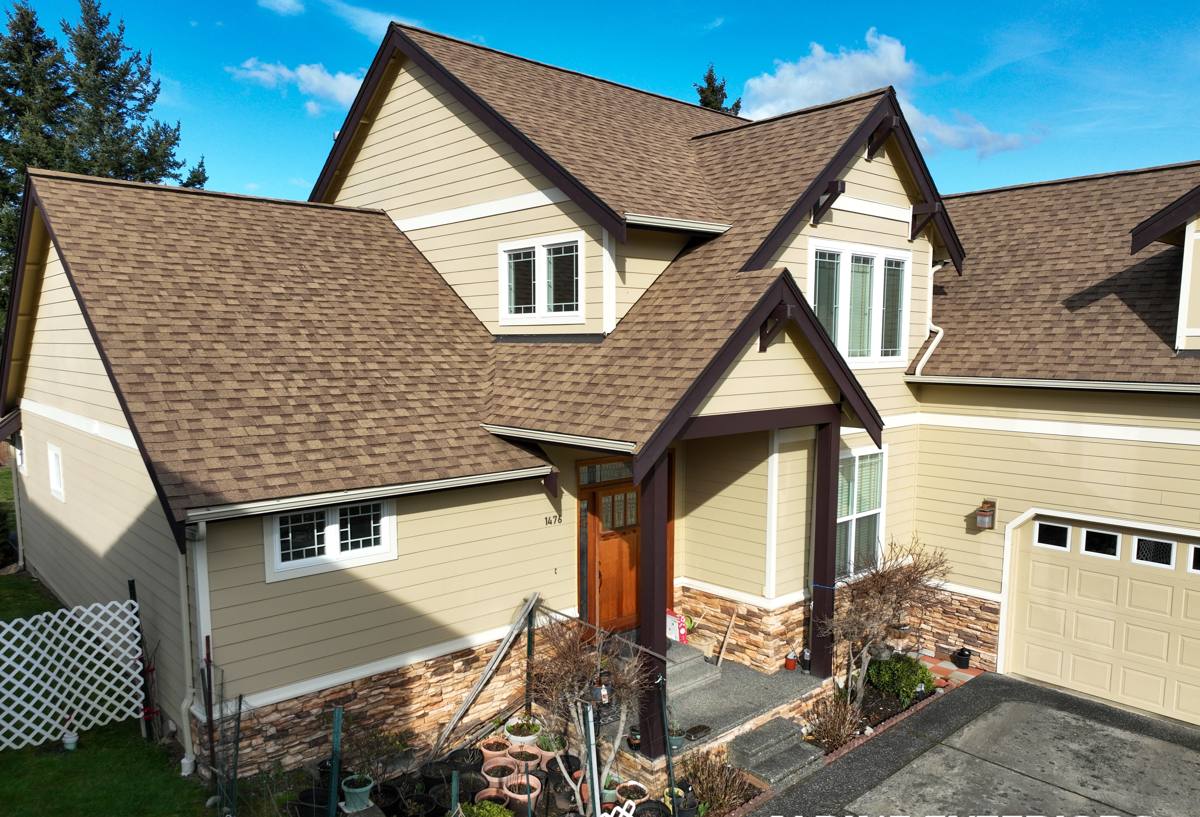
What Bellingham's Climate Actually Does to a Roof
Driving Rain and Wind-Driven Moisture
Rain that falls straight down is easy to shed. Rain that comes in at an angle, pushed by wind off the bay, works its way under shingle tabs, around vent pipes, and into any flashing that was installed loosely or caulked instead of properly lapped. Over time this shows up as soft spots in the decking, water stains on interior ceilings, or a slow rot at the eaves that isn't visible until a contractor pulls the shingles back.
Salt Air and Metal Fatigue
Homes closer to the water deal with airborne salt that accelerates corrosion on exposed metal — flashing, fasteners, gutters, and any metal roofing panels. It's not enough to ruin a roof in a few years, but it does mean fastener and flashing quality matters more here than it would further inland, and it's a real factor when weighing metal roofing for a Bellingham home.
Moss and Constant Dampness
Bellingham's moss season is long because the conditions that grow moss — shade, moisture, and moderate temperatures — are present most of the year, not just in winter. Moss holds water against the roof surface, works its way under shingle edges as it grows, and can lift shingles enough to create an entry point for leaks. A roof that isn't detailed to shed moisture and resist moss growth from the start will need moss treatment or premature replacement far sooner than one that is.
Signs a Bellingham Roof Is Due for Replacement
- Granule loss showing up in gutters or downspouts, especially after wind or heavy rain
- Shingles that are cupping, curling at the edges, or visibly cracked
- Moss buildup that comes back within a season or two of cleaning
- Dark streaking or staining that doesn't wash off with light cleaning
- Soft or spongy spots when walking the roof, or sagging visible from the ground
- Daylight visible through the attic decking, or damp insulation after storms
- A roof that's 20+ years old and has never been reroofed, even if it "looks fine" from the street
- Repeated small leaks that keep getting patched instead of resolved
Any one of these can sometimes be handled with a repair. Several at once, or a roof already past its expected service life, usually points to replacement being the more cost-effective long-term choice.
What a Correct Roof Replacement Involves Here
A roof replacement done right for this climate is built in layers, and each layer has a job. Skipping or shortcutting any one of them is where most premature roof failures in Whatcom County start.
Tear-Off and Deck Inspection
We remove the old roofing down to the deck rather than laying new shingles over old ones. This is the only way to actually see the condition of the sheathing — soft or rotted decking has to be replaced before anything new goes down, and there's no way to know it's there without pulling the old roof off.
Underlayment
Given how much wind-driven rain Bellingham gets, underlayment choice matters more here than in drier climates. Synthetic underlayment with taped or lapped seams, combined with self-adhered ice-and-water membrane at eaves, valleys, and around penetrations, gives the roof a real second line of defense if wind ever drives water past the shingles themselves.
Flashing
Flashing around chimneys, skylights, vent pipes, and roof-to-wall transitions is where the majority of leaks originate — not the open field of shingles. Correct flashing is metal, properly lapped with the underlayment and shingles (never just sealed with caulk as a substitute for proper lapping), and sized to handle sideways-driven rain, not just vertical runoff.
Ventilation
A roof deck that can't breathe traps moisture underneath it, which speeds up rot and gives moss and algae an easier foothold from below as well as above. Balanced intake and exhaust ventilation — soffit vents paired with ridge or roof vents — keeps the attic space dry and close to outdoor temperature, which also protects the shingles themselves from premature aging.
Moss-Resistant Details
On roofs with heavy shade or a history of moss, we'll often recommend algae-resistant shingles (shingles with copper-infused granules) and, where appropriate, zinc or copper strips near the ridge that release trace metal ions with rainfall to inhibit new moss growth. These are add-ons, not substitutes for proper ventilation and drainage, but they meaningfully extend the time between moss treatments.
Choosing a Roofing Material for This Climate
| Material | How It Handles Rain & Salt Air | Moss Resistance | Typical Lifespan Here |
|---|---|---|---|
| Architectural asphalt shingle | Good when properly flashed and underlaid; standard choice locally | Good with algae-resistant granules; moderate otherwise | 20-30 years |
| Standing seam metal | Sheds wind-driven rain very well; needs quality fasteners and coatings near salt air | Excellent — few surfaces for moss to grip | 40-60 years |
| Cedar shake | Traditional look, but higher maintenance in constant damp conditions | Requires regular treatment to resist moss and rot | 20-30 years with upkeep |
| Synthetic composite shingle | Good moisture resistance, consistent performance | Good, especially with algae-resistant formulations | 30-50 years |
There's no single "correct" material for every Bellingham home — it depends on the roof's exposure, the amount of shade it sits under, the home's architecture, and budget. What matters is that whichever material is chosen, it's installed with the underlayment, flashing, and ventilation details this climate actually requires.
Our Roof Replacement Process
- On-site inspection. We walk the roof and attic, check for soft decking, note ventilation gaps, and look at how the current roof has performed against wind and moisture exposure.
- Written estimate. A clear scope covering materials, tear-off, decking allowance, underlayment, flashing, and ventilation — no vague line items.
- Material selection. We walk through the honest trade-offs between shingle types, colors, and any moss-resistant upgrades based on your roof's actual exposure.
- Tear-off and deck repair. Full removal of the old roofing, with any compromised decking replaced before new materials go down.
- Underlayment and flashing installation. Ice-and-water membrane at vulnerable areas, synthetic underlayment across the field, and new metal flashing at every penetration and transition.
- Ventilation correction. Intake and exhaust vents balanced to the attic space, not just reusing whatever was there before.
- Final roofing installation and cleanup. Shingles or panels installed to manufacturer spec, site swept for nails and debris, and a final walkthrough with you.
What Roof Replacement Typically Costs to Consider
| Cost Factor | Why It Moves the Price |
|---|---|
| Roof size and pitch | Steeper roofs take longer to work safely and use more material per square foot of coverage |
| Decking condition | Rotted sheathing found during tear-off adds material and labor not visible in an initial estimate |
| Material choice | Asphalt, metal, and composite products carry different material and labor costs |
| Number of penetrations | Chimneys, skylights, and vent pipes each require individual flashing work |
| Ventilation upgrades | Adding intake or exhaust venting where none existed is additional scope, not just a swap |
| Access and layout | Steep lots, tight setbacks, or limited staging area can affect labor and equipment needs |
We give a firm number after seeing the roof in person — broad online estimates rarely hold up once decking condition and flashing scope are actually assessed.
Why a Local Crew Matters for This Job
A roofing crew that regularly works Bellingham and the surrounding Whatcom County area already knows which details matter here: how much ice-and-water membrane a north-facing valley actually needs, which neighborhoods see the most moss buildup, and how salt exposure near the bay affects fastener choice. That's not something a crew based hours away picks up on the first job. It also means someone is nearby if a question comes up after installation, and familiar with local permitting and inspection expectations rather than learning them on your project.
If your roof is showing wear, has a moss problem that keeps coming back, or is simply old enough that you'd rather plan ahead than wait for a leak, we're glad to take a look and walk you through what we find — plainly, with no pressure. Reach out for a free estimate using the form below.