 Lynden Window
 Metal Roofing Built for Bellingham's Marine Climate
Bellingham sits close enough to the water that salt air is a real factor in how a roof ages, not just a coastal talking point. Add in the driving rain that comes off Pacific storms through the fall and winter, plus a moss season that can run most of the year under tree cover and on shaded north slopes, and you have a climate that is genuinely harder on a roof than most of the country deals with. A metal roof can handle all of this extremely well, but only if it is specified and installed with this exact climate in mind. A panel system, fastener set, and flashing detail that works fine in a dry inland climate can fail early here if it is not matched to what Whatcom County actually throws at a roof year-round.
That is the difference we focus on for Bellingham homes: not just "installing a metal roof," but installing one that is built for salt exposure, wind-driven rain, and sustained moisture and shade.
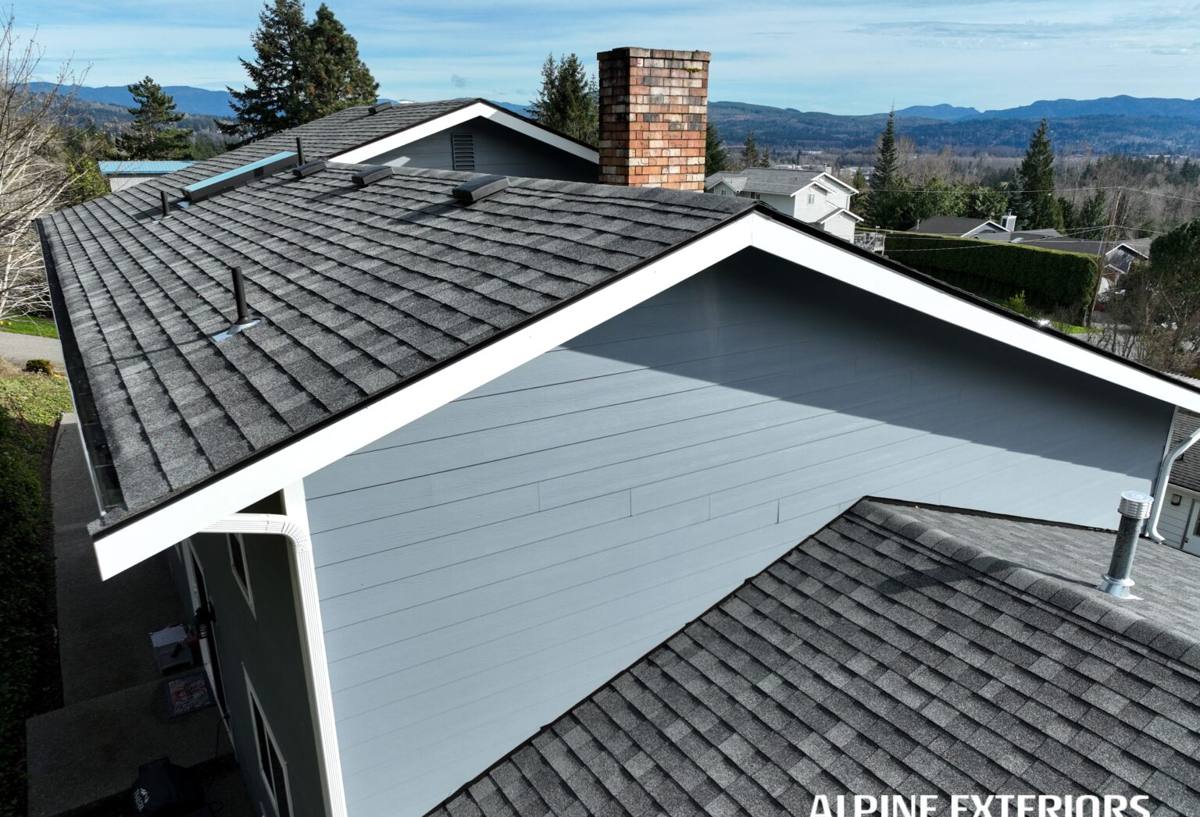
What a Correct Metal Roof Installation Actually Involves
Metal roofing looks simple from the ground, and a well-installed one should look effortless. Underneath, a correct installation is a series of details that all have to work together. Skipping or rushing any one of them is usually where problems start, sometimes years later when they're expensive to trace back to their source.
Underlayment and Moisture Barriers
A synthetic underlayment rated for metal roofing goes down first, with self-adhered ice-and-water membrane at eaves, valleys, and anywhere water concentrates. In a climate with as much sustained rain as ours, this layer is what protects the deck if wind ever drives water past the panel seams, which it eventually will during a hard storm. This is not an area to use a builder-grade underlayment meant for asphalt shingles.
Fastening and Panel Seams
How panels are fastened and seamed determines both weathertightness and how the roof handles thermal movement. Metal expands and contracts with temperature swings more than other roofing materials, and a system that does not account for that will eventually work fasteners loose or stress seams. The right approach depends on the panel profile, which we cover below.
Flashing at Penetrations and Transitions
Chimneys, vents, skylights, and roof-to-wall transitions are where the majority of roof leaks originate, on metal roofs and every other type. Flashing has to be formed and layered correctly with the panel system, not just caulked into place. Caulk is a maintenance item, not a waterproofing strategy, and we treat it that way.
Choosing the Right Panel Profile for a Bellingham Home
Not every metal roofing profile is a good match for every home or every budget. Here's how the main options compare for a typical Bellingham roof:
| Panel Type | Best For | Trade-Offs |
|---|---|---|
| Standing seam (concealed fastener) | Homes exposed to driving rain and wind, longer-term ownership | Higher upfront cost, requires an experienced installer to get seams right |
| Exposed-fastener panels | Budget-conscious projects, outbuildings, simpler rooflines | Fasteners eventually need inspection and occasional replacement as gaskets age |
| Stone-coated steel | Homeowners who want the look of shingles or tile with metal's durability | More installation labor due to profile detailing, higher material cost |
For most Bellingham homes dealing with sustained wind-driven rain, we lean toward standing seam because the concealed fastener design has no exposed penetrations for water to work into over time. That said, exposed-fastener systems are a legitimate, lower-cost option for simpler roofs, garages, and shops where the trade-offs matter less.
Materials and Cost Factors
Metal roofing pricing swings based on a handful of factors that are worth understanding before you compare quotes, since two bids for "metal roofing" can describe very different products.
| Factor | Why It Matters Here |
|---|---|
| Steel gauge (thickness) | Thicker gauge resists denting and holds up better to wind-driven debris and hail |
| Paint finish (PVDF vs. polyester) | Premium finishes hold color and resist chalking longer under UV and salt air exposure |
| Fastener material | Stainless or coated fasteners resist corrosion better in coastal air than bare steel |
| Roof complexity | Valleys, dormers, and multiple penetrations add labor for flashing and trim |
| Tear-off vs. overlay | Removing old roofing adds cost but allows full deck inspection and repair |
We give straightforward, itemized estimates so you can see what's driving the number, rather than a single lump sum that hides which corners were cut to hit a price.
Moss, Algae, and Organic Growth in a Wet, Shaded Climate
Whatcom County's tree cover and long stretches of damp weather make moss and algae growth a fact of life for most roofs, especially on shaded, north-facing slopes and anywhere debris collects. Metal roofing has a real advantage here: a smooth, sloped standing seam surface sheds water and debris far more readily than a textured shingle surface, giving moss and algae much less to grip onto. It is not moss-proof, though. Low-slope sections, valleys, and areas that stay shaded and damp for months at a time can still develop growth over the years, especially if leaves and needles are allowed to build up.
We design roof detailing to minimize debris traps where we can, and we're honest with homeowners about which parts of a roofline are more moss-prone based on orientation and tree cover, so you know what to expect rather than being surprised by it later.
Salt Air and Corrosion Near the Water
Proximity to Bellingham Bay means airborne salt is part of the environment your roof lives in, even a few miles inland. Salt air accelerates corrosion on unprotected or mismatched metals, and it's one of the more overlooked factors in roofing failures near the coast. Two things matter most: the quality of the panel's protective coating, and making sure every metal component on the roof, from fasteners to flashing to trim, is compatible with the panel material. Mixing dissimilar metals without the right isolation between them can set up galvanic corrosion, where one metal degrades the other at the point of contact. This is a detail that's easy to get wrong if a crew isn't used to installing near open water.
Ventilation and Condensation Control
A metal roof performs best with proper attic or roof-deck ventilation underneath it. In our climate, warm, moist indoor air that gets trapped against the underside of cold metal panels can condense, and over time that moisture can affect insulation and framing even though the roof surface itself never leaks. Ridge and soffit ventilation, sized correctly for the attic space, keeps air moving and keeps that moisture from building up. This is worth confirming during any re-roof, since older homes were often built with less ventilation than current standards call for.
Our Installation Process
- On-site assessment — we look at the existing roof, deck condition, ventilation, and any problem areas like valleys or penetrations before quoting anything.
- Tear-off or overlay decision — based on deck condition and local code, we recommend the honest option rather than defaulting to whichever is cheaper for us.
- Deck inspection and repair — any soft, rotted, or water-damaged decking is addressed before anything goes back down, since a metal roof is only as good as what it's fastened to.
- Underlayment and moisture barrier installation — synthetic underlayment plus ice-and-water membrane at vulnerable areas.
- Panel installation — panels installed to the manufacturer's fastening and seaming specifications, accounting for thermal movement.
- Flashing, trim, and penetration detailing — chimneys, vents, and transitions finished with formed flashing, not caulk-dependent shortcuts.
- Final walkthrough — we review the completed roof with you, including any maintenance notes specific to your roofline.
Maintenance Checklist for Bellingham Homeowners
Metal roofing is low-maintenance compared to most materials, but "low" isn't "none." A short annual routine goes a long way in this climate:
- Clear leaves, needles, and debris from valleys and low-slope sections, especially in fall
- Check gutters and downspouts for blockages that can back water up under roof edges
- Look for early moss or algae growth on shaded slopes and address it before it spreads
- Inspect flashing around chimneys, vents, and skylights for any visible gaps or wear
- Note any fastener heads that appear raised or loose on exposed-fastener systems
- After major windstorms, do a visual check for lifted panels or dislodged trim
Why Hiring a Crew That Already Works Bellingham Matters
A metal roof installed correctly can last decades, but that depends entirely on whether the crew understands the specific conditions it has to survive here. A contractor who mostly works drier inland climates may not think twice about fastener material, underlayment grade, or ventilation the way a crew working Whatcom County day in and day out will. Local experience also means familiarity with the permitting process for the City of Bellingham and unincorporated Whatcom County, realistic expectations about wind exposure on different rooflines, and being available if a warranty question or maintenance issue comes up years down the road, rather than a name from an out-of-area sales blitz that's hard to reach afterward.
We work on homes throughout the Bellingham area and build every metal roof around what this specific climate demands, not a generic install.
Get a Straightforward, No-Pressure Estimate
If you're weighing a metal roof for your Bellingham home, we're happy to walk your roof, answer questions honestly, and give you a clear, itemized estimate with no pressure to decide on the spot. Use the form below to get started.