 Lynden Window
 Roof Replacement in Aldergrove: A Climate That Doesn't Forgive Shortcuts
Aldergrove sits inland in the Fraser Valley, far enough from open saltwater that it doesn't take the direct salt spray a waterfront community does. But it still sits inside the same damp, marine-influenced weather system that covers this whole stretch of the Pacific Northwest on both sides of the border, just a few minutes north of Lynden and Whatcom County. Moisture-laden air moves in off the Salish Sea and settles into the Fraser Valley for long stretches of the year, and the roofs here deal with three things above all else: driving rain that gets pushed under shingle edges by wind rather than falling straight down, long stretches of gray, low-sun weather that keep roof surfaces damp for days at a time, and a moss and algae season that can run nearly year-round on shaded, north-facing slopes. A roof built for a drier climate, or installed by a crew that hasn't worked this specific weather pattern, tends to show its age early — curling shingle edges, dark streaking, and soft spots at valleys and flashing points well before the material's rated lifespan is up.
Replacing a roof correctly in this climate isn't about using exotic materials. It's about getting the ordinary details right — tear-off depth, underlayment choice, flashing work, and ventilation — because those are the details that actually determine whether a new roof holds up through fifteen or twenty wet seasons or starts leaking in year six.
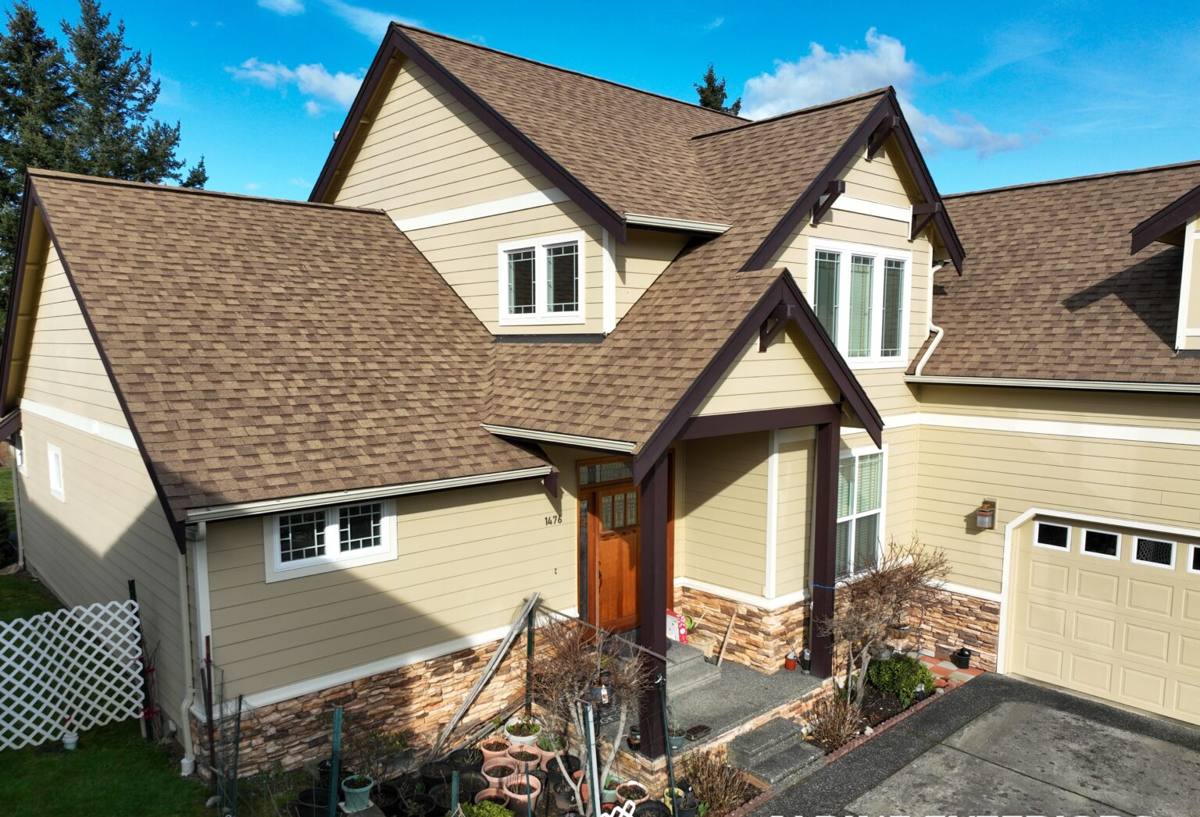
Signs an Aldergrove Roof Needs Replacing, Not Just Patching
Not every roof problem means a full replacement. But there's a point where patching becomes a way of throwing money at a roof that's already past the point of return, and recognizing that point early saves both money and interior damage.
- Shingles that are curling, cupping, or losing granules in patches rather than just fading evenly
- Dark streaking or a green-black cast across shaded slopes that won't wash off, a sign of established algae and moss growth working into the shingle mat
- Soft or spongy spots underfoot, especially near valleys, chimneys, or roof-wall intersections
- Daylight visible through the roof deck from inside the attic, or water staining on attic sheathing
- A roof that's already had two or more patch repairs in the same area within a few years
- A roof approaching or past the manufacturer's rated lifespan for the material, especially if it was installed with older-style felt underlayment
If a roof is showing more than one or two of these signs at once, a repair is usually a short-term delay rather than a real fix, and it's worth getting a straight answer on whether replacement is the more honest long-term move.
What a Correct Roof Replacement Actually Involves
A roof replacement is more than pulling off old shingles and nailing down new ones. Each layer underneath the visible surface is doing specific work against this climate's rain and moisture, and skipping or shortcutting any one of them is where early failures come from.
Full Tear-Off and Deck Inspection
We remove the existing roofing down to the deck rather than layering new shingles over old ones. That's the only way to actually see the condition of the roof deck underneath — soft, delaminated, or water-stained sheathing needs to be found and replaced before anything new goes down, and a layover install hides exactly that kind of damage instead of fixing it.
Ice-and-Water Barrier and Underlayment
Self-adhered ice-and-water membrane goes down first at the eaves, valleys, and any low-slope transitions, since these are the areas where wind-driven rain and any winter freeze-thaw cycling put the most stress on a roof. A synthetic underlayment covers the rest of the deck, offering better water resistance and tear strength than older felt paper, particularly through a long, wet install season.
Flashing at Every Penetration
Valleys, chimneys, skylights, vent pipes, and any wall intersections get new flashing, not a reuse of whatever was there before. Most roof leaks in this climate don't start in the open field of the roof — they start at a flashing detail that was reused, undersized, or improperly lapped the first time around.
Ventilation Corrections
Where the existing attic ventilation is inadequate, we address intake and exhaust venting as part of the replacement rather than leaving it as an afterthought. Proper airflow keeps the underside of the roof deck dry, which matters directly for both shingle lifespan and moss resistance, since a damp deck from below feeds the same organic growth that shows up on the surface.
Final Roofing Layer and Cleanup
The shingle or roofing material goes down last, with proper nailing patterns and exposure for the specific product and roof pitch. A full property cleanup, including a magnetic sweep for stray fasteners, finishes the job.
Choosing a Roofing Material for This Climate
Asphalt shingles remain the right, cost-effective choice for the large majority of homes in this area, but the specific product grade matters more here than it would in a drier climate.
| Material | Typical Lifespan Here | Moss/Algae Resistance | Relative Upfront Cost |
|---|---|---|---|
| Standard 3-tab asphalt shingle | 15-20 years | Low unless treated; shows staining earliest | Lowest |
| Architectural (laminated) asphalt shingle | 25-30 years | Moderate to good with algae-resistant granules | Moderate |
| Standing seam or panel metal roofing | 40-50+ years | Very good; sheds moss and debris more easily | Highest |
Metal roofing holds up well in this climate and sheds moss more readily because of its smooth, low-friction surface, but it comes with a higher upfront cost and different installation requirements around fastening and expansion. Architectural asphalt shingles with algae-resistant granules are usually the more practical choice for most budgets, offering a meaningful step up in moss and algae resistance over basic 3-tab shingles without the cost jump of metal.
Ventilation and Moisture: The Part of a Roof Homeowners Rarely See
A shingle only has to shed water from above. The roof deck underneath has to survive moisture pressure from both directions — rain trying to get in from outside, and warm, humid indoor air trying to escape through the attic from inside. When attic ventilation is undersized or blocked, that indoor moisture condenses on the underside of the deck, especially during the cold, damp stretches common here, and that trapped dampness is what accelerates deck rot and gives moss an extra foothold from below as well as above. Correcting ventilation during a roof replacement, rather than treating it as a separate, optional upgrade, is one of the more overlooked ways to extend a new roof's real lifespan.
Our Process, Start to Finish
Free On-Site Assessment
We walk the roof in person, document deck and flashing condition, and talk through what's actually needed versus what can wait, before any quoting happens.
Written, Itemized Proposal
You get a proposal that spells out tear-off scope, underlayment and material choices, flashing work, and ventilation changes, not a one-line total.
Scheduling Around the Weather
Roofing in this region means building realistic flexibility into the schedule for wet weather rather than promising a fixed date and rushing the work to hit it.
Install Day and Daily Cleanup
Materials are staged, the deck is inspected as tear-off happens, and the property is kept clean and protected throughout, not left exposed overnight if the job runs past a single day.
Final Walkthrough
We walk the finished roof and attic with you, cover warranty documentation, and do a final property and magnetic fastener sweep before calling the job done.
Permits and Working on Both Sides of the Border
Roof replacement work in Aldergrove goes through Canadian building permit and code requirements, which aren't identical to what applies a few minutes south in Lynden and Whatcom County. Part of what a crew that regularly works this area brings is already knowing that process — coordinating with the correct local building authority for your specific property, handling the business-registration side of operating across the border, and planning material and equipment logistics so a border crossing doesn't turn into a delay on your job. Homeowners shouldn't have to manage that coordination themselves; it should already be handled before a crew or a load of materials shows up at the house.
Keeping a New Roof Ahead of the Moss Season
A correctly installed roof still benefits from basic seasonal upkeep, especially given how long the damp season runs in this part of the Pacific Northwest.
- Keep gutters clear so water isn't backing up under the lowest course of shingles
- Trim back overhanging branches that keep shaded roof sections damp and feed moss growth
- Have moss and debris gently removed from north-facing slopes before it builds up into a thick mat
- Check attic ventilation isn't blocked by insulation or storage after any attic work
- Have the roof looked at after any major windstorm, even if nothing looks obviously wrong from the ground
Why a Crew That Already Works Aldergrove Matters
A roofing crew that only occasionally crosses the border for a single job doesn't carry the same working knowledge as one that treats Aldergrove as regular territory. That familiarity shows up in small but real ways: knowing which roof styles and slopes are common in the area, understanding the local permitting relationship instead of learning it for the first time on your job, and being close enough that a warranty callback is a short drive rather than a special trip. Being based just across the border in Lynden means we're already working this area regularly, not treating it as a one-off.
If you're weighing a repair against a full roof replacement, or just want a straight, no-pressure look at where your roof actually stands, we're glad to come take a look and put together a written estimate you can compare against anything else you've received.