 Lynden Window
 Why Acme Homes Need Windows Built for This Climate
Acme sits in a part of Whatcom County where the weather doesn't do anything halfway. Homes here take on driving rain that comes sideways off the foothills, long stretches of damp gray months where moss and mildew get a foothold on anything that stays wet too long, and the kind of humid, marine-influenced air that works its way into gaps most homeowners never notice until a window starts to fail. Window replacement in this area isn't just a cosmetic upgrade — it's a moisture-management job first and an energy-efficiency job second.
A window that's rated fine for a dry climate can still underperform here if it's installed without the right flashing and drainage details. We've replaced enough failed windows around Whatcom County to know that most problems trace back to installation, not the window itself. Getting Acme window replacement right means respecting how much water this area sees and how long it sits around before it dries out.
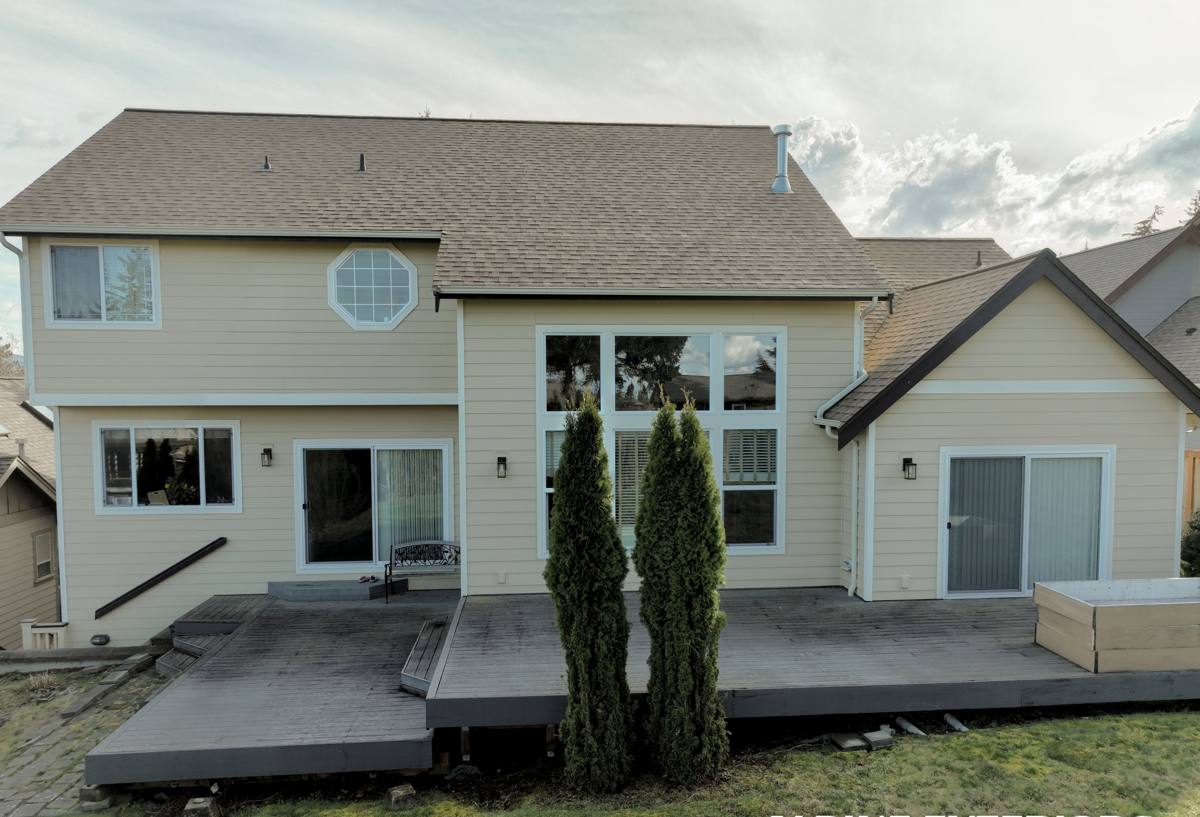
Signs a Window in Your Acme Home Needs Replacing
Windows rarely fail all at once. They give off warning signs for months or years before a homeowner notices the real cost building up behind the walls.
- Fogging or a permanent haze between panes on double- or triple-glazed units — the seal has failed and the gas fill is gone
- Soft or discolored wood on the sill, jamb, or trim, especially on walls that face the prevailing weather
- Visible moss, algae, or dark streaking on the exterior casing that keeps coming back no matter how often it's cleaned
- Drafts you can feel with a hand near the frame on a windy day, even with the window latched shut
- Windows that stick, won't stay open, or have hardware that's rusted or seized
- A noticeable difference in room temperature near the window compared to the rest of the house
- Rising heating bills without any other clear explanation
Any one of these on its own might just mean a repair. Several of them together, especially on a home more than 20 years old, usually means the windows are past the point where patching makes sense.
What a Correct Window Replacement Job Actually Involves
Swapping the glass unit is the easy part. What separates a job that lasts from one that fails again in five years is everything around the window — the parts nobody sees once the trim goes back on.
Removing the Old Window Without Making Things Worse
We pull the old unit carefully and inspect the rough opening before anything new goes in. This is where hidden problems show up — soft framing, old caulk that trapped moisture instead of shedding it, or insulation that's compressed and no longer doing its job. Any of that gets addressed before the new window ever sees the opening.
Flashing and Drainage Come First
In a climate that sends rain sideways for days at a time, flashing is the part of the job that actually keeps water out. We integrate flashing tape and pan flashing at the sill so that any water that does get past the exterior cladding has somewhere to go — out, not into the wall cavity. This step gets skipped more often than homeowners realize, and it's the single biggest reason windows fail early in wet coastal counties.
Air Sealing and Insulation
The gap between the window frame and the rough opening gets sealed with low-expansion foam or backer rod and sealant, not just stuffed with fiberglass. Overfilled or underfilled gaps both cause problems — one restricts the window, the other leaves cold spots that show up as drafts and, eventually, condensation.
Exterior Finish Work
New trim, caulking, and where needed, touch-up siding work around the opening, finished so water sheds away from the house rather than pooling at any horizontal surface. On homes with wood trim, we pay particular attention to end grain, which is where moss and rot both tend to start first.
Choosing Window Materials That Hold Up in Whatcom County
There's no single "best" window material — the right choice depends on the home's age, style, and how exposed it is to weather. Here's how the common options compare for a property in the Acme area.
| Material | Moisture Performance | Maintenance | Typical Fit |
|---|---|---|---|
| Vinyl | Excellent — won't rot, doesn't need painting | Low; occasional cleaning | Most homes; best value for full-house replacement |
| Fiberglass | Excellent — very stable in temperature swings and damp conditions | Low | Homes wanting a higher-end look with long-term durability |
| Wood | Requires diligent upkeep in this climate; end grain and sills are vulnerable | High — regular painting/sealing | Historic or period-style homes where appearance is the priority |
| Wood-clad (wood interior, aluminum or vinyl exterior) | Good, provided cladding and flashing details are correct | Moderate | Homes wanting a wood interior look without full exterior wood maintenance |
For most Acme homes, we lean toward vinyl or fiberglass on the exposed sides of the house simply because they hold up with the least upkeep against a climate that gives wood siding and trim little chance to dry out between rain events. Solid wood windows can still be the right call on a home where matching an existing architectural style matters more than minimizing maintenance — that's a conversation we have honestly, including what the upkeep commitment actually looks like.
Our Process, Start to Finish
- Free on-site assessment — we look at every window being considered, check for hidden moisture or framing issues, and measure accurately rather than estimating from photos.
- Honest recommendation — we tell you which windows genuinely need replacing now, which can wait, and which just need a repair or better weatherstripping.
- Clear, written quote — material options, labor, and any framing repair costs spelled out before work starts, no surprise change orders for anything we could have caught during the assessment.
- Scheduling around the weather — we plan installation windows to minimize how long any opening is exposed, and we don't start exterior work in conditions that would compromise the seal.
- Installation with flashing and air-sealing done properly — the steps described above, on every window, not just the ones facing the street.
- Cleanup and final walkthrough — we walk the job with you, operate every window, and make sure trim and caulk lines are finished before we call it done.
What Window Replacement Typically Costs — and What Moves the Number
Every home is different, and the honest answer to "what will this cost" always depends on a site visit. That said, a few factors consistently move the price up or down, and it helps to know them before you start getting quotes.
| Factor | Why It Matters |
|---|---|
| Number of windows replaced at once | Bundling windows into one project spreads setup and labor costs across more units |
| Window size and configuration | Large picture windows, bays, and custom shapes cost more than standard double-hungs |
| Material | Vinyl is typically the most budget-friendly; fiberglass and wood cost more upfront |
| Framing condition | Rot or moisture damage found during removal adds repair time before the new window goes in |
| Access and story height | Second-story or hard-to-reach windows take longer and may need staging |
| Trim and siding work | Matching existing exterior trim or siding around a resized opening adds labor |
Full-house replacements typically run into the higher four figures to low five figures depending on the count and materials chosen, while single-window replacements are far less. We'll never give a number without seeing the windows in person — anyone quoting sight unseen is guessing.
Energy Efficiency Beyond the Glass
Homeowners often focus on the glass package — double pane, triple pane, low-E coatings — and those choices matter. But in this climate, the bigger energy loss usually comes from air leakage around a poorly sealed frame, not from the glass itself. A correctly installed mid-grade window will often outperform a premium window that was installed with gaps in the air seal. We size up both when we make a recommendation, and we won't sell a homeowner an upgraded glass package as a fix for what's really an installation problem.
For homes in Acme dealing with condensation on interior glass during the wet months, that's frequently a sign of air leakage or insufficient insulation around the frame rather than a defect in the glass unit itself — another reason the installation details matter as much as the product spec sheet.
Why a Crew That Already Works in Acme Makes a Difference
Whatcom County covers a lot of different microclimates, from the drier lee side of ridges to spots that catch every storm coming off the water. A crew that's worked Acme specifically knows which walls on a typical property here take the worst of the weather, how the local moss and moisture patterns behave on different sidings and trim types, and what framing issues tend to show up in homes of a given age in this area. That's knowledge you can't get from a manufacturer's install manual — it comes from doing the work here, repeatedly, and seeing what holds up.
It also means we're not learning on your house. We know what flashing details actually matter in this specific rainfall pattern, and we don't treat every job like it's our first one in a wet climate.
Keeping New Windows Performing for the Long Haul
A correctly installed window still benefits from basic upkeep, especially given how much moss and moisture this area sees.
- Clear debris and moss from window sills and tracks each season, particularly after fall leaf drop
- Check exterior caulk lines annually and re-caulk any spots that have cracked or pulled away
- Keep gutters clear so overflow doesn't run down over window heads
- Operate every window at least a few times a year, even ones you rarely open, to keep hardware and weatherstripping from seizing
- Watch for early moss growth on sills or trim and clean it off before it holds moisture against the surface long-term
- Vacuum weep holes on vinyl and fiberglass frames so drainage paths stay clear
None of this takes much time, but skipping it is how a well-installed window ends up with an avoidable problem ten years down the road.
Get a Straight Answer About Your Windows
If you're not sure whether your Acme home needs a full window replacement or just some targeted repairs, we're happy to take a look and tell you honestly which it is. The estimate is free, there's no pressure, and you'll walk away with a clear picture of what your windows actually need — use the form below to get started.