 Lynden Window
 Acme's Setting Puts Extra Demands on Siding
Acme sits in a river valley east of Lynden, tucked against the foothills that lead up toward Mt. Baker. That setting is beautiful, but it's also tough on a house. Heavy tree cover means less direct sun and slower drying after rain. The valley holds moisture longer than open ground closer to town. And Whatcom County's wet season isn't a quick pass-through — it's weeks of driving rain followed by a long stretch where moss and algae have every reason to take hold on anything that stays damp.
Siding in a spot like this isn't just cosmetic. It's the first line of defense against a climate that gives water a lot of chances to get in and very little time to get back out. When siding fails here, it's usually not one dramatic event — it's years of moisture cycling in and out of a product that wasn't built to handle it, until the damage finally shows.
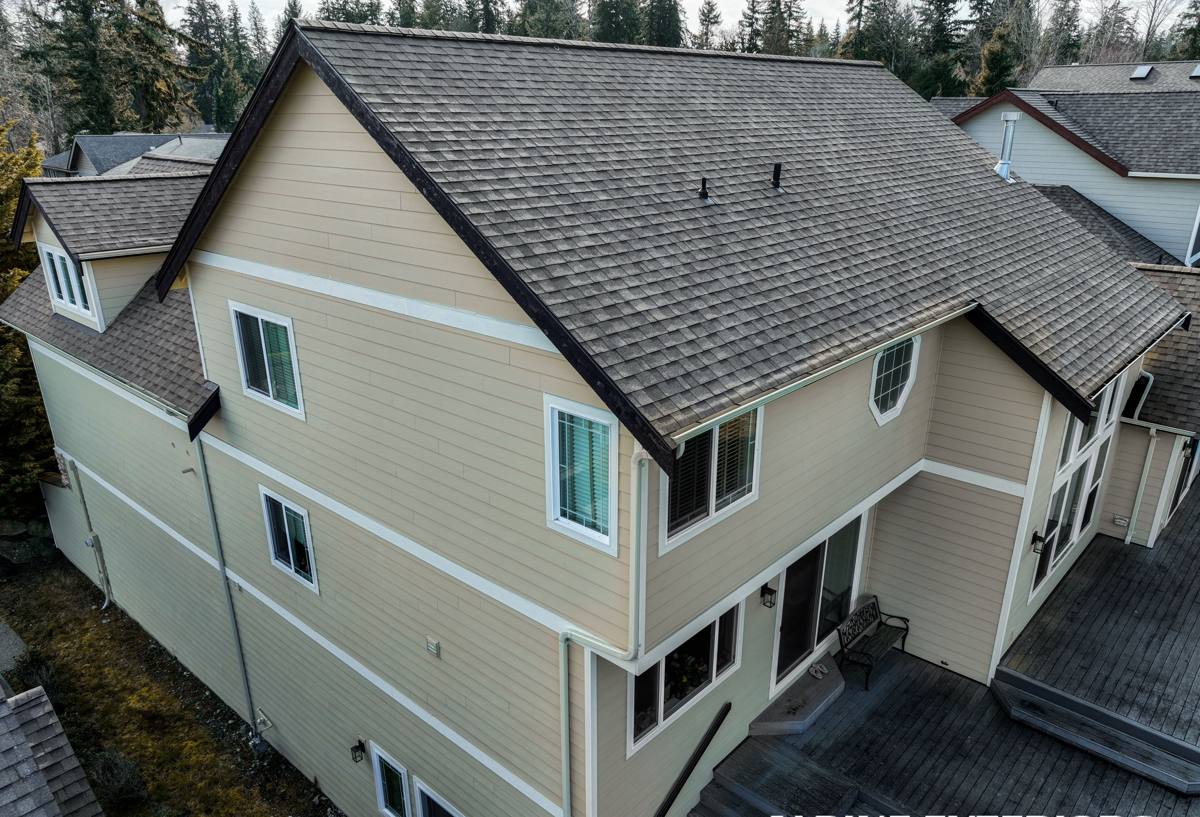
What Shows Up First on Acme Homes
Because of the shade and moisture load, problems tend to show up in predictable places before they spread. Knowing what to look for lets you catch a siding problem while it's still a siding problem, not a sheathing or framing problem.
- Green or black staining on north-facing walls and anywhere tree canopy blocks the sun
- Soft or spongy spots when you press on siding near the bottom courses or under windows
- Paint that's peeling, bubbling, or chalking faster than it should for its age
- Warped, cupped, or swollen boards, especially where gutters overflow or downspouts discharge nearby
- Gaps opening up at seams, corners, and trim where caulking has failed
- Musty smell or visible moisture on interior walls that share an exterior wall with damaged siding
Any one of these is worth a closer look. On a wooded, shaded lot like a lot of Acme properties, moss and staining alone don't always mean the siding has failed — but they do mean the wall is staying wet longer than it should, and that's exactly the condition that eventually causes failure in the wrong material.
Why the Siding Material You Choose Matters More Here
In a drier, sunnier location, a homeowner can get away with a siding product that's more forgiving of moisture. Acme isn't that location. Wood-based products — including primed spruce and engineered wood siding — rely on a factory or field-applied coating to keep water out. Once that coating is compromised at a cut edge, a nail hole, or a seam, the wood substrate underneath can start absorbing moisture, and in a shaded, slow-drying environment it doesn't get much chance to dry back out between rain events. Vinyl siding sheds water reasonably well on its face, but it's not a moisture barrier system on its own, it can warp or fade in temperature swings, and it depends heavily on what's happening behind it — which is often not inspected once it's installed.
We made the decision to install James Hardie fiber cement exclusively because it doesn't have that same vulnerability. It's cement-based, not wood-based, so it doesn't rot, and it isn't a food source for the fungus and moss spores that thrive in a shaded valley climate. The factory-applied ColorPlus finish is baked on and warranted against peeling and chipping, which matters a lot in a climate that gives paint very little time to cure and a lot of reasons to fail early.
A Straightforward Comparison
| Factor | James Hardie Fiber Cement | Vinyl | Wood-Based / Primed Spruce |
|---|---|---|---|
| Moisture & rot resistance | Cement-based, does not rot | Won't rot, but relies on drainage behind it | Vulnerable once coating is breached |
| Moss / algae susceptibility in shade | Low — not an organic food source | Can still host surface growth | Higher — organic substrate |
| Finish durability in low-sun areas | Factory ColorPlus, warranted | Field color, can fade unevenly | Needs repainting on a shorter cycle |
| Fire resistance | Non-combustible | Combustible | Combustible |
| Long-term maintenance | Periodic caulk/inspection | Low, but repairs can be visible | Regular repainting and caulk upkeep |
None of these products is worthless — vinyl and engineered wood both have a place in the market and get specified for good reasons in other climates. Our position is simply that for a wet, shaded, moss-prone area like Acme, fiber cement is the product that holds up with the least ongoing risk, and it's the only one we put our name behind.
What a Correct Siding Replacement Actually Involves
Siding replacement is more than swapping old panels for new ones. Done right, it's a chance to fix what's underneath before it gets covered up again for another 30-plus years.
Tear-Off and Inspection
We remove the old siding and inspect the sheathing and framing underneath for rot, soft spots, or hidden moisture damage — common in shaded walls that have been trapping water behind failing siding for years. Any damaged sheathing gets replaced before anything new goes back on. Covering up a compromised wall with new siding just hides the problem for another few years.
Moisture Management
This is where a lot of siding jobs are won or lost, especially in a valley climate. A correct installation includes a weather-resistant barrier, properly lapped and taped seams, and flashing at every window, door, and horizontal trim transition — with kick-out flashing anywhere a roofline meets a wall, so runoff is directed away from the siding instead of behind it. A rainscreen gap behind the siding, where called for, gives water a path to drain and lets the wall breathe instead of holding moisture against the back of the panels.
Installation to Manufacturer Spec
James Hardie's warranty depends on installation matching its specifications — correct fastener type and spacing, proper clearance from grade, decks, and roofing, and correctly sealed joints. Cutting corners here doesn't just risk a warranty claim, it recreates the exact moisture pathways that cause premature failure. We install to spec every time, not as an upsell but as the baseline.
Our Process for an Acme Project
- On-site assessment — we walk the property, check current siding condition, sun exposure, drainage, and any moisture history
- Written estimate — a clear scope covering tear-off, repairs, materials, and installation, with no vague allowances
- Material selection — Hardie plank, shingle, or panel profile and color chosen for the home and its setting
- Installation — tear-off, sheathing repair as needed, moisture barrier and flashing detail, then siding installed to spec
- Final walkthrough — we review the finished work with you before calling the job done
What Drives the Cost of a Siding Replacement
Every home is different, and we don't quote off a square footage number alone. These are the factors that actually move the price up or down.
| Cost Factor | Why It Matters |
|---|---|
| Home size and wall square footage | Base driver of material and labor quantity |
| Trim, corners, and architectural detail | More cuts and transitions mean more labor time |
| Condition of existing sheathing | Hidden rot repair adds cost but is essential, not optional |
| Siding profile chosen | Lap, shingle, and panel styles carry different material and install costs |
| Site access | Tree cover, slope, and tight rural driveways can affect staging and labor |
| Number of stories | Affects scaffolding, safety setup, and time on site |
We'll walk through all of this on-site so you understand where the money is going before you commit to anything.
Why It Matters to Hire a Crew That Already Works Around Acme
A crew that regularly works this side of Lynden already understands what a wooded, valley property needs before they show up — where moisture tends to collect on a shaded lot, how tree debris and needle buildup around a home affects drainage and gutters, and how to work efficiently on rural properties with longer driveways and less staging room than an in-town lot. That familiarity shows up in fewer surprises mid-project and a install that accounts for the site's real conditions, not a generic checklist.
It also means someone who understands Whatcom County's permitting and inspection expectations, so the paperwork side of the project doesn't become its own headache. Local experience isn't a marketing line — it's fewer callbacks and a siding job that's actually built for the property it's on.
Ready for a Straight Answer on Your Siding
If your home in or around Acme is showing moss, staining, soft spots, or paint that won't hold, it's worth getting an honest look before the damage spreads further. We'll assess your siding, explain what we find in plain terms, and give you a clear, no-pressure estimate for a James Hardie replacement built for this climate. Use the form below to get started.