 Lynden Window
 Acme's Climate Is Harder on Siding Than Most Homeowners Realize
Acme sits back in the Nooksack River valley east of Lynden, tucked against the foothills where the Cascades start to rise. It feels sheltered compared to the open flats closer to town, but that shelter comes with a trade-off: moisture-laden marine air pushes up the valley from Bellingham Bay and the Salish Sea and gets trapped there. Add tree cover, lower winter sun angles, and long stretches of driving rain, and you get siding conditions that are genuinely tougher than what a house a few miles away might face.
The combination that matters most for siding is salt-tinged marine air working on fasteners and trim, near-constant rain loading walls with water, and a moss and algae season that can run eight or nine months out of the year in shaded spots. Siding that isn't engineered for that combination doesn't fail overnight — it fails slowly, through swollen edges, soft trim, cracked caulk lines, and dark green streaking that never quite goes away no matter how often it's power-washed.
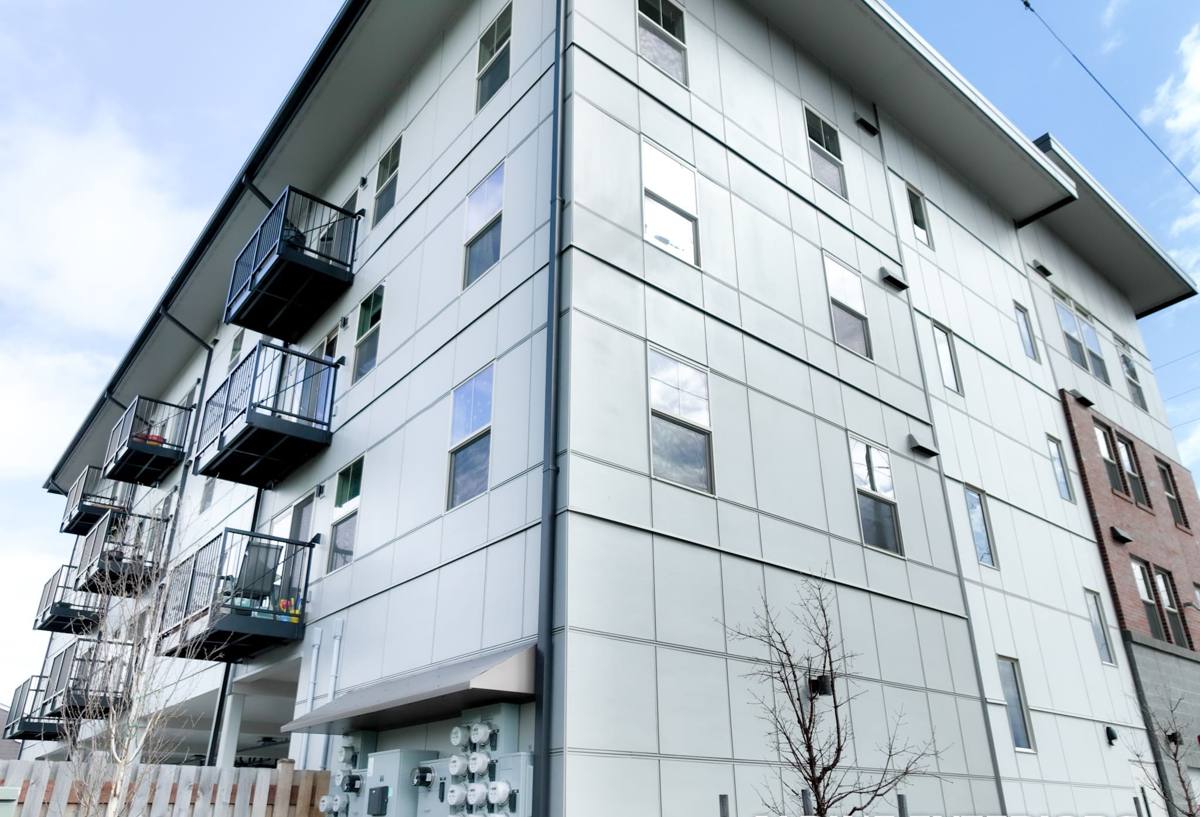
What "Correct" Fiber Cement Installation Actually Requires Here
Fiber cement siding is only as good as the install behind it. In a valley climate like Acme's, a handful of details separate siding that lasts thirty-plus years from siding that starts showing problems in five.
Water Management Comes First
Every seam, window, and door opening needs proper flashing and a drainage plane behind the siding — not caulk doing the job flashing should be doing. In a location that sees this much rain volume, a wall assembly that can't shed incidental moisture will trap it, and trapped moisture behind fiber cement causes the same rot problems it was installed to prevent.
Fastening and Clearances
Fiber cement has to be fastened correctly for the plank profile and blind- or face-nailed per manufacturer spec, with the right gaps at butt joints to allow for seasonal movement. Bottom clearance off the foundation, deck ledgers, and roof lines matters even more here, since standing moisture at ground level combined with shaded, damp conditions is exactly where moss and rot get their start.
Caulk and Sealant Choices
Cheap sealant is one of the first things to fail in this climate. We use sealants rated for sustained UV and moisture exposure at trim joints and penetrations, because a sealant that cracks after two winters undoes the water management work underneath it.
Why We Install Only James Hardie Fiber Cement — Not the Alternatives
We get asked fairly often why we don't offer LP SmartSide, vinyl, Cemplank, Allura, or primed wood siding like spruce or cedar. It's not that these products have no place in the market — it's that after years of installing and repairing siding in this exact climate, we standardized on one product line and stopped installing the rest.
LP SmartSide and Primed Wood (Spruce/Cedar)
Engineered wood and natural wood siding both depend on their surface coating staying intact to keep moisture out of the wood substrate underneath. In a climate with this much sustained rain and shade-driven dampness, any breach in that coating — a nail pop, a scuff, a hairline crack — gives moisture a path into a material that can swell, rot, or delaminate. That's manageable maintenance in a drier region; it's a recurring headache here.
Vinyl Siding
Vinyl is inexpensive and low-maintenance in a narrow sense, but it expands and contracts significantly with temperature swings, its seams and J-channels give moss and algae plenty of places to take hold, and it's not a fire-resistant material. It also can't be repainted, so once it fades or a section gets damaged, replacement is often the only option.
Cemplank and Allura
These are also fiber cement products, and fiber cement as a category is the right material choice for this region. Where they differ from what we install is factory finish warranty structure, product engineering specific to wet marine climates, and the depth of installer training and accountability behind the product. We made a call to build our installation standards, warranty backing, and crew training around one system rather than splitting attention across several.
Why James Hardie
James Hardie fiber cement is non-combustible, engineered in climate-specific HardieZone formulations (the Pacific Northwest falls under HZ5), finished at the factory with ColorPlus Technology rather than field-painted, and backed by a strong transferable warranty. For a house in Acme dealing with rain, moss, and salt-touched air year after year, that combination of engineering and finish durability is what actually holds up.
Our Process for Acme Siding Projects
- On-site assessment: we walk the exterior, check for existing moisture damage, and look at drainage, tree cover, and sun exposure specific to the lot.
- Scope and product selection: we recommend a HardiePlank profile, ColorPlus finish, and trim package suited to the home's exposure and your style.
- Written proposal: a clear scope covering tear-off (if applicable), water management details, fastening spec, and trim work — no vague line items.
- Tear-off and prep: removal of failing siding, inspection and repair of sheathing, and installation of a proper weather-resistive barrier and flashing.
- Installation to manufacturer spec: correct nailing pattern, clearances, joint treatment, and sealant at every penetration.
- Final walkthrough: we go over the finished work with you before calling the job done.
HardiePlank Lines and Colors That Make Sense for This Climate
James Hardie offers several plank profiles and textures — traditional lap, beaded, and shingle-style among them — and all of them come in the HZ5 formulation built for wet Pacific Northwest conditions. ColorPlus factory-applied color resists fading and chipping far better than field-applied paint, which matters in a location where a repaint job means dealing with wet weather windows and moss-prone surfaces.
Color Considerations for Shaded, Damp Sites
On heavily treed or shaded lots — common around Acme — darker colors tend to show moss and algae growth less obviously between cleanings than very light colors, though no color is immune. We talk through this trade-off with homeowners during the color selection stage rather than after the fact.
What Affects the Cost of a Siding Project in Acme
Every home is different, but a few factors consistently move the price up or down. We give firm numbers after the on-site assessment — not before — but this is what typically drives the range:
| Cost Factor | Why It Matters |
|---|---|
| Tear-off vs. new construction | Removing and disposing of old siding, and repairing any sheathing damage found underneath, adds labor and material cost. |
| Home size and wall complexity | More square footage, dormers, and cut-in trim details all add install time. |
| Accessibility | Multi-story homes, steep grades, or tight setbacks (common on wooded Acme lots) affect staging and labor time. |
| Trim and accent package | Corner boards, frieze boards, and shadow-line trim details add cost but also add to how well water sheds off the wall. |
| Color and finish | Standard ColorPlus colors versus premium or custom colors carry different material pricing. |
| Existing moisture damage | Rot found during tear-off has to be repaired before new siding goes on — this is the most common source of change orders. |
As a broad reference point, professionally installed fiber cement siding in this region generally runs in the range of roughly $9 to $16 per square foot installed, with the final number depending heavily on the factors above. Homes with significant existing damage or complex trim will land toward the higher end.
A Maintenance Checklist for Long-Term Performance
Even the right siding installed correctly still needs basic upkeep, especially in a shaded, damp valley setting. We give every customer a version of this list:
- Rinse siding annually to remove pollen, dust, and early moss growth before it establishes.
- Inspect caulk lines at trim and window/door junctions each fall, before the wet season sets in.
- Keep gutters clear so overflow doesn't run down and pool against wall surfaces.
- Trim back vegetation and tree limbs that keep siding sections shaded and damp longer than the rest of the house.
- Check for any nail pops, cracked boards, or gaps at penetrations (vents, hose bibs, light fixtures) and have them sealed promptly.
- Watch north-facing and heavily shaded walls most closely — they're consistently the first place moss and algae take hold.
Why Hiring a Crew That Already Works in Acme Matters
Siding installation is a local trade in the most literal sense. A crew that regularly works the Acme and greater Lynden area already understands how tree cover and river-valley humidity behave on a wall, how far bottom clearances need to be given local moisture patterns, and which trim details actually hold up rather than just look good on install day. That's different from general contracting experience — it's specific, repeated exposure to how this exact climate treats exterior materials over time.
It also means accountability doesn't disappear once the job is done. A local crew is the one you call if a caulk joint needs attention two winters later, and warranty support is straightforward because the installer is still local and still standing behind the work.
If you're weighing a siding project for a home in the Acme area, we're glad to come take a look and walk you through what your house specifically needs. There's no cost and no pressure for the estimate — just a straight assessment and a clear proposal if you decide to move forward.