 Lynden Window
 Custom Windows for Abbotsford, BC Homes
Abbotsford sits in the Fraser Valley just north of the Whatcom County line, and the weather doesn't stop at the border to check anyone's passport. Homes here deal with the same marine-influenced weather pattern that runs the length of the Pacific Northwest lowlands: long wet winters, driving rain that comes in sideways off the valley wind, salt-tinged air pulled in from the Salish Sea, and a moss season that can run eight months or more. Stock windows sized for a builder's spec sheet don't always fit the odd openings in older Fraser Valley farmhouses, character homes, and additions, and standard installation details don't always hold up to how much water actually hits these walls in a given year. Custom windows solve both problems at once — the fit is right, and the install is built for the actual climate load the wall will see.
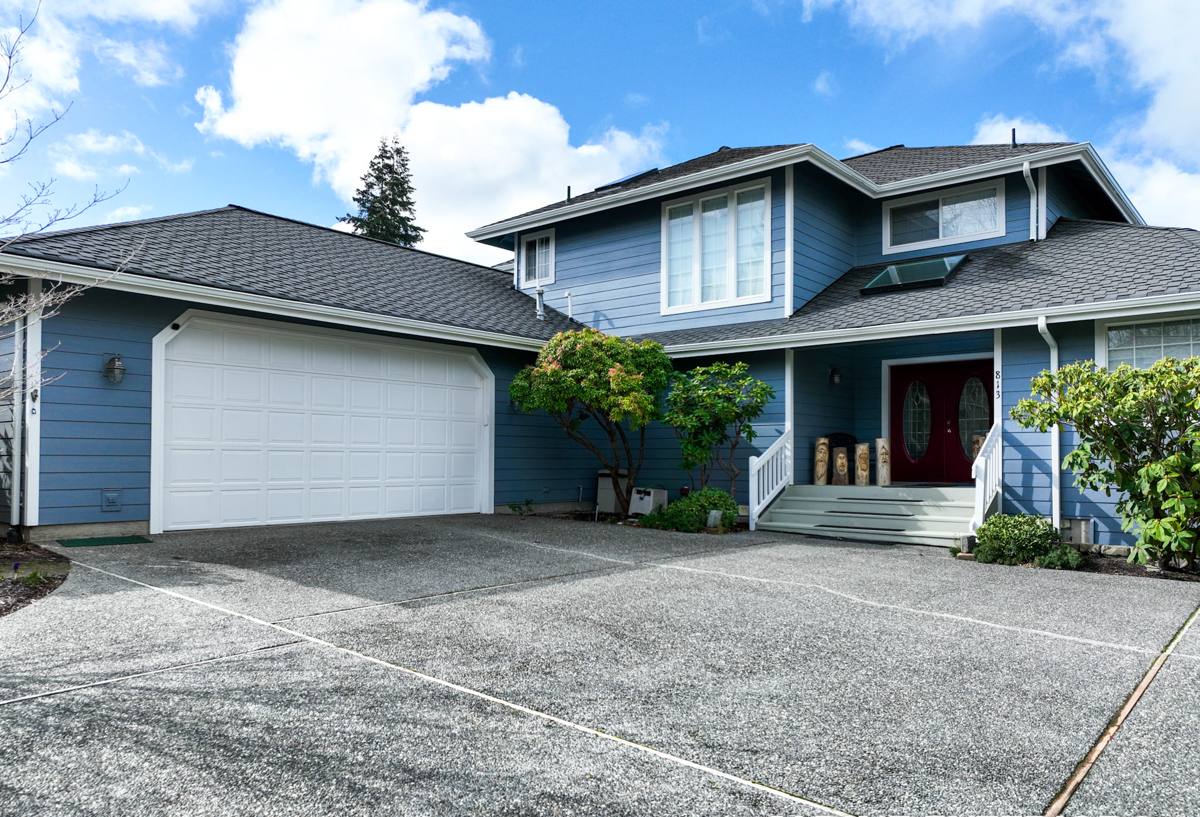
What Abbotsford Homes Are Up Against
Driving rain and wind-driven moisture
The Fraser Valley funnels weather systems in from the coast, and a lot of the rain that falls here doesn't fall straight down — it's pushed sideways by wind, which means it hits window frames, sills, and the wall assembly behind them with real force. Any gap in flashing or a sealant joint that's starting to fail becomes an entry point, and once water gets behind a window frame it can travel a long way before it shows up as a stain on drywall.
A long moss season
Moss and algae growth on siding, trim, and window sills is close to a year-round condition in this region rather than a seasonal nuisance. Moss holds moisture against wood trim and sill surfaces far longer than open air would, which accelerates rot at exactly the joints where a window meets the wall. Window trim and sills that stay damp under a moss mat are one of the more common places we find hidden rot on older homes in this area.
Condensation and indoor humidity
Cool, damp exteriors combined with modern, tighter-sealed homes create more indoor condensation than a lot of homeowners expect, especially on single-pane or older double-pane windows. Persistent condensation on the inside of the glass, or fogging between panes on an older insulated unit, is usually a sign the seal has failed or the window is under-performing for the climate it's actually in.
Serving Both Sides of the Border: US and Canadian Window Standards
Because we work right along the Whatcom County–Fraser Valley border, we run into a detail a lot of window sellers overlook: the US and Canada rate and label windows differently. US windows are typically rated under NFRC/NAFS testing and labeled with U-factor and solar heat gain figures. Canadian product is more commonly rated under CSA-A440 and labeled with an Energy Rating (ER) number that combines air leakage, solar gain, and U-factor into a single score. Neither system is better than the other, but they aren't directly interchangeable on a spec sheet, and permitting and energy code expectations can differ depending on which side of the line a project sits on. A crew that only ever deals with one side of the border can miss this. We check what a given municipality or building department actually wants before we spec the glass package, rather than assuming one country's default applies. It also matters after the sale — if a unit ever needs warranty service, having a contractor who already handles cross-border logistics means parts and service calls don't get stuck in limbo.
What a Correct Custom Window Installation Actually Involves
A window is only as good as the four inches of wall around it. Custom sizing solves the fit problem, but the installation details are what determine whether the window performs for twenty years or starts leaking in three.
Flashing and the sill pan
Water management starts below the window, not at the frame itself. A sloped sill pan and properly lapped flashing — integrated with the house wrap or building paper, shingle-style, so water is always directed outward and down — is the single most important detail in a rainy climate like this one. Skipping or shortcutting the sill pan is the most common cause of hidden rot we find behind older windows in this region.
Fastening, shimming, and squaring
A custom-sized window has to be shimmed and fastened so it's plumb, level, and square in the rough opening, with even reveal all around. An out-of-square install stresses the sash and hardware and can show up as a window that won't latch cleanly or drags on its track within a year or two.
Sealant is a system, not a caulk bead
The interior air seal and the exterior water seal do two different jobs and use different materials — an interior air/vapor seal to stop conditioned indoor air from reaching the cold frame (which is what drives interior condensation), and an exterior weather sealant compatible with the cladding and the window's own factory finish. A single bead of caulk run around the outside of a window is not a complete seal, and in a climate with this much wind-driven rain, it's not enough on its own.
Choosing a Frame Material and Glass Package for This Climate
Every frame material handles constant moisture and temperature swings a little differently. For a Fraser Valley home, the honest trade-offs look like this:
| Frame Material | Moisture Behavior | Maintenance | Typical Lifespan |
|---|---|---|---|
| Vinyl | Won't rot; can flex slightly with big temperature swings | Low — occasional cleaning | 20–30 years |
| Fiberglass | Very stable; expands and contracts close to the glass itself, so seals hold up well | Low | 30–40+ years |
| Wood, clad exterior | Good if the cladding stays intact; exposed end-grain and joints are the risk points | Moderate — watch cladding seams and interior finish | 20–30 years, install-dependent |
| Aluminum | Durable but conducts cold; prone to interior condensation unless thermally broken | Low | 25–35 years |
On the glass side, a double-pane unit with a low-E coating and an argon fill is the practical baseline for this region — it's the coating and gas fill, more than the number of panes, that controls heat loss and reduces interior condensation. Triple-pane glass is worth the added cost mainly on north-facing walls, rooms with chronic condensation trouble, or elevations that take the wind and rain head-on.
Window style and wind-driven rain
Style matters as much as material here. A casement window closes by compressing its whole sash against a gasket, which tends to seal tighter against wind-driven rain than a sliding double-hung or slider that relies on a friction fit between sash and frame. That doesn't mean double-hung windows are wrong for this climate — they're often the right call for matching an older home's look — but on exposed walls that take the weather head-on, a casement is worth considering for the seal alone.
Cost Factors for a Custom Window Project
Custom window pricing swings on a handful of real variables, not a flat per-window number. The main ones we walk through with homeowners:
| Factor | Why It Moves the Price |
|---|---|
| Opening size and shape | Oversized, arched, or non-standard openings require true custom manufacturing, not a stock size trimmed down |
| Frame material | Vinyl, fiberglass, wood-clad, and aluminum all sit at different price points before labor |
| Glass package | Low-E coatings, argon fill, and triple-pane glass each add cost for a real performance gain |
| Existing rot or damage | Rotted framing found once the old window is out has to be repaired before the new one goes in |
| Access and floor level | Second-story and hard-to-reach openings take longer and need more setup |
| Trim and finish work | Matching existing exterior and interior trim profiles adds carpentry time beyond the window unit itself |
Our Process, Start to Finish
- On-site assessment. We look at existing window condition, the wall assembly, and any signs of moisture damage before quoting anything.
- Measurement and spec. Every opening is measured individually — no assuming two windows on the same wall are identical, especially on older homes.
- Material and glass selection. We walk through frame material and glass package trade-offs based on that wall's sun exposure, wind exposure, and your budget.
- Written estimate. A clear, itemized quote before any work is scheduled — no surprise add-ons discovered after the fact.
- Removal and inspection. Old windows come out carefully so we can actually see the condition of the framing, sheathing, and flashing underneath.
- Repair as needed. Any rot or water damage found gets repaired properly before the new window goes in — never covered over.
- Install with full flashing and sealant details. Sill pan, flashing integration, shimming, and both air and water sealant, done to a consistent standard on every opening.
- Final walkthrough. We test operation, check reveals and seals, and walk the job with you before calling it done.
Signs Your Current Windows Are Already Failing
A quick self-check worth doing before winter sets in again:
- Fogging or a permanent haze between the panes of a double-pane window (the seal has failed)
- Soft or spongy wood trim or sill, especially where moss has been sitting
- Visible daylight or a noticeable draft around a closed sash
- Windows that are hard to open, won't latch fully, or have dropped in the frame
- Paint or finish that's bubbling, peeling, or staining near the corners of the frame
- A musty smell or visible mold on interior trim near the window during winter months
- Noticeably higher heating bills compared to similarly sized rooms elsewhere in the house
Why Hire a Crew That Already Works Abbotsford, BC
Working this close to the border means we see the same wall assemblies, the same moss and moisture patterns, and the same rot failure points over and over — knowledge that doesn't transfer well from a crew based somewhere drier or somewhere that doesn't cross between US and Canadian job sites regularly. We know to check ER ratings against U-factor labels instead of assuming one applies, we know what a Fraser Valley winter does to an unsealed sill over a few seasons, and we know moss isn't cosmetic here — it's a maintenance issue with real consequences for the wood underneath it. That's the difference between a window that's simply installed and one that's installed correctly for where it actually sits.
If your windows are fogging, drafting, sticking, or just showing their age, we're happy to come take a look. Estimates are free, there's no pressure, and you'll get a straight answer about what your windows actually need — whether that's a full custom replacement or something smaller.