 Lynden Window
 Asphalt Shingle Roofing for Abbotsford, BC Homes
Abbotsford sits close enough to the Fraser Valley's marine air and long wet stretches that roofs here take a different kind of beating than roofs thirty miles inland. If you own a home in or near Abbotsford, BC and you're looking at your shingles wondering whether they've got another winter in them, you're asking the right question at the right time. A roof that's failing quietly — granule loss, a soft spot near a valley, moss creeping up from the north-facing slope — rarely announces itself until water's already inside the deck. We install and repair asphalt shingle roofing for homes on both sides of the border, and we've built our process around what actually wears roofs out in this part of the world: salt-tinged air, driving rain that comes in sideways, and a moss season that runs longer here than it does almost anywhere else in the Pacific Northwest.
This page covers what a correctly installed or repaired asphalt shingle roof looks like for an Abbotsford property specifically — not a generic roofing overview, but the details that matter given this area's climate and housing stock.
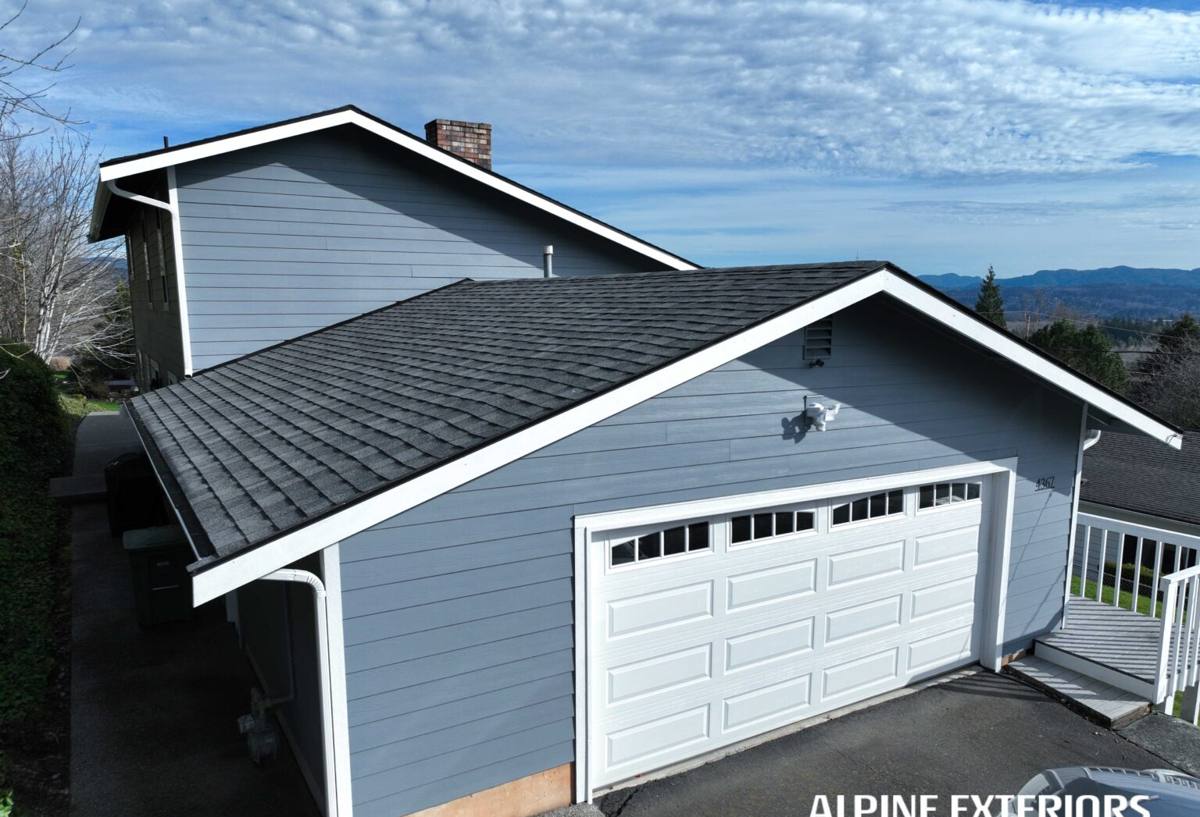
Why Abbotsford's Climate Is Hard on Shingle Roofs
Three things work against asphalt shingles here, and they compound each other rather than acting alone.
Salt Air and Metal Fatigue
Abbotsford isn't oceanfront, but proximity to the Salish Sea and the Fraser Valley's air patterns means homes here get more airborne salt than most people realize. Salt exposure accelerates corrosion on exposed metal — flashing, nail heads, gutter hardware, roof vents — well before the shingles themselves are due for replacement. A roof can look fine from the ground while its flashing is quietly rusting through underneath the shingle courses.
Driving Rain
This region doesn't just get a lot of rain — it gets wind-driven rain that hits roofs at an angle instead of falling straight down. That matters because standard shingle installation assumes water sheds downhold. Wind-driven rain can work its way up under shingle tabs, through underlapped seams, and into valleys that weren't sealed with enough overlap. Roofs installed to a minimum-code standard tend to hold up fine in calm rain and start leaking in the first real windstorm.
Extended Moss Season
Because Abbotsford stays damp and shaded through spring and well into early summer on north- and east-facing roof slopes, moss gets a longer growing window than it would in a drier climate. Moss isn't just cosmetic — its root structure lifts shingle edges, holds moisture against the shingle mat, and accelerates granule loss. Left unmanaged for a few years, moss can shave real years off a shingle roof's service life.
What a Correct Installation Involves Here
A shingle roof that's actually built for this climate — not just built to pass inspection — differs from a bare-minimum job in a handful of specific ways.
- Ice-and-water shield at eaves and valleys: a self-adhering waterproof membrane under the shingles in the areas most exposed to wind-driven rain and ice damming, not just the code-minimum strip.
- Properly lapped valley metal or woven valleys: valleys carry more water volume than any other part of the roof and are the first place under-built roofs leak.
- Corrosion-resistant flashing and fasteners: given the salt exposure in this area, we don't cut corners on flashing metal or nail coating — it's cheaper to spend a little more here than to re-flash in eight years.
- Correct nailing pattern and placement: shingles nailed too high, too low, or with too few fasteners are the single most common cause of wind-driven rain intrusion and blow-off, and it's invisible once the roof is finished.
- Balanced attic ventilation: intake and exhaust venting that actually moves air, which controls condensation on the underside of the deck and slows moss and algae growth from the inside out.
- Starter strip and hip/ridge detailing done to spec: the edges and ridge are where wind gets underneath a roof first — this is not a place to save five minutes.
Repair, Recover, or Full Replacement — How We Decide
Not every roof that's showing wear needs to come off. We look at three things: the age of the shingles relative to their expected service life, the condition of the decking underneath (which we check for soft spots, not just guess at), and how localized the damage is.
| Situation | Typical Approach | What We Check First |
|---|---|---|
| Isolated leak, roof under ~10 years old | Targeted repair — flashing, valley, or shingle section | Whether the leak source is truly isolated or a symptom of a wider issue |
| Heavy moss coverage, shingles otherwise sound | Moss treatment and removal, gutter clearing, ventilation check | Granule loss under the moss — moss can mask deeper wear |
| Widespread granule loss, curling, or brittle shingles | Full re-roof | Deck moisture and rot, especially at eaves and valleys |
| Roof at or past manufacturer service life | Full re-roof, upgraded underlayment and flashing package | Whether current ventilation caused premature aging, to avoid repeating it |
We'll walk you through which category your roof falls into and why — not just hand you an estimate for the most expensive option.
Our Process for Abbotsford, BC Projects
1. Inspection and Honest Assessment
We look at the roof from the ground and, where it's safe and useful, up close — checking flashing condition, valley integrity, moss coverage, granule wear, and signs of moisture in the attic if accessible. We'll tell you plainly if a repair is the smarter call over a full replacement.
2. A Written Scope You Can Read
You get a clear breakdown of what's being done, what materials are going on your roof, and why — no vague line items.
3. Weather-Timed Scheduling
Given how much rain this region gets, we plan tear-off and installation around dry weather windows and stage the work so your home isn't sitting open to the elements longer than necessary.
4. Careful Tear-Off and Deck Inspection
Old shingles come off cleanly and the deck underneath gets checked for rot or soft spots before anything new goes down — covering up a bad deck is how roofs fail early.
5. Installation to the Standard, Not the Minimum
Ice-and-water shield, proper flashing, correct nailing, and ventilation get done the way described above, every time, not just when it's specified.
6. Final Walkthrough
We go over the finished roof with you, including gutters, flashing, and any ventilation changes, so you know exactly what's up there.
Why a Crew That Already Works Abbotsford, BC Matters
A lot of roofing problems in this specific area come from installers applying a generic approach instead of a Fraser Valley one — underlayment specs from a drier climate, flashing that isn't rated for the salt exposure here, or moss left untreated because the crew doesn't see it as often where they normally work. Because we already work in and around Abbotsford, we know which slopes on which orientations tend to hold moss longest, which detailing actually stops wind-driven rain in this area's storms, and which corners genuinely can't be cut given what the climate does to a roof over time. That's not a sales pitch — it's the difference between a roof that needs attention again in five years and one that goes the distance.
Simple Maintenance That Extends Roof Life Here
- Clear moss from north- and shaded east-facing slopes before it spreads — early removal is far less damaging than letting it establish.
- Keep gutters clear, especially heading into fall, so water isn't backing up under the eave line during heavy rain.
- Trim overhanging branches that keep roof sections shaded and damp longer than the rest of the roof.
- After major windstorms, do a visual check from the ground for lifted or missing shingles — catching this early prevents water intrusion.
- Have flashing and valleys checked periodically, since these fail before the shingle field usually does in this climate.
What Homeowners Often Get Wrong About Shingle Roofs Here
The most common mistake we see is treating moss as a cosmetic issue and pressure-washing it off aggressively, which can strip granules and shorten shingle life faster than the moss itself would have. Another is assuming a roof that isn't visibly leaking is fine, when slow moisture intrusion at a valley or flashing point can be damaging the deck for a year or more before it shows up as a ceiling stain. And some homeowners assume a repair is always cheaper than replacement — sometimes it is, but if the deck is compromised or the shingles are near end-of-life, a repair just delays the same decision at a higher total cost.
If you're in Abbotsford, BC and want a straight answer about whether your roof needs a repair, a moss treatment, or a full replacement, we're happy to take a look and walk you through it — no pressure, no upsell. Use the form below to request a free estimate.