 Lynden Window
 Windows Built for Laurel's Weather, Not Just the Showroom
Laurel sits in that stretch of Whatcom County where weather off the Salish Sea meets the everyday grind of Pacific Northwest rain. Homes here don't get hit by hurricanes or hailstorms — they get something slower and more persistent: months of driving rain at an angle, damp marine air that never fully dries out, and a moss season that seems to start earlier every year and stretch longer than anyone would like. That combination is hard on window installations that were done fast, done cheap, or done by someone who normally works in a drier climate.
A window that looks fine in July can be letting water into the wall cavity by November. The problem almost never shows up as a dramatic leak. It shows up as a soft spot in the sill, a faint musty smell in a bedroom closet, or a slow rise in the heating bill because the seal quietly failed two winters ago. For a Laurel home, correct installation isn't a nice-to-have — it's the difference between windows that last twenty-plus years and windows that need attention again in five.
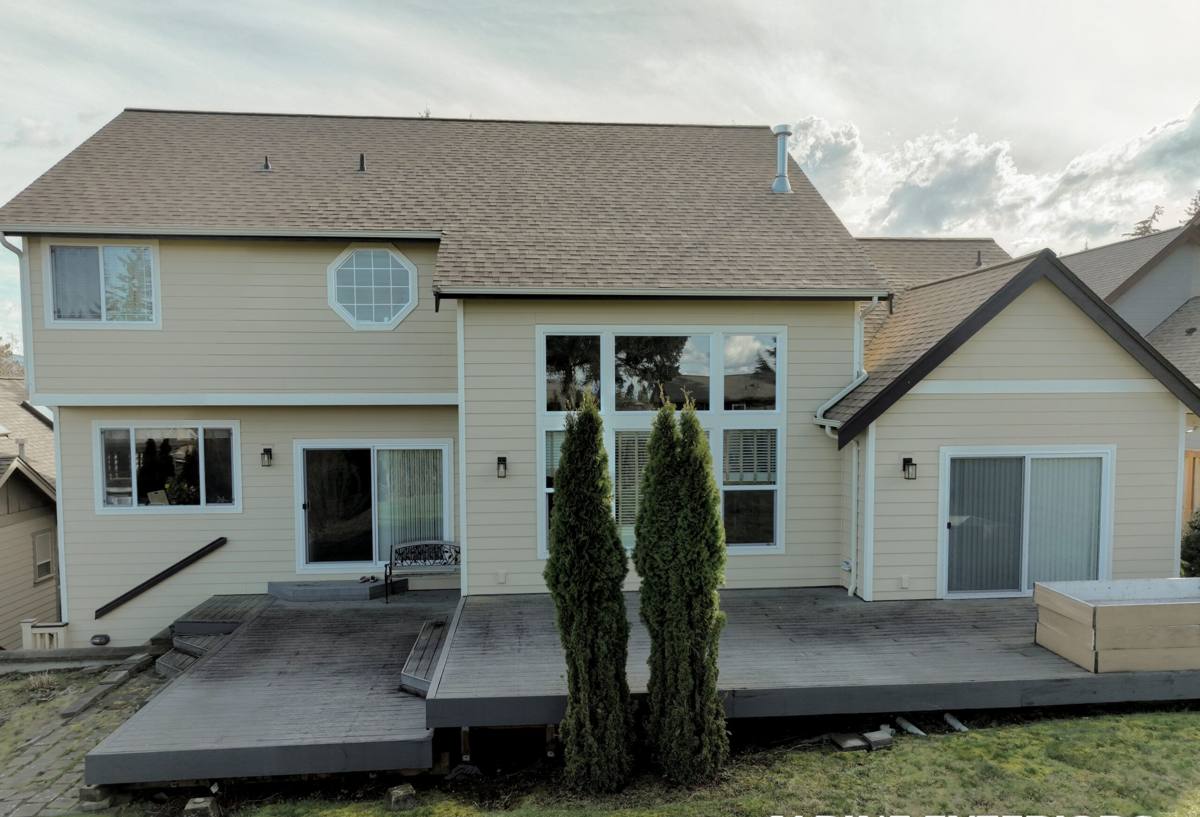
Signs Your Current Windows Are Losing the Fight
Before we talk about installation, it's worth knowing what failure looks like locally, because it's usually gradual.
- Condensation building up between the panes (a sign the seal has failed on a double-pane unit)
- Visible moss or green streaking on the sill or lower frame, even after cleaning
- A draft you can feel with your hand near the frame on a windy day
- Wood trim that feels soft or spongy when pressed near the corners
- Difficulty opening or latching a window that used to move freely — often a sign the frame has swollen or shifted
- Paint or finish that's bubbling or peeling specifically around the window opening, not the wall in general
Any one of these on its own might just mean a window needs caulking. Several together, especially on the same wall, usually means water has been getting behind the frame for a while and the installation — not just the window unit — needs to be redone correctly.
What a Correct Window Installation Actually Involves
Swapping a window sounds simple: take the old one out, put the new one in. In practice, the window itself is maybe a third of the job. The rest is water management, and in a climate that sees this much sustained rain, water management is where installs succeed or fail.
Removal and Opening Inspection
Once the old window is out, we check the rough opening before anything new goes in. This is the point where hidden rot, soft framing, or old flashing that was never installed correctly gets found. If the opening isn't sound, sealing a new window into it just buries the problem for a few more years instead of fixing it.
Flashing and Water Management
This is the step that gets skipped most often on rushed jobs, and it's the one that matters most here. Proper flashing directs any water that gets past the exterior finish down and out, away from the framing, instead of letting it pool at the sill. That means flashing tape or pan flashing at the bottom of the opening, correctly lapped house wrap at the sides and top, and a sequence where every layer sheds water onto the layer below it — never the reverse.
Sealing and Insulation
The gap between the window frame and the rough opening gets sealed and insulated, not just caulked shut. A low-expansion foam or backer rod and sealant lets the window move slightly with temperature changes without cracking the seal — an important detail through Whatcom County's damp winters and drier summers.
Finish and Trim
Exterior trim and caulking go back on with attention to water shedding, not just appearance. Interior trim is reset and finished so there's no visible sign anything was touched, aside from a window that opens, closes, and seals the way it should.
Choosing the Right Window for a Laurel Home
There's no single "best" window — the right choice depends on the home's age, exposure, and how much upkeep you want to do. Here's how the common frame materials compare for our climate specifically.
| Frame Material | Moisture Performance | Maintenance | Typical Fit |
|---|---|---|---|
| Vinyl | Won't rot; handles damp climate well | Low — occasional cleaning | Most homes, best value |
| Fiberglass | Excellent — very stable in wet/dry swings | Low | Homes wanting a longer-term, low-flex frame |
| Wood | Needs a sound finish to resist moisture and moss | Highest — repainting/sealing on a schedule | Older or historic-style homes prioritizing look |
| Wood-Clad | Good — exterior clad layer protects the wood core | Moderate | Homes wanting wood interior look with less exterior upkeep |
| Aluminum | Conducts cold and can condense; less common here | Low | Limited use, usually specific architectural needs |
For most Laurel homes, we steer people toward vinyl or fiberglass simply because they hold up to sustained damp weather without demanding a repaint cycle. If you want a wood look, a wood-clad unit gets you most of that appearance with a lot less exterior maintenance than solid wood — an honest trade-off worth discussing before you commit.
How Our Installation Process Works
- On-site assessment — we look at each window opening, note framing condition, and measure precisely rather than estimating from a single reference.
- Product selection — we walk through frame material, glass package, and style options based on the home's exposure and your budget, with no pressure toward a specific brand.
- Scheduling around the weather — we plan installation days with rain in mind and stage the work so openings aren't left exposed longer than necessary.
- Removal and opening prep — old units come out, framing is inspected and repaired if needed before anything new goes in.
- Flashing, setting, and sealing — the window is installed with correct flashing sequence, shimmed level and plumb, then sealed and insulated.
- Trim and cleanup — interior and exterior trim finished, hardware tested, site cleaned up, debris hauled off.
- Final walkthrough — we open, close, and lock every window with you before calling the job done.
What Affects the Cost of Window Installation
Every home is different, but the same handful of factors drive most of the variation in price. Broad, honest ranges — actual numbers depend on your specific home and windows.
| Factor | Why It Matters |
|---|---|
| Number of windows | Per-window cost typically drops slightly on larger jobs due to setup efficiency |
| Frame material | Vinyl is generally most affordable; fiberglass and wood-clad cost more upfront |
| Glass package | Double-pane vs. triple-pane, and low-E or gas-fill options, change energy performance and price |
| Opening condition | Rot or framing repair adds labor beyond the window itself |
| Installation type | Full-frame replacement costs more than insert replacement but corrects underlying issues insert jobs can't |
| Access and site conditions | Second-story windows, tight landscaping, or limited access can add time |
Insert Replacement vs. Full-Frame Replacement
This is a decision worth understanding before you get quotes, because contractors don't always explain it clearly. Insert replacement fits a new window into the existing frame — faster and less expensive, and a reasonable option when the existing frame is sound and square. Full-frame replacement removes everything down to the rough opening, which costs more but is the only way to actually fix flashing or framing problems underneath. If a home has any history of water intrusion, we'll usually recommend full-frame so the underlying cause gets addressed instead of covered over.
Why a Crew That Already Works in Laurel Makes a Difference
Window installation isn't regional rocket science, but there's real value in a crew that's worked enough homes in Whatcom County to know what this specific climate does to a bad seal over a few winters. We know what moss buildup on a north-facing sill usually means, what a soft spot near a lower corner usually points to, and how much margin to build into flashing details given how long our wet season actually runs. That's not something you get from a general contractor passing through — it's something that comes from doing this work, in this weather, on homes like yours, on an ongoing basis.
Keeping New Windows Performing for the Long Haul
A correct installation gets a window off to a good start. A little regular attention keeps it performing for decades.
- Rinse sills and tracks a couple times a year to keep moss and debris from building up
- Check exterior caulking annually and touch up any cracked or separated sections before winter
- Keep gutters and downspouts clear so water isn't running down the wall near window openings
- Test locks and operate each window through its full range once or twice a year
- Watch for condensation between panes — it's an early, fixable sign of a failing seal if caught soon
If your windows in Laurel are drafty, fogging, or just overdue, we're glad to take a look and give you a straightforward, no-pressure estimate — no obligation, no pushy sales pitch. Use the form below to get started.