 Lynden Window
 Storm Damage Roof Repair for Acme Homes
Acme sits in the foothills east of Lynden, where Whatcom County's weather gets more exaggerated than it does closer to the water. Homes here catch heavier wind funneling down from the Nooksack valley, more sustained rain during winter storm systems, and a longer wet season that keeps roofs damp for months at a stretch. That combination is hard on shingles, flashing, and the wood underneath them, and it means storm damage in Acme doesn't always look like the dramatic missing-shingle photo people expect. Often it's quieter: a lifted tab, a bent flashing edge, a soft spot that only shows up once you're standing on the roof.
This page covers what storm damage actually means for a roof in this area, what a correct repair looks like, and how we handle the job from first call to final cleanup.
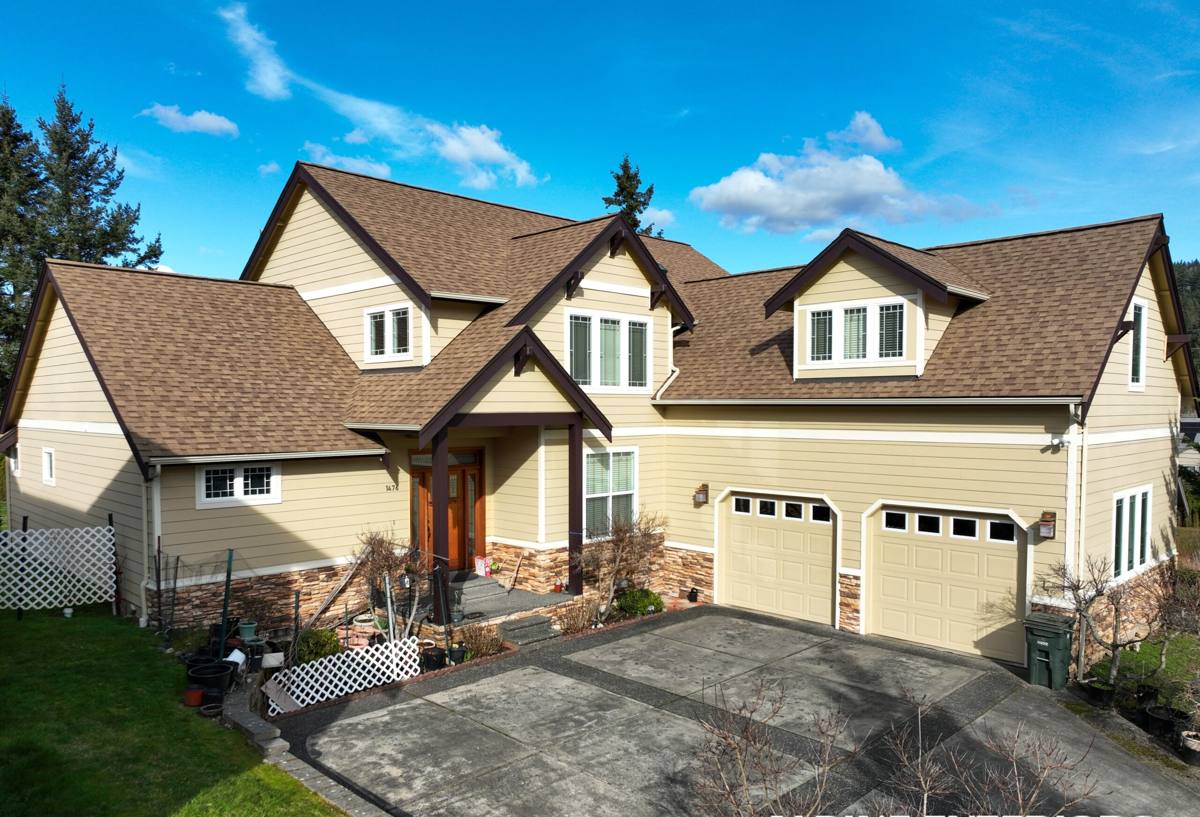
What Counts as Storm Damage Here
"Storm damage" covers more than a single dramatic event. In Acme, it usually comes from one of a few sources, often layered on top of each other over a season:
- Wind uplift — gusts that catch a shingle edge and loosen or crease it without fully removing it, which is easy to miss from the ground
- Wind-driven rain — rain pushed sideways under shingle edges and around flashing, especially during the kind of sustained winter systems this area gets
- Falling debris — limbs and branches from nearby trees, which is common on properties with mature fir or cedar close to the house
- Hail or small debris impact — less frequent here than in some regions, but it does happen and can bruise shingle mat without breaking it open right away
- Cumulative moisture stress — not a single storm, but repeated wetting and drying that weakens fasteners and seals over a long, damp season
That last category is the one homeowners underestimate most. A roof doesn't need a named storm to take damage — a long stretch of driving rain and a slow moss season doing their work in the background can do just as much harm.
Why This Matters More in Acme Than in Town
Acme's terrain and tree cover mean roofs here often stay wet longer after a storm passes than roofs closer to Lynden proper. Less direct sun exposure on certain rooflines, more surrounding vegetation, and cooler valley air all slow drying time. A roof that would dry out in a day or two in an open, sunnier spot might stay damp for the better part of a week here, and that extended dampness is exactly what lets minor storm damage turn into rot, moss growth, or a slow leak.
Signs of Storm Damage to Watch For
Most storm damage isn't obvious from the driveway. Here's what we look for, and what homeowners can reasonably check themselves without getting on a ladder:
- Granules collecting in gutters or at downspout outlets after a storm — a sign of shingle wear or impact
- Shingle tabs that look slightly lifted or out of line with the rest of the field, especially along roof edges and ridges
- Flashing around chimneys, skylights, or wall intersections that looks bent, pulled away, or has visible gaps
- New or worsening moss growth concentrated in one area, which can indicate a spot where water is sitting longer than it should
- Water stains on interior ceilings or in the attic, particularly after a heavy rain event
- Soft or spongy feeling underfoot if you're already up there for gutter cleaning (we don't recommend homeowners climb up just to check)
If you notice any of these after a wind or rain event, it's worth a professional look before the next storm system rolls through. Small, caught-early damage is a straightforward repair. Damage that sits through a second or third storm often isn't.
How Moss Season Compounds Storm Damage
Whatcom County's moss season runs long, and Acme's tree cover and shade patterns make it worse on many roofs than what you'd see on a more open lot. Moss itself isn't storm damage, but it interacts with it in a few specific ways that matter for repair work:
- Moss holds moisture against the shingle surface, which slows drying after a storm and extends the window where wind-driven rain can find its way under a lifted edge
- Moss mats can lift shingle edges over time, which makes them more vulnerable to wind uplift in the next storm
- Heavy moss growth can hide early signs of damage — a lifted or cracked shingle is harder to spot under a moss mat than on a clean roof
When we're repairing storm damage on an Acme roof, we're almost always dealing with moss in the same visit, because the two problems tend to travel together. A repair that ignores the moss underneath it is a repair that won't hold as long as it should.
What a Correct Repair Actually Involves
A storm damage repair that's done right isn't just swapping out the shingles you can see are missing. It involves checking the layers underneath and around the visible damage:
- Underlayment check — if water has been getting under shingles, the underlayment beneath the damaged area needs to be inspected and replaced if it's compromised, not just covered back up
- Decking inspection — sustained moisture exposure can soften roof sheathing; any soft spots get identified and replaced before new shingles go down, not patched over
- Flashing repair or replacement — bent or displaced flashing around chimneys, vents, and valleys is a common source of ongoing leaks even after shingles are replaced, so it gets addressed as part of the same repair
- Fastener check — wind uplift often loosens nails in the surrounding field, not just the shingles that visibly moved; those get reset or replaced
- Matching materials — we match shingle type, color, and where possible manufacturer to minimize visible patchwork, though some variation is normal on an older roof
- Moss and debris clearing — the repair area and surrounding roof get cleared so the new work isn't sitting under the same conditions that contributed to the damage
Skipping any of these steps is how a "repaired" roof ends up with the same leak six months later, just in a slightly different spot.
Our Process
1. Inspection
We start with a full roof inspection, not just a look at the damage you called about. Storm damage rarely stays contained to one spot, and we'd rather find a second problem area now than have you call us back after the next storm.
2. Straight Assessment
We tell you what we actually find — what's storm damage, what's pre-existing wear, and what can wait versus what needs attention now. If insurance is involved, we document damage clearly enough to support your claim.
3. Repair Plan
We give you a clear scope: what gets replaced, what gets repaired, and roughly what it will cost, before any work starts.
4. The Work
We complete the repair, including any underlayment, decking, or flashing work the inspection turned up, then clean the work area and haul away debris.
5. Follow-Up
We check our own work after the repair holds through a real rain event, not just a dry-day walkthrough.
Repair vs. Replace: How We Decide
Not every storm-damaged roof needs full replacement, and not every roof can be safely patched. The right call depends on a few factors:
| Factor | Favors Repair | Favors Replacement |
|---|---|---|
| Age of roof | Under 12-15 years, otherwise in good shape | Nearing or past typical shingle lifespan |
| Extent of damage | Localized to one area or slope | Spread across multiple areas or slopes |
| Decking condition | Solid, no soft spots found | Soft or rotted decking in multiple areas |
| Moss history | Light, manageable growth | Heavy, long-term moss with underlying moisture damage |
| Prior repairs | Few or none | Multiple past patch jobs in different spots |
We'll walk you through where your roof falls on these factors and give you an honest recommendation, not the more expensive option by default.
Why a Crew That Already Works Acme Matters
Roofing crews that mostly work in flatter, more open parts of Whatcom County don't always account for how differently roofs perform in a shaded, valley-adjacent area like Acme. We work this stretch of the county regularly, which means we're already familiar with:
- How long roofs here typically stay wet after a storm, and what that means for repair timing and material choices
- Which roof orientations and tree-adjacent areas tend to develop moss and moisture problems first
- How wind funnels through this part of the valley differently than it does closer to Lynden or the coast
- Realistic scheduling around the wet season, so repairs get done in a workable weather window instead of getting rushed or delayed
That local familiarity shortens the inspection-to-repair timeline and reduces the odds of a repair getting scheduled at a point where conditions work against it holding well.
After a Storm: A Quick Homeowner Checklist
- Check gutters and downspouts for shingle granules or debris after a significant wind or rain event
- Look at interior ceilings, especially in upper rooms and attic spaces, for new staining after heavy rain
- Note any new or heavier moss patches that appeared after the storm season started
- Avoid climbing onto the roof yourself, especially on wet or moss-covered surfaces
- Call for an inspection sooner rather than later — minor storm damage is a much smaller job than damage that's had a second or third storm to work on it
If you're seeing signs of storm damage on your Acme home, or just want a professional set of eyes on your roof before the next system rolls through, we're happy to take a look. Request a free, no-pressure estimate using the form below and we'll get back to you with a straightforward assessment.