 Lynden Window
 Roof Repair Built for Aldergrove's Weather
Aldergrove sits in a stretch of the Fraser Valley where the weather doesn't do a roof any favors. Winters bring long stretches of driving rain that finds every weak seam, spring and fall push moss and organic growth into anything with shade or a north-facing slope, and the damp air that moves through this part of the valley keeps roofing materials wet longer than they'd stay in a drier climate. None of that means a roof is doomed — it means a roof needs to be built, and repaired, with that reality in mind rather than treated like it's in Phoenix or Denver.
A roof repair here isn't just patching a hole and moving on. It's understanding why that spot failed in the first place, whether it's an isolated issue or a sign of something working its way across the whole roof, and fixing it in a way that holds up through the next several wet seasons, not just until the next dry spell hides the problem again.
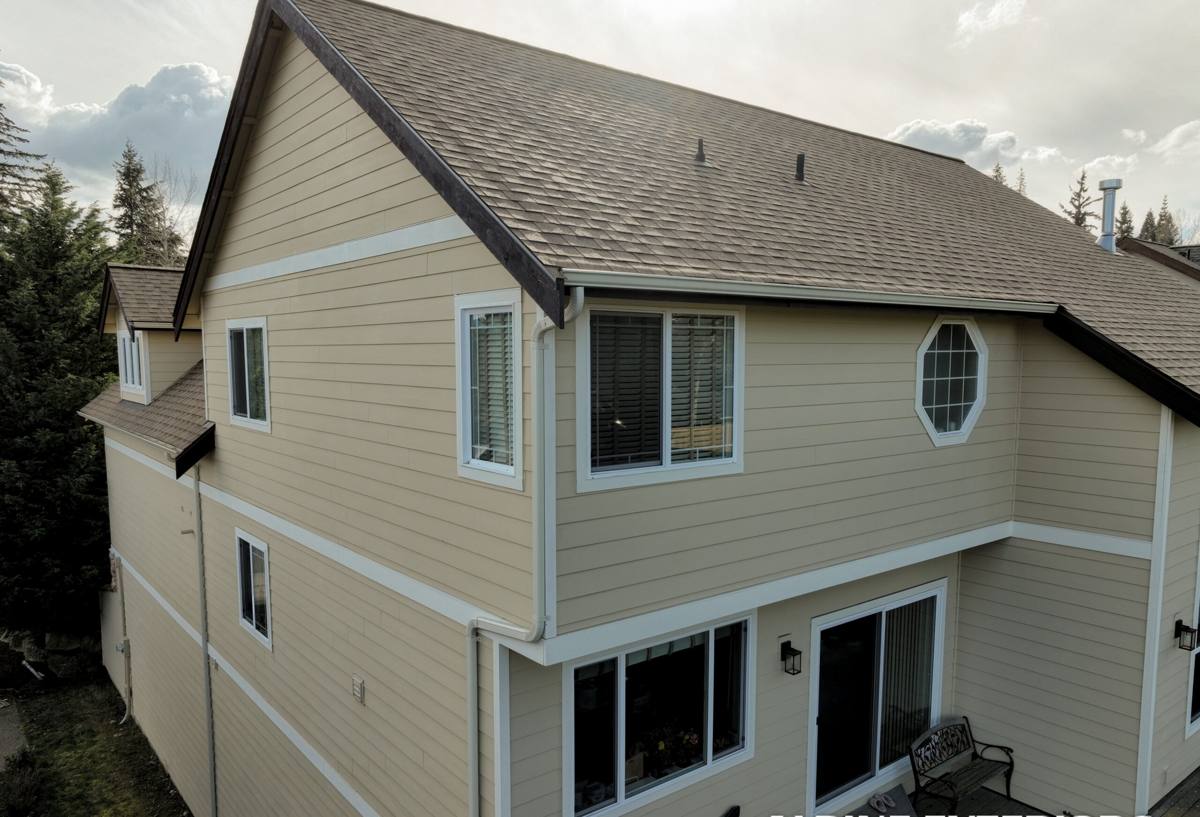
What This Climate Actually Does to a Roof
Moss and Organic Growth
Shaded roof sections, north slopes, and anywhere debris collects in a valley or against a chimney are prime spots for moss to take hold. Moss isn't just cosmetic — it holds moisture against the roofing material, works its way under shingle edges as it grows, and can lift tabs enough to let wind-driven rain underneath. Left long enough, it accelerates granule loss on asphalt shingles and speeds up rot on wood or exposed sheathing.
Driving Rain and Wind-Driven Moisture
Straight-down rain is easy for most roofs to shed. The rain that causes problems here comes at an angle, pushed by wind, and finds its way under flashing, around vent boots, and into any spot where a seal has aged or a fastener has backed out. This is why so many repair calls in this area aren't about a dramatic storm event — they're about slow, steady infiltration that finally shows up as a stain on a ceiling weeks or months after the water first got in.
Salt Air and Material Fatigue
Coastal-influenced air moving through the valley adds another layer of wear on top of moisture — it speeds up corrosion on exposed metal flashing, fasteners, and vent components. A fastener or flashing piece that would last decades in a drier inland climate can start showing rust and weakening years sooner out here, which is one reason we pay close attention to the metal components during any repair, not just the shingles or membrane.
Signs a Roof Needs Repair, Not Just Watching
- Water stains on ceilings or upper walls, especially ones that appear or spread after a windy rainstorm
- Visible moss patches, especially thick growth on north-facing or shaded slopes
- Shingles that are curling, cracked, missing, or visibly lifted at the edges
- Granules collecting in gutters or at downspout outlets (a sign of shingle wear)
- Rusted, lifted, or missing flashing around chimneys, skylights, and roof-to-wall transitions
- Sagging areas on the roofline, which can indicate deck or structural moisture damage underneath
- Daylight visible through the roof deck from inside an attic
- Consistently damp or musty attic air, even without an obvious visible leak
Any one of these on its own might be minor. Several together, or one that's been ignored for more than a season, usually means water has already gotten past the surface layer and into material that's more expensive to fix the longer it sits wet.
Common Repair Types We Handle
| Repair Type | Typical Cause | What's Involved |
|---|---|---|
| Flashing repair or replacement | Corrosion, poor original install, or age at chimneys/valleys/wall transitions | Remove old flashing, inspect deck underneath, install new flashing with proper overlap and sealant |
| Shingle/tile replacement | Wind lift, impact damage, or granule loss from age and moss | Match existing material where possible, replace underlayment if compromised, re-secure surrounding courses |
| Moss removal and treatment | Shaded areas, valley debris buildup, organic growth over time | Careful low-pressure removal, treatment application, and a look at what's underneath for damage |
| Leak tracing and deck repair | Long-term slow infiltration, often from a failed seal upstream of the visible stain | Trace water path (often not directly above the stain), open affected area, repair or replace deck sheathing |
| Vent boot and penetration seal repair | Rubber boot cracking with age and UV/moisture exposure | Replace boot or full vent flashing, reseal penetration |
| Gutter and edge repair | Overflow damage, ice, or debris backup pushing water under roof edges | Clear and repair drainage path, address any water damage to fascia or roof edge |
How We Approach a Repair Call
- Inspection first. We look at the whole roof, not just the spot you called about — a leak in one place is often caused by a failure somewhere else, especially with wind-driven rain.
- Honest diagnosis. We tell you what's actually wrong, what's causing it, and whether it's a targeted repair or a sign of broader wear that's worth knowing about now rather than later.
- Straightforward scope and pricing. Before work starts, you know what's being repaired, what materials are used, and what it costs — no vague allowances.
- Repair matched to the material. Flashing, sealants, and fasteners are chosen for how they hold up in this area's moisture and salt-influenced air, not just whatever's cheapest.
- Cleanup and a final check. We clear debris from the work area and check that drainage paths — gutters, valleys, downspouts — are clear so the repair isn't undone by the next storm.
Repair vs. Replacement: How We Think About It
| Factor | Usually Points to Repair | Usually Points to Replacement |
|---|---|---|
| Roof age | Well within expected material lifespan | Near or past the end of its typical service life |
| Extent of damage | Localized to one section or a few isolated spots | Widespread wear, multiple failure points across slopes |
| Deck condition | Sheathing is solid where opened up | Soft, rotted, or repeatedly wet deck material |
| Cause of failure | Isolated event (impact, single failed seal) | Systemic issue (widespread granule loss, chronic moisture) |
We won't push a full replacement when a solid repair will genuinely hold up, and we won't patch something that's going to need the same fix again in a year. If a roof is borderline, we'll walk you through the trade-offs honestly, including what a repair buys you in time versus what a replacement resets.
Why It Matters That We Already Work in Aldergrove
A repair crew that knows this specific area isn't guessing at how a roof performs here — they've already seen how moss builds on shaded slopes locally, how driving rain off a west-facing exposure finds its way under flashing, and how quickly corrosion shows up on aging metal components in this air. That local pattern recognition matters when you're diagnosing a leak, because the cause is rarely as obvious as the water stain on your ceiling.
It also matters for timing. Roof leaks in this climate don't wait for a convenient week, and a crew that's regularly working Aldergrove and the surrounding Whatcom County and Fraser Valley border area can usually get to a repair call faster than one that has to travel in from further out — which matters when water is actively getting into your home.
Maintenance That Extends a Repair's Life
- Clear moss and debris from valleys and shaded slopes at least once a year, before the wet season builds up
- Keep gutters and downspouts clear so water isn't backing up under roof edges
- Trim back overhanging branches that keep sections of roof shaded and slow to dry
- Have flashing and vent boots checked periodically, since these fail well before shingles typically do
- Address small leaks early — a stain the size of a coin now is a much smaller repair than the same leak after another winter
What to Expect From an Estimate
When we come out for a repair estimate, we're looking at the full roof system — shingles or tiles, flashing, penetrations, and the deck where it's accessible — not just the spot causing the current problem. You'll get a clear explanation of what we found, what we recommend, and why, along with straightforward pricing before anything is scheduled. If it's a simple, contained repair, we'll say so. If it points to something bigger, we'll explain what we're seeing and let you make the call.
If you're dealing with a leak, visible moss buildup, or storm damage on your Aldergrove roof, we're happy to take a look and give you a straightforward, no-pressure estimate. Reach out using the form below and we'll get you scheduled.