 Lynden Window
 Windows Built for Custer's Coastal Exposure
Custer sits close enough to Birch Bay and the Strait to catch salt-laden air on a regular basis, and that changes what a window has to survive. Add Whatcom County's driving rain off the water and the long stretch of gray, damp months when moss and algae take hold on anything that stays wet, and you've got a climate that's noticeably harder on window components than what you'd find twenty miles inland. Custom windows for a Custer home need to be selected and installed with that exposure in mind from the start, not treated the same as a standard replacement job in a drier part of the county.
"Custom" here doesn't mean fancy shapes or oversized picture windows, though we do plenty of that too. It means the window is sized, framed, and flashed to fit the actual opening and the actual wall assembly on your house — which matters more on older Custer farmhouses and ranch homes with settled, slightly out-of-square openings than it does on new construction.
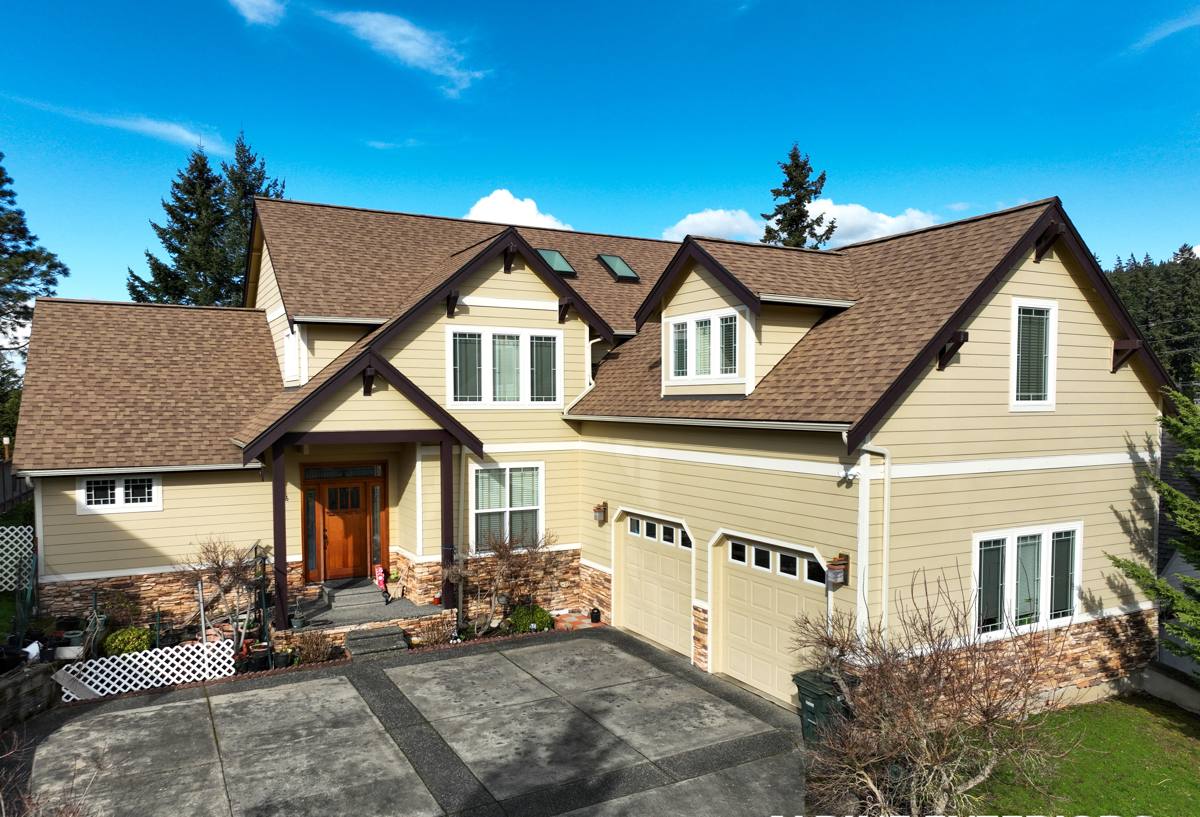
What Salt Air and Coastal Rain Actually Do to a Window
Salt air is corrosive to unprotected metal hardware — hinges, cranks, locks, and cheap aluminum cladding all degrade faster near the coast than they do further inland. Driving rain, meanwhile, is a water-management problem: wind-driven moisture gets pushed sideways into gaps that a calm-weather installation would never expose. Combine the two with a moss season that can run from fall through spring, and you get a specific failure pattern we see repeatedly on Custer service calls:
- Pitted or seized hardware on lower-grade aluminum and vinyl cranks within a handful of years
- Water staining below sills where flashing was skipped or done with caulk alone
- Moss and algae growth on horizontal trim and sills that stay damp too long between dry spells
- Fogged double-pane glass from failed seals, often on the weather-exposed side of the house first
- Soft or rotting wood trim around older wood-framed windows that were never properly flashed
None of these are inevitable. They're the result of window components and installation methods that weren't matched to the exposure. A correctly specified, correctly installed window in Custer should not show these problems for a very long time.
What a Correct Window Job Looks Like Here
Material and Hardware Choices
For coastal-exposed walls, we lean toward vinyl and fiberglass frames with corrosion-resistant hardware — stainless or coated steel components rather than bare aluminum. Vinyl handles moisture well and doesn't corrode, though frame quality varies a lot between manufacturers; fiberglass costs more up front but holds up extremely well to temperature swings and moisture over decades. Wood-clad windows can still work on a Custer home if that's the look you want, but they need aluminum or vinyl exterior cladding and disciplined maintenance — bare exterior wood in this climate is a losing bet.
Flashing and Water Management
This is where most window failures actually start, and it's largely invisible once the trim goes back on. A correct install uses window flashing tape or a pan flashing system at the sill, house wrap integrated properly with the window's nailing flange, and a drip cap or head flashing above the unit so water sheds away from the opening instead of running behind it. On driving-rain walls facing the prevailing weather, we pay extra attention to this step — it's the difference between a window that stays dry for 30 years and one that starts staining trim in five.
Glass and Seal Performance
Double-pane, low-E glass with argon fill is the baseline we recommend for this area — it manages both the damp cold and any direct sun the house gets. The seal quality between the panes matters more here than in a drier climate, since persistent humidity works harder on a weak seal. We steer customers toward manufacturers with a strong track record on seal longevity rather than the cheapest glass package available.
Our Process, Start to Finish
- On-site assessment — we look at each opening individually, check for existing water damage or rot, and note the specific exposure of each wall (which sides catch the most wind-driven rain).
- Measuring and product selection — true custom sizing for each opening, with frame material and hardware chosen based on that wall's exposure, not a one-size-fits-all spec for the whole house.
- Removal and opening prep — old windows come out carefully, and we inspect the framing and sheathing underneath before anything new goes in. Any soft wood or damaged sheathing gets addressed before installation, not covered up.
- Flashing and installation — proper flashing sequence, air sealing, and shimming so the window sits square and operates smoothly for years, not just on install day.
- Trim and finish — interior and exterior trim work finished to match the house, with exterior details sloped and sealed to shed water rather than trap it.
- Final walkthrough — we test operation, locks, and weatherstripping with you before we consider the job done.
Comparing Frame Options for a Custer Home
| Frame Type | Coastal/Salt Air Performance | Maintenance | Typical Fit |
|---|---|---|---|
| Vinyl | Very good — won't corrode or rot | Low | Most Custer homes; strong value |
| Fiberglass | Excellent — very stable in moisture and temperature swings | Low | Long-term ownership, higher exposure walls |
| Aluminum-clad wood | Good if cladding is intact; interior wood adds warmth | Moderate | Homes wanting a wood-look interior |
| Bare wood | Poor without diligent upkeep in this climate | High | Historic restoration only, with clear maintenance commitment |
Sizing the Job: What Drives Cost
Every Custer home is different, so we quote openings individually rather than giving a flat per-window number over the phone. Broadly, cost is driven by:
- Opening size and whether it's a standard shape or something custom (bay, arched, oversized)
- Frame material — vinyl generally costs less than fiberglass or clad-wood options
- Glass package — standard double-pane versus upgraded low-E and gas-fill options
- Condition of the existing opening — rot repair or sheathing replacement adds labor
- Trim and finish work needed to match existing interior and exterior details
We'd rather walk your specific openings and give you real numbers than guess in the abstract — a phone quote for "windows" doesn't account for the difference between a straightforward vinyl swap and a rotted opening that needs framing repair first.
Why a Crew That Already Works Custer Matters
A contractor who works this corner of Whatcom County regularly already knows which walls on a typical Custer property take the worst of the weather, what the older housing stock around here tends to have for framing and existing window types, and how aggressive the flashing detail needs to be given the salt air and rain exposure. That's not something you can fully compensate for with a generic install checklist. It also means warranty and service calls are practical — we're not driving in from across the state if a window needs adjustment down the road.
We're licensed and insured to do this work in Washington, and we stand behind both the installation and the manufacturer's product warranty on the windows we install. If something isn't right, you're not chasing us down.
Maintenance That Extends the Life of Your New Windows
Even a correctly installed window benefits from basic upkeep in this climate. A short annual routine goes a long way:
- Rinse sills and exterior trim to clear salt residue and slow moss growth, especially on north- and west-facing walls
- Check weatherstripping for wear and re-seat or replace it if it's compressed or cracked
- Lubricate cranks and hinges lightly if hardware starts to feel stiff
- Clear debris from tracks and weep holes so water can drain as designed
- Watch for soft spots in exterior trim early — caught early, it's a small fix; caught late, it's a bigger one
None of this is demanding, but skipping it is how a good installation slowly turns into a problem one.
Signs It's Time to Replace, Not Repair
Not every window issue means full replacement. But a few signs point toward it rather than a patch job: fogged or cloudy glass between the panes (a failed seal that can't be fixed, only reglazed or replaced), wood trim that's soft or crumbling at the sill, windows that won't stay open or locked, noticeably higher heating bills traced to drafty frames, or visible daylight around the frame when the window is closed. If you're only seeing one early symptom, a repair might make sense — we'll tell you honestly if that's the case rather than pushing a full replacement you don't need yet.
Get an Estimate for Your Custer Home
If you're weighing new or replacement windows for a home in Custer, we're happy to come take a look, walk the openings with you, and give you a straightforward, no-pressure estimate — no guesswork, no generic phone quote. Use the form below to get started.